SEOUL · PRACTICAL EXPERIENCE
Order confidently in a food alley
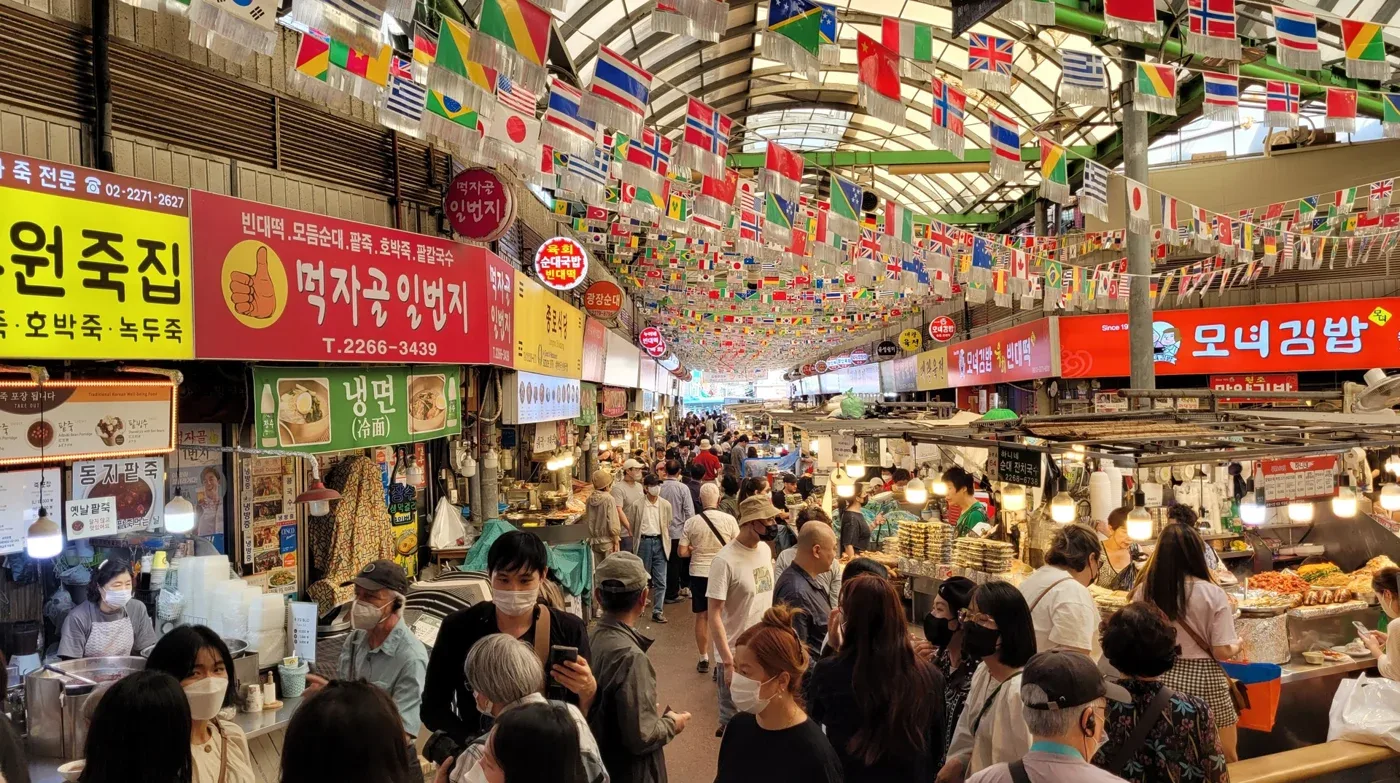
Start with one dish at Gwangjang or Myeongdong, confirm the price, then decide what to try next.
Allow 60–90 minutes in one food area; a suggested tasting pace.
Sources checked: 3 October 2026. This is a self-guided plan; no booking or guiding service is included.
Before you set out
- Choose one area using the existing Seoul street-food guide. Stall opening times and accepted payments vary.
Follow the visit
Pick your first dish
Read a displayed menu. Choose one portion of a dish you understand; ask whether the price is per portion, per person or for a shared plate. Do not order by pointing at a large display without checking quantity.
Ask about ingredients
Use the Korean name and ask about any ingredient you need to avoid. Do not assume a vegetable-looking dish is vegetarian. If the answer is unclear, choose another dish rather than guessing.
Confirm seating and payment
Ask whether you may sit and when to pay. Check card acceptance before ordering, and any minimum order for the table. Show the agreed quantity with fingers if needed.
Finish one stop before the next
Check the bill against your order, clear waste as directed and choose the next dish only if still hungry. Crowded or unavailable stall: use another posted menu or a seated restaurant; the experience is not tied to one vendor.
Build your budget
Add posted dish prices before ordering. Set a tasting limit and keep cash available if your chosen vendor cannot accept your card. No fixed “market price” applies to every stall.
Save the places
Use the exact Korean name. Confirm the current entrance and branch; alternatives are not necessarily consecutive walking stops.
- Gwangjang Market · 광장시장
- Myeongdong: alternative area, not the same market · 명동거리
Ask this in Korean
이 가격은 한 접시 가격인가요?
Is this the price for one plate?
More Korean questions & audioKeep exploring
Sources & scope
Provider facts come from the linked sources. Visit order, time allowances, budget structure and checklists are editorial suggestions. Confirm changing hours, stock, prices and facilities before travelling. Photos illustrate the named places or dishes; they are not live availability reports.