HISTORY & HERITAGE
Korea, through the centuries.
Read the stories behind the palaces, temples, objects and neighbourhoods you can explore today.
Meet influential kings and commanders, from Gwanggaeto and Sejong to Eulji Mundeok and Yi Sun-sin.
Goguryeo came before Goryeo. Some kingdoms existed at the same time, so their dates overlap. BCE means before the Common Era; CE uses the same year numbering as AD. Early founding dates are traditional dates recorded in later histories.
Before the Three Kingdoms
Korean history begins long before this timeline, with prehistoric communities, dolmen-building societies and early states including Gojoseon. The familiar date of 2333 BCE belongs to the Dangun founding tradition; it is not an archaeologically established foundation date. This guide focuses on the kingdoms and later periods most often encountered in museums and heritage travel.
01
1st century BCE–7th century CE
Goguryeo, Baekje & Silla
Three neighbouring kingdoms developed distinct courts, beliefs and artistic traditions. They were contemporaries, not successive dynasties.
Goguryeo, traditionally dated to 37 BCE–668 CE, occupied parts of the northern Korean peninsula and what is now northeast China. Its tomb paintings preserve scenes of riding, hunting, dress and belief. These images are evidence of a complex society as well as a powerful military state.
Baekje, traditionally 18 BCE–660 CE, developed in the southwest. Its later capitals at Gongju and Buyeo, together with Iksan, preserve traces of royal and Buddhist culture. Exchanges across the sea connected Baekje with Japan and China.
Silla, traditionally founded in 57 BCE, grew around Gyeongju in the southeast and continued until 935 CE. Royal tombs, gold ornaments and Buddhist remains make Gyeongju a useful starting point for visitors. The Gaya confederacies also flourished in the south before their incorporation into Silla.
Dates to remember
- 57 BCETraditional founding of Silla.
- 37 BCETraditional founding of Goguryeo.
- 18 BCETraditional founding of Baekje.
- 660 / 668Baekje and then Goguryeo fall to the Silla–Tang alliance.
Read more: UNESCO · Koguryo tombs · UNESCO · Baekje Historic Areas · UNESCO · Gyeongju Historic Areas
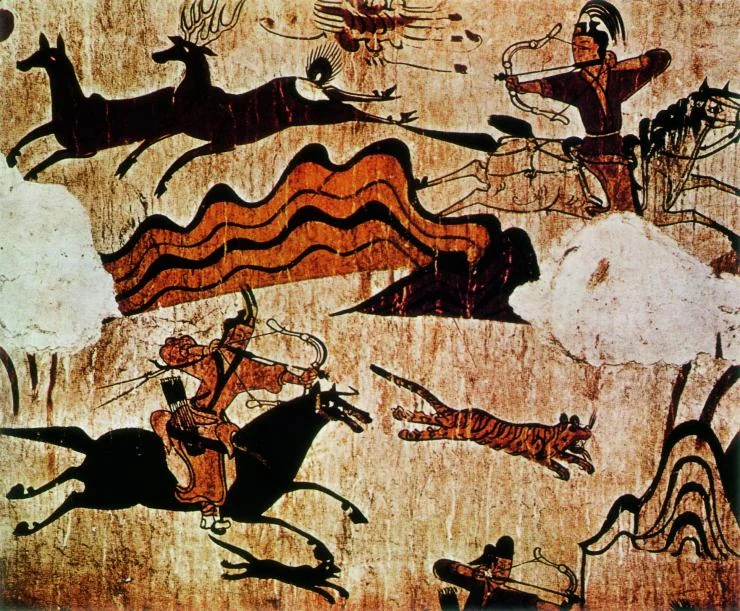 Enlarge photo
Hunting scene from a Goguryeo tomb mural at Muyongchong, near Ji’an in present-day China; photographic reproduction of ancient wall art.
Unknown ancient artist; reproduction photographer unrecorded · Public domain — PD-Art / PD-old-70 (Wikimedia Commons designation) · Photo source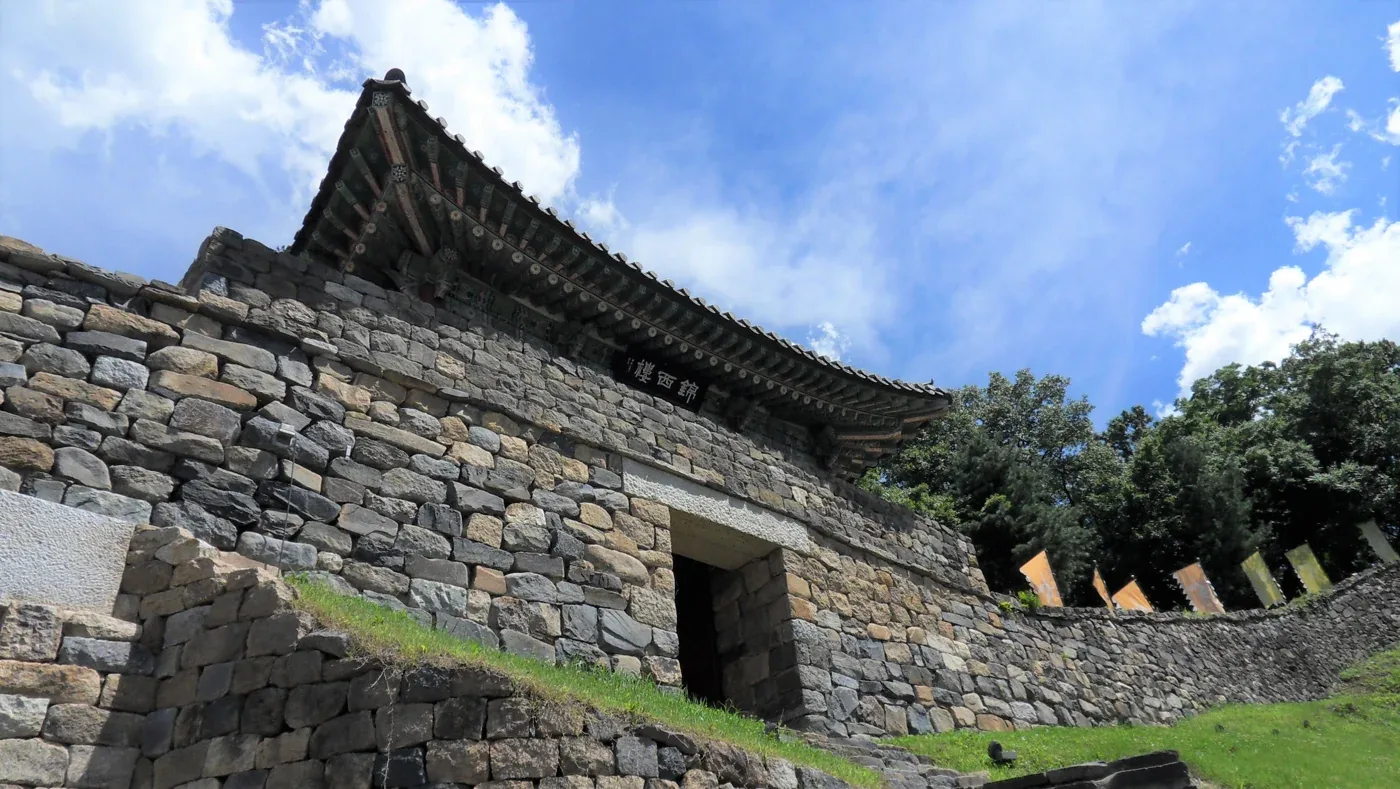 Enlarge photo
Present-day Geumseoru Gate at Gongsanseong in Gongju, a fortress site within the Baekje Historic Areas; photographed in July 2021. The gate pavilion is a later reconstruction, not surviving Baekje-period fabric.
Ashy Minivet · CC0 1.0 Universal Public Domain Dedication · Photo sourceKings & commanders
Select a name to read about achievements, key events and related places.
King of GoguryeoGwanggaeto the GreatExpanded Goguryeo’s territory and influence across northeast Asia.Read their storyClose story
Late 4th–early 5th century
His campaigns strengthened Goguryeo against neighbouring powers and extended its influence on the peninsula. His son Jangsu erected the Gwanggaeto Stele in 414 to commemorate his reign.
Key events & significance
The stele is a major source for the reign. Some passages and their interpretation remain debated. It stands near Ji’an in present-day China.
Historical sources: Gwanggaeto · reign and stele
Goguryeo commanderEulji MundeokLed the defence remembered for the victory at Salsu in 612.Read their storyClose story
Early 7th century
During the Sui invasion, Goguryeo forces used manoeuvre and repeated attacks to wear down the advancing army. Eulji Mundeok became a lasting symbol of the kingdom’s defence.
Key events & significance
Goguryeo defeated a retreating Sui force. The victory helped repel the invasion; the battlefield is associated with the northern peninsula, outside a South Korea itinerary.
Historical sources: Eulji Mundeok · Salsu campaign
Silla commanderKim Yu-sinA leading commander in Silla’s campaigns against Baekje and Goguryeo.Read their storyClose story
7th century
Kim Yu-sin led Silla’s army during the alliance with Tang China. His career connects military leadership with the political changes that reshaped the Three Kingdoms.
Key events & significance
Silla defeated the Baekje force led by Gyebaek. This was part of the wider Silla–Tang campaign that brought down Baekje, not a single battle that united all historical Korean territory.
Historical sources: Kim Yu-sin · military career
02
Later Silla 668–935 · Balhae 698–926
Later Silla & Balhae
A southern kingdom and a northern state developed alongside one another after Goguryeo’s fall.
After the fall of Baekje and Goguryeo, Silla fought its former Tang ally. By 676 it controlled much of the southern peninsula. Gyeongju remained its capital, with courtly life and Buddhist patronage expressed in architecture, stone sculpture and temple landscapes.
Balhae was founded in 698 in the north, drawing on Goguryeo and Mohe populations and traditions. Its territory extended across areas now in several countries. The term North–South States period helps explain why Silla’s expansion did not mean a single state occupied every former Goguryeo territory.
Bulguksa and Seokguram are associated with eighth-century Silla. Their surviving stonework should be distinguished from wooden buildings repaired or rebuilt in later centuries. Today’s night view at Wolji likewise includes reconstructed pavilions around a historic royal pond.
Dates to remember
- 676Silla consolidates control after war with Tang.
- 698Balhae is established.
- 8th centuryBulguksa and Seokguram take shape.
- 926 / 935Balhae falls; Silla later submits to Goryeo.
Read more: UNESCO · Bulguksa & Seokguram · UNESCO · Gyeongju Historic Areas · Balhae · historical overview
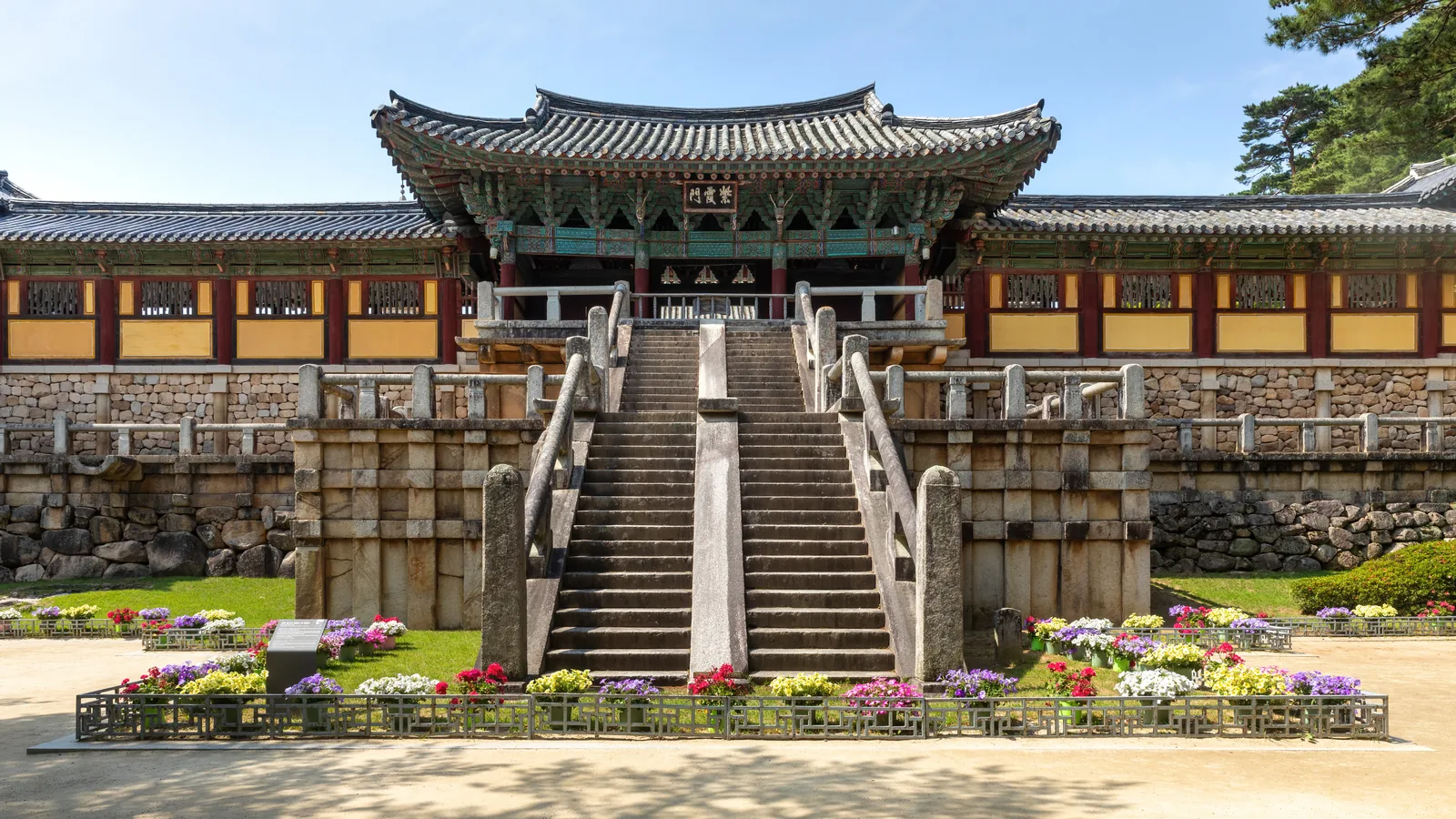 Enlarge photo
Bulguksa’s stone terraces and entrance in June 2024. The temple’s Silla-era heritage includes later repairs and rebuilt timber structures.
Basile Morin · CC BY-SA 4.0 · Photo source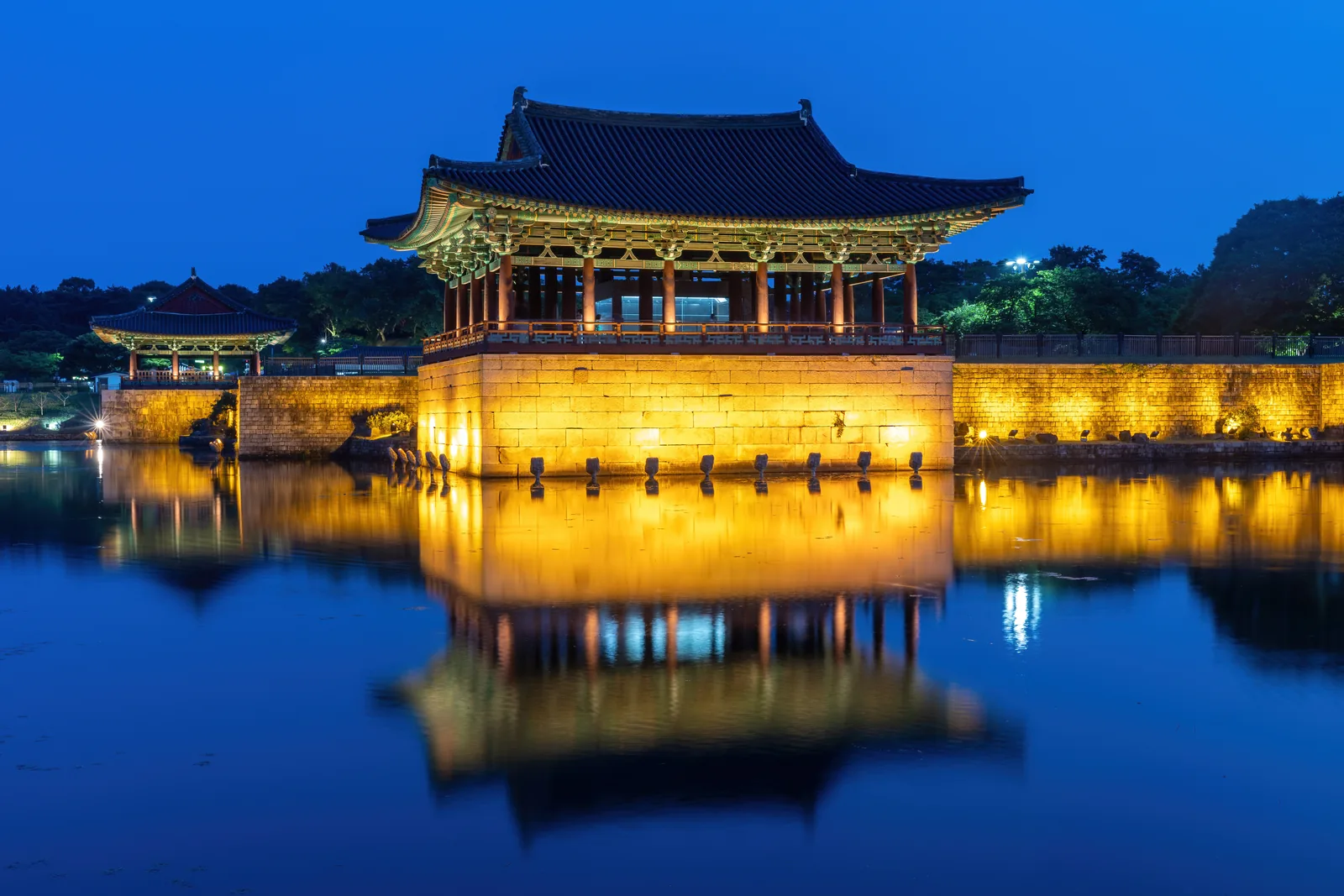 Enlarge photo
Donggung Palace and Wolji Pond in Gyeongju, photographed in June 2024. The illuminated pavilions are modern reconstructions at a Silla royal pond.
Basile Morin · CC BY-SA 4.0 · Photo source03
918–1392
Goryeo: celadon, Buddhism & printing
Goryeo gave the name Korea its international roots and left an extraordinary record in ceramics and books.
Wang Geon founded Goryeo in 918 and brought the Later Three Kingdoms together by 936. The capital was Gaegyeong, now Kaesong in North Korea. Goryeo is a later dynasty than Goguryeo, despite their similar names.
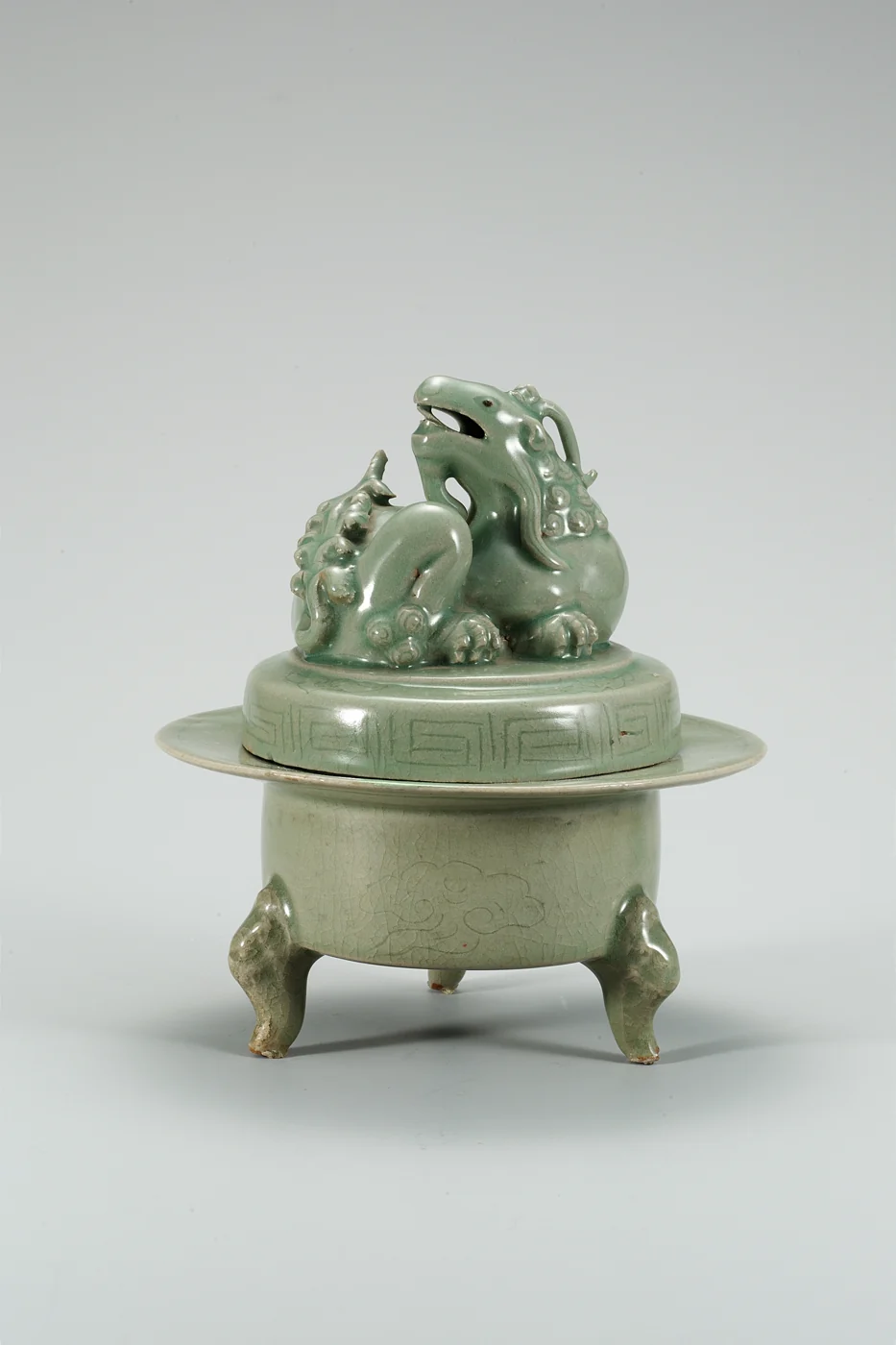
Buddhist institutions, scholarship and trade shaped its culture. Celadon potters produced green-glazed objects with sculptural forms and delicate inlaid decoration. The Tripitaka Koreana woodblocks, carved in the thirteenth century, preserve a vast Buddhist canon at Haeinsa.
Printing developed in several forms. Jikji, printed in 1377, is an important surviving example of early movable-metal-type printing. Goryeo also experienced invasions and political upheaval; the royal court spent part of the Mongol-war period on Ganghwa Island.
Dates to remember
- 918Wang Geon establishes Goryeo.
- 936The Later Three Kingdoms are brought together.
- 13th centuryThe surviving Tripitaka Koreana woodblocks are carved.
- 1392The Joseon dynasty replaces Goryeo.
Read more: Goryeo · historical overview · UNESCO · Tripitaka Koreana
 Enlarge photo
Goryeo celadon incense burner crowned by a mythical girin; National Museum of Korea collection, accession Deoksu 3063. Modern museum photograph from 2012.
National Museum of Korea · Korea Open Government License Type 1 (KOGL Type 1) · Photo sourceKings & commanders
Select a name to read about achievements, key events and related places.
Founder of GoryeoWang Geon (Taejo)Founded Goryeo and brought the Later Three Kingdoms together in 936.Read their storyClose story
Reign 918–943
Wang Geon combined military campaigns with alliances and the integration of former rivals. He welcomed refugees from Balhae, connecting the new dynasty with the legacy of northern states.
Key events & significance
Goryeo began in 918. After Silla’s submission in 935 and the defeat of Later Baekje in 936, Wang Geon consolidated the new kingdom.
Historical sources: Taejo of Goryeo · founding and unification
Goryeo statesman and commanderGang Gam-chanCommanded the Goryeo victory over the Khitan army at Gwiju in 1019.Read their storyClose story
10th–11th centuries
A civil official who took military command, Gang Gam-chan organised the defence during a Liao invasion. His story shows how scholarship and command could overlap in Goryeo government.
Key events & significance
Goryeo defeated the withdrawing Khitan force. The victory helped secure the kingdom after years of conflict; Gwiju is in present-day North Korea.
Historical sources: Gang Gam-chan · defence of Goryeo
04
1392–1897
Joseon: palaces, learning & everyday life
For more than five centuries, the court and society of Joseon shaped the landscapes and traditions many travellers recognise.
Founded by Yi Seong-gye, Joseon made Hanyang, present-day Seoul, its capital. Neo-Confucian ideas influenced government, education, family rituals and social hierarchy. Palace spaces and village houses show different sides of this world.
Under King Sejong, the Korean alphabet was developed and then promulgated in 1446 through Hunminjeongeum. Its legacy is visible in the writing travellers encounter every day. Court records, ceramics and printing also offer routes into the period beyond kings and battles.
War and rebuilding matter when reading historic sites. The Japanese invasions of 1592–1598 devastated palaces and temples. Much of what visitors see today includes later repair or reconstruction. Suwon Hwaseong, built in 1794–1796 under King Jeongjo, tells a different story of late-Joseon city planning and engineering.
Dates to remember
- 1392Joseon is founded.
- 1394 / 1395The capital moves to Hanyang; Gyeongbokgung is established.
- 1446Hunminjeongeum is promulgated.
- 1794–1796Hwaseong Fortress is constructed.
Read more: Joseon · historical overview · UNESCO · Hwaseong Fortress
 Enlarge photo
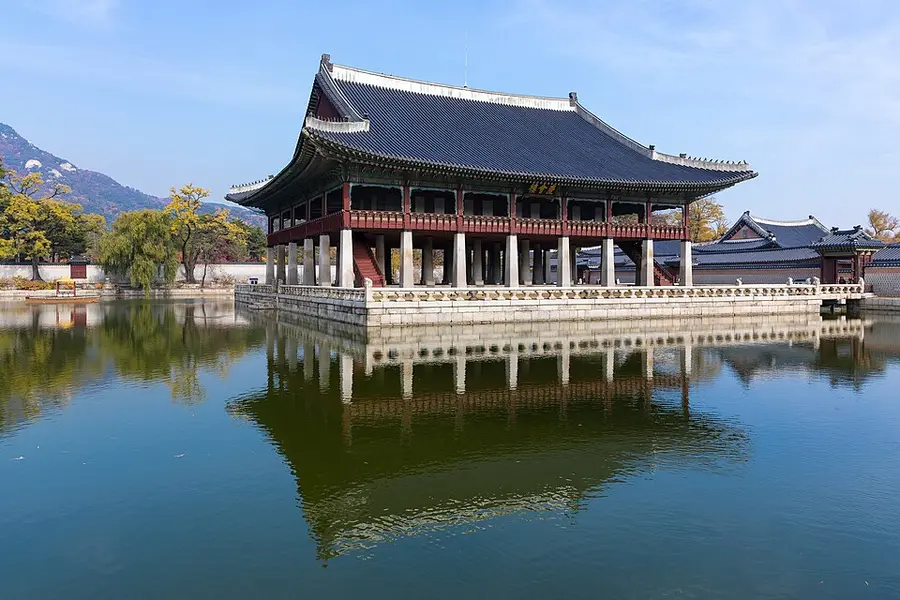
Gyeonghoeru Pavilion reflected in its pond at Gyeongbokgung, a Joseon royal palace in Seoul.
Frank Schulenburg · CC BY-SA 4.0 · Photo source Enlarge photo
Modern photograph of the restored royal palace complex at Suwon, taken in 2017. It is part of the city’s late-Joseon heritage, not a photograph from the Joseon period.
Adil · CC BY-SA 4.0 · Photo sourceKings & commanders
Select a name to read about achievements, key events and related places.
King of JoseonSejong the GreatCreated the Korean alphabet and supported learning and scientific work.Read their storyClose story
Reign 1418–1450
Sejong’s reign is associated with the development of Hangul and court projects in astronomy, timekeeping and agriculture. The alphabet offered a way to write Korean beyond the difficult literary Chinese system used by educated elites.
Key events & significance
The new alphabet and its explanation were made public. This is why Sejong’s legacy appears in everyday Korean writing, far beyond palace history.
Historical sources: Sejong · alphabet and scholarship
Joseon admiralYi Sun-sinLed naval victories at Hansando and Myeongnyang during the Japanese invasions.Read their storyClose story
Japanese invasions, 1592–1598
Yi Sun-sin’s campaigns protected coastal routes and hindered Japanese naval operations. Preparation, knowledge of local waters and the work of fellow commanders and sailors were central to these victories.
Key events & significance
The Joseon fleet drew Japanese ships into open water and used a coordinated formation to win a major naval battle.
After the fleet’s earlier losses under another commander, Yi led its remaining ships to victory in a narrow tidal strait.
Historical sources: Yi Sun-sin · naval campaigns
Joseon commanderGwon YulLed the defence of Haengju in 1593, a major Joseon victory on land.Read their storyClose story
Japanese invasions, 1592–1598
Gwon Yul’s defenders held a fortified position overlooking the Han River against repeated Japanese attacks. The engagement is remembered alongside the naval campaigns as part of the resistance to invasion.
Key events & significance
The attackers failed to take Haengjusanseong. Terrain, fortifications, weapons and resupply helped the defenders hold their position near the capital.
Historical sources: Battle of Haengju · campaign and outcome
King of JoseonKing JeongjoSupported scholarship and commissioned Suwon’s Hwaseong Fortress.Read their storyClose story
Reign 1776–1800
Jeongjo developed the Kyujanggak royal library and promoted scholarship. His Suwon project connected royal authority, remembrance of his father Crown Prince Sado, and ambitious planning and engineering.
Key events & significance
The planned fortress combined defensive design with a new urban setting. Its walls and Haenggung palace make Jeongjo’s reign especially tangible for travellers.
Historical sources: Jeongjo · scholarship and reform · UNESCO · Hwaseong Fortress
05
1897–1910
The Korean Empire & a changing capital
Imperial ambitions and modern infrastructure met mounting pressure on Korean sovereignty.
Gojong proclaimed the Korean Empire in 1897. Around the Jeong-dong district, diplomacy, new technologies and different architectural traditions came into close contact. Deoksugung provides a compact way to explore this transition.
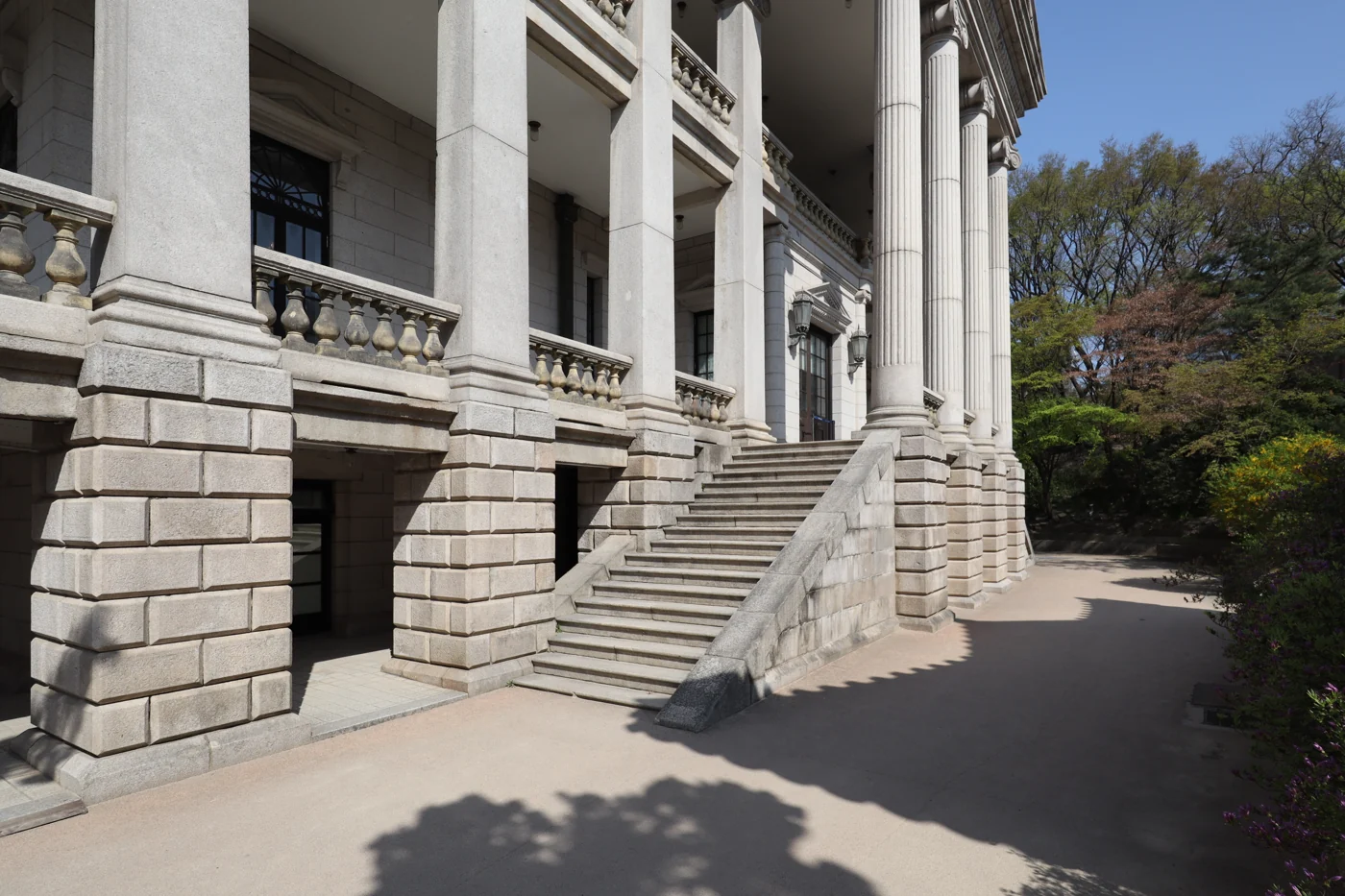
Seokjojeon’s neoclassical main building, completed in 1910, belongs to this imperial modernisation story. It should not be confused with the neighbouring west wing, built later during colonial rule. The contrast between stone halls and timber palace buildings reflects a changing court.
Japan imposed a protectorate in 1905 and annexed Korea in 1910. Modernisation therefore unfolded alongside the erosion and eventual loss of national sovereignty.
Dates to remember
- 1897The Korean Empire is proclaimed.
- 1905Japan imposes a protectorate.
- 1910Seokjojeon is completed; Japan annexes Korea.
Read more: Seokjojeon · palace history · Korea under Japanese rule
 Enlarge photo
Columns and exterior stairs of Seokjojeon’s main building at Deoksugung, photographed in April 2024; a surviving landmark of the Korean Empire.
Mobius6 · Creative Commons Attribution 4.0 International (CC BY 4.0) · Photo source06
1910–1945
Colonial rule & the independence movement
Colonial control transformed daily life and provoked sustained resistance at home and abroad.
Under Japanese colonial rule, Koreans faced political repression, economic exploitation and, increasingly, forced assimilation and wartime mobilisation. The experiences of workers, students, families and independence activists are essential to understanding the period.
The March First Movement began in 1919 with declarations and demonstrations demanding independence. It spread beyond Seoul and was violently suppressed. The Provisional Government of the Republic of Korea was also formed in 1919, initially in Shanghai.
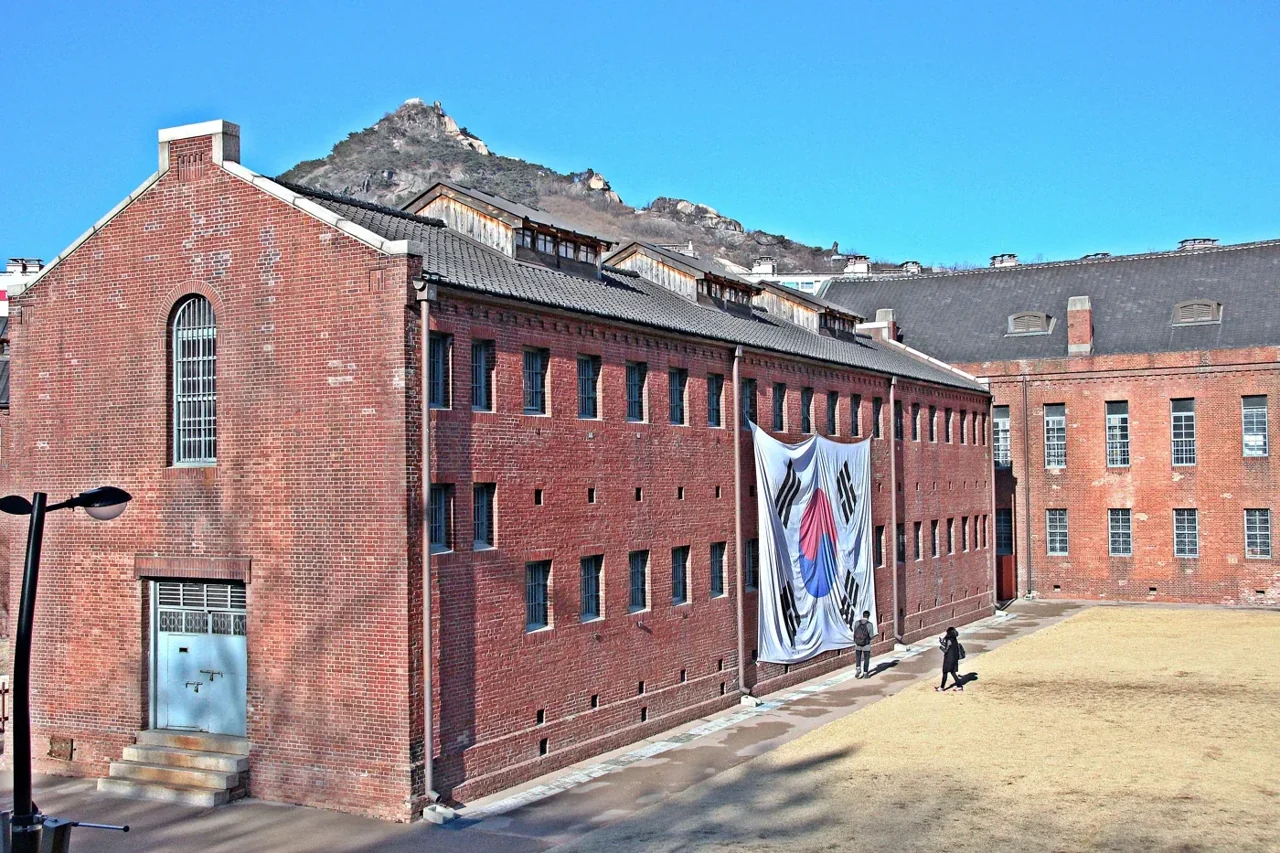
Seodaemun Prison History Hall preserves a former prison associated with the detention and suffering of independence activists. Its museum setting today should be distinguished from archival photographs of the colonial period.
Dates to remember
- 1910Colonial rule begins with annexation.
- 1 March 1919Independence demonstrations begin.
- 1919The Provisional Government is established.
- 1945Japanese colonial rule ends with Japan’s defeat in World War II.
Read more: Korea under Japanese rule · March First Movement
 Enlarge photo
Seodaemun Prison History Hall in Seoul, photographed in February 2013. This modern museum view recalls the imprisonment of Korean independence activists under Japanese rule.
Noh Mun Duek · Creative Commons Attribution-ShareAlike 4.0 International (CC BY-SA 4.0) · Photo source07
1945–1953
Liberation, division & the Korean War
Liberation did not bring a united state. Division and war separated communities and families.
After liberation in 1945, Soviet and US occupation zones divided the peninsula. Separate states were established in 1948: the Republic of Korea in the south and the Democratic People’s Republic of Korea in the north.
North Korean forces invaded the south on 25 June 1950. South Korean and UN forces, including US troops, fought North Korean forces; China later intervened. Civilians experienced destruction, displacement and family separation across the peninsula.
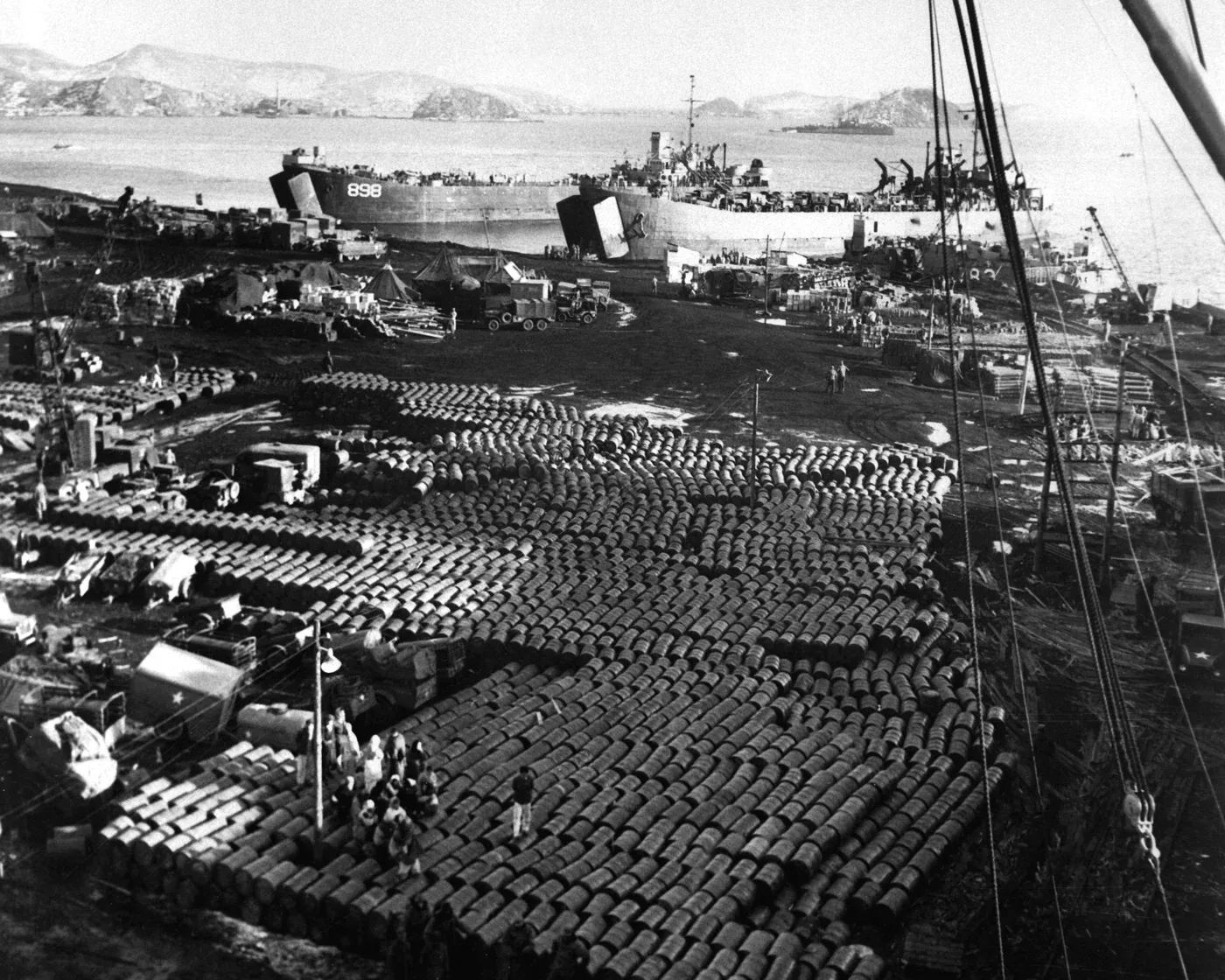
The armistice of 27 July 1953 stopped large-scale fighting and established the demilitarised zone. It was a military ceasefire, not a permanent peace treaty. The photograph here records the evacuation of equipment at Hungnam in December 1950, rather than a scene from a present-day museum.
Dates to remember
- 1945Liberation and division into occupation zones.
- 1948Separate governments are established.
- 25 June 1950The Korean War begins.
- 27 July 1953The armistice is signed.
Read more: US National Archives · 1953 armistice · South Korea · modern history
 Enlarge photo
Supplies and equipment awaiting evacuation at Hungnam on 11 December 1950, during the Korean War; an archival U.S. Army photograph.
Pfc. Emerich M. Christ, U.S. Army · Public domain — U.S. military official-duty photograph (PD-USGov-Military) · Photo source08
1953–1987
Reconstruction, industrialisation & democracy
Rapid economic change went hand in hand with social struggle and demands for democratic government.
Post-war South Korea rebuilt its cities and developed an export-oriented industrial economy. Migration, education, factories and changing work patterns reshaped ordinary lives. The benefits and burdens of this transformation were unevenly shared.
Authoritarian governments restricted political freedoms, while students, workers and other citizens organised for change. The April Revolution of 1960, the 1980 Gwangju uprising and the June Democratic Struggle of 1987 mark important moments in this history.
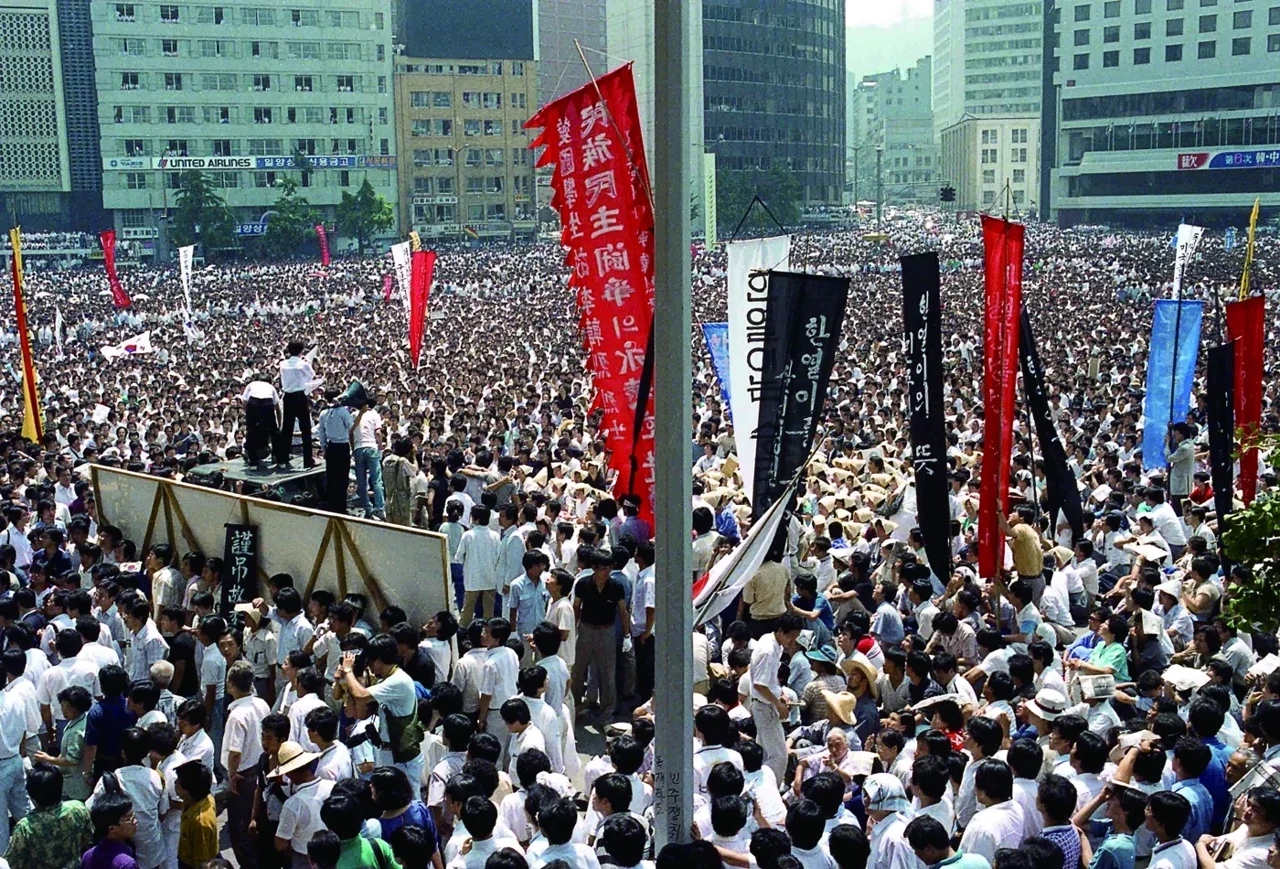
Nationwide demonstrations in June 1987 led to concessions on direct presidential elections and constitutional reform. Democracy developed through continued civic action; a single date does not capture the whole process. The archive image shows mourners for Lee Han-yeol in July, after the June protests.
Dates to remember
- 1960The April Revolution challenges authoritarian rule.
- 1980The Gwangju uprising is violently suppressed.
- June 1987Mass protests demand democratic reform.
- December 1987A direct presidential election is held.
Read more: June Democratic Struggle · South Korea · modern history
 Enlarge photo
Crowds gather outside Seoul City Hall to mourn Lee Han-yeol on 9 July 1987, following the June democracy movement; archival photograph.
Seoul History Archive (서울역사아카이브); individual photographer not named · Korea Open Government License Type 1 (KOGL Type 1) · Photo source09
1988–present
Contemporary Korea: a connected society
Today’s Korea brings together democratic civic life, global cultural connections and the continuing legacies of its past.
The Seoul Olympics in 1988 and the World Cup co-hosted with Japan in 2002 were major international moments. Manufacturing, digital technology and cultural production helped connect South Korea with a wider world.
Film, television, popular music and food now offer many visitors their first introduction to Korea. These are part of a changing contemporary society, alongside debates about housing, work, inequality and demographic change. Modern skylines do not erase older neighbourhoods or historic landscapes.
The peninsula remains divided. This final chapter focuses on present-day South Korea, while the earlier history concerns a wider peninsula and region. Connect the timeline with the site’s destination, food, drama and music guides to see those different layers in everyday travel.
Dates to remember
- 1988Seoul hosts the Olympic Games.
- 2002South Korea and Japan co-host the FIFA World Cup.
- TodayExplore historic places alongside contemporary cities and culture.
Read more: South Korea · modern history
 Enlarge photo
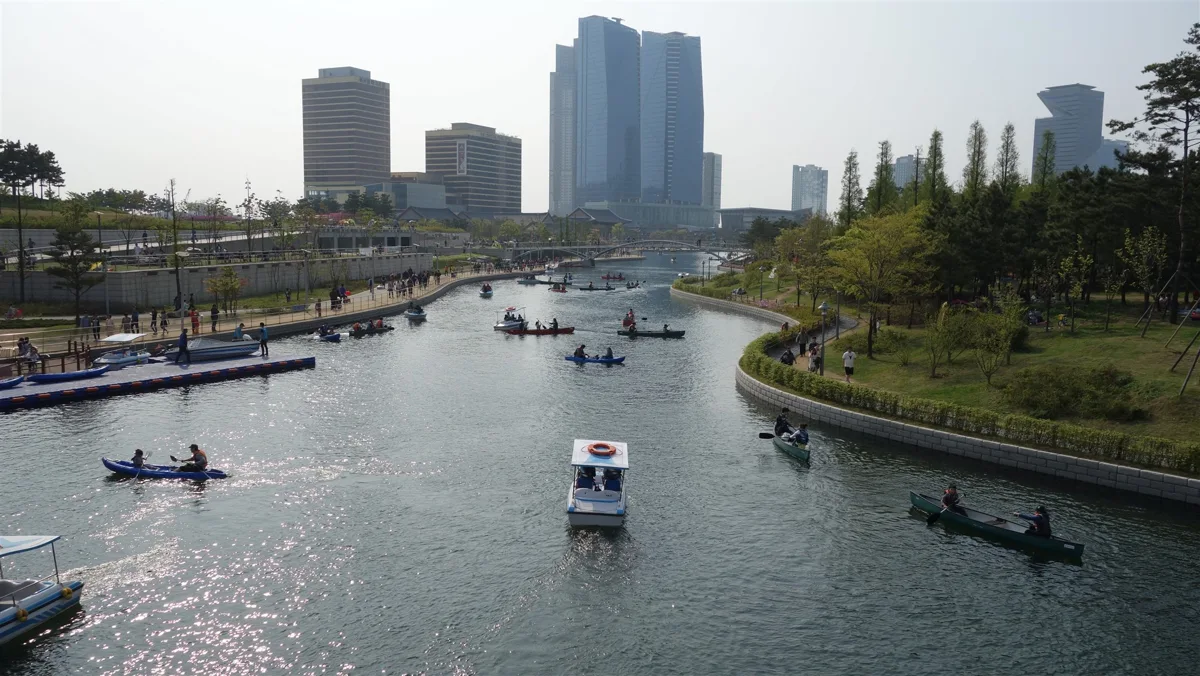
Songdo Central Park in Incheon, photographed in April 2015. This contemporary city landscape is an illustration of urban development, not a live skyline image.
Ken Eckert · CC BY-SA 4.0 · Photo sourceReading the photographs
Ancient-period images show surviving objects, ruins or later restorations. Modern photographs of historic places are labelled as such; they are not pictures taken in antiquity. Archive images retain their original dates and descriptions. Select a photograph to enlarge it and follow its source link for attribution.
Historical Korea extended across areas now in more than one country. The travel links here focus on places in present-day South Korea; a historic capital shown in the text is not automatically a suggested stop on a South Korea itinerary.