Choose by the experience and the journey, not just a pretty photograph. Each guide includes the last local transfer, an overnight base, meals and personal essentials.
Autumn · choose your pace
Rock peaks, living heritage & autumn valleys
Five detailed guides: choose a cable-car view, a proper mountain route, a heritage visit or a forest walk. Compare the effort and arrange your return before leaving.
Archive photographs show the real places, not today’s colour. A photograph of a nearby mountain or another season is labelled below it. Typical foliage timing is not a forecast. Travel-time allowances are editorial estimates; verify current transport, fees and weather before departure.
A quiet half-day from Seoul. Choose the shorter royal-tomb visit, or add the seasonal Bokjagi maple trail if you are comfortable with slopes and steps.
Forest: 1 October–29 November 2026 · Oct 09:00–17:00 / Nov 09:00–16:30. Normally closed Mondays; holiday exceptions and weather closures apply. Royal-tomb grounds open year-round on visiting days.
Tall metasequoia trees and forest paths near Daejeon. Colour can develop later than an early-October trip; a forest walk remains worthwhile before peak foliage.
A temple approach with stairs, historic halls and long views. Visit the temple itself rather than treating the Bonghwangsan name as a summit itinerary.
River, cliffs and an outlook bridge near Chungju. Choose a daylight viewpoint visit; riverside camping and water access have separate safety and operating conditions.
One event at the Agricultural Technology Center, not two destinations. The nearby Maisan photo is explicitly a regional reference, not a photograph of the festival flower beds.
Wide autumn flower fields, rather than a mountain hike. Choose this for colourful photographs and an unhurried garden visit.
2026 autumn opening: August 28–October 31. Listed hours 09:00–19:00, last ticket 18:00; Tuesdays closed. Verify holiday exceptions and current ticket prices.
Visit
Suggested visit: 1½–2 hours. Start with the broad garden paths, then choose the flower beds that are actually blooming. The flower garden and Goseokjeong pavilion are different stops; save the garden entrance pin rather than the generic gorge pin. Stay on paths and leave beds untouched.
Transport
From Seoul, plan the intercity journey towards Cheorwon/Dongsong first, then a local bus or taxi to the flower garden. Do not treat a coach arrival as arrival at the entrance. Confirm the last local return and book a return coach before adding the pavilion. A car is easier for several Cheorwon stops.
Stay
Dongsong is a useful overnight base for meals and buses; a riverside pension suits a car itinerary. Compare the exact address, parking, heating and cancellation terms. A DMZ-tour package is a separate booking and is not included in the garden ticket.
Look for cooked freshwater-fish dishes or rice-and-soup meals around Dongsong/Goseokjeong. Ask whether spicy fish stew is sold per pot with a two-person minimum; solo visitors should check single-portion options. Eat before the return transfer rather than depending on a garden stall.
Closed walking shoes, sun hat, water, light windproof jacket and a charged phone. October mornings can feel colder than Seoul. Use a small bag so you can walk and photograph without blocking the path.
A realistic visit plan
Garden → nearby Goseokjeong pavilion if time permits → meal → return transfer. Keep the two attractions separate in the map.
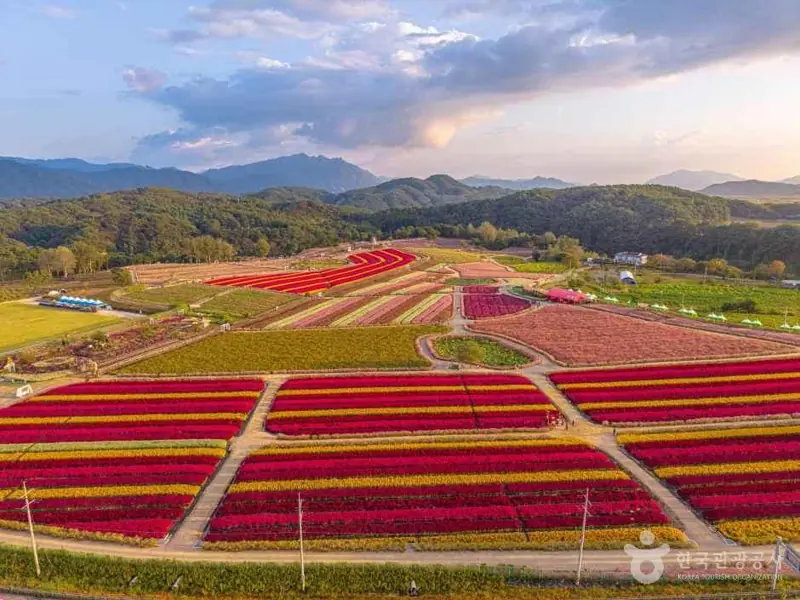
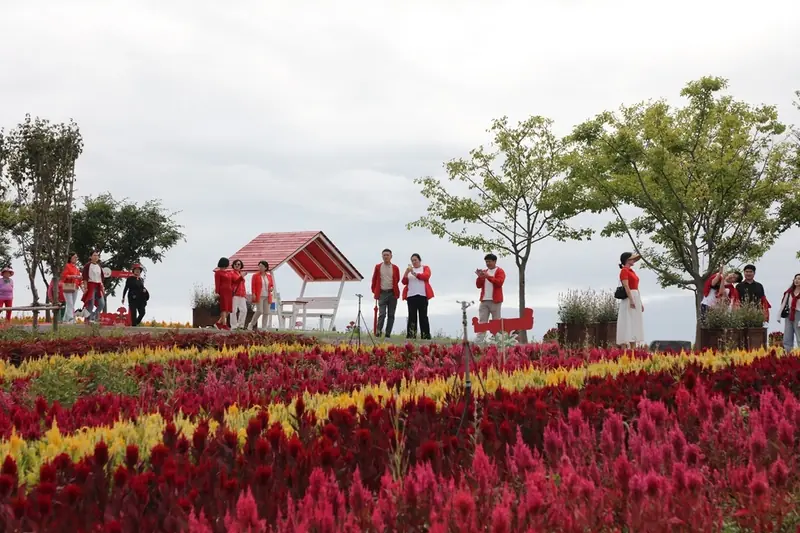
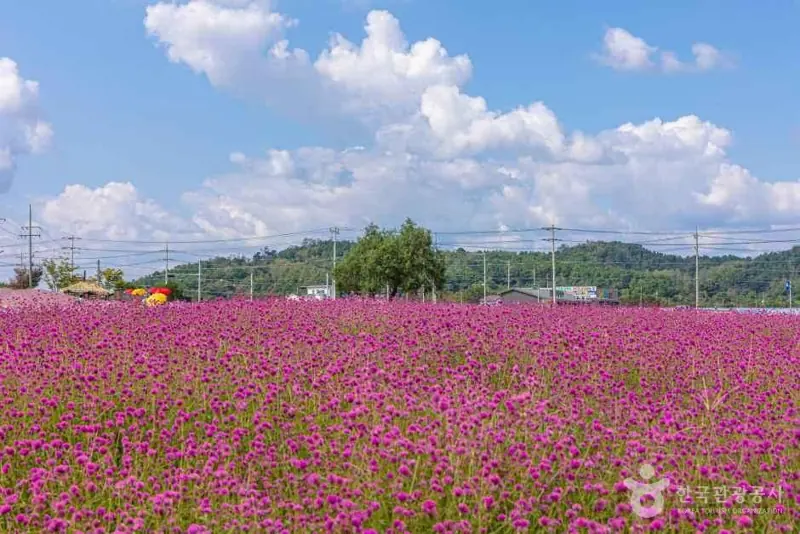
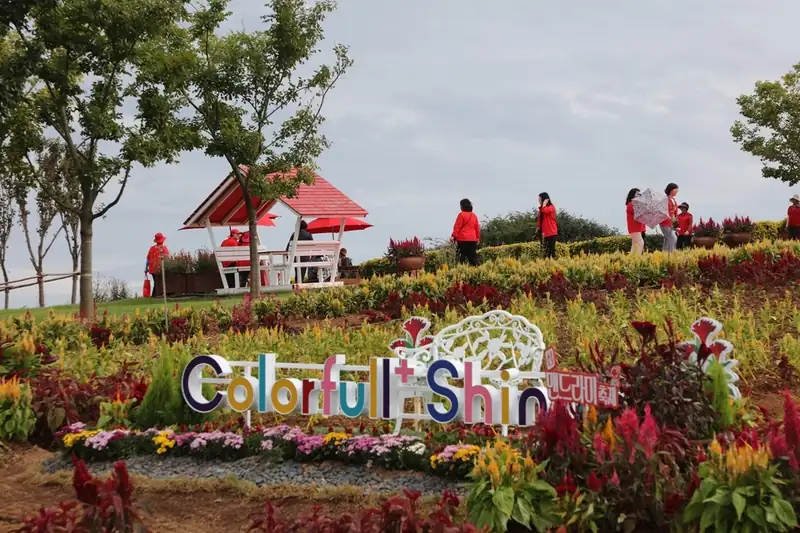
Red celosia fields on an island: plan the ferry before the flower photographs. A suitable slow overnight trip, with weather-dependent access.
The 2026 autumn garden is promoted for October; a 2026 celosia festival was not confirmed. Flowers and peak colour depend on weather. These garden photographs are historical references.
Visit
Allow roughly 1–2 hours at the garden, plus the ferry and local transfer. Walk the designated field paths and use wider views to show the island setting. Do not assume a visit to another Shinan island or an inter-island tidal walkway fits the same itinerary.
Transport
Reach the appropriate Shinan ferry port from Mokpo or your mainland base, then verify the actual Byeongpungdo sailing for your date. Ask which pier serves the garden and how to get from the arrival pier to it. Ferry cancellation and the last return determine the whole day; do not improvise a tidal crossing.
Stay
If the ferry schedule makes a day trip tight, ask an island pension about the exact pier transfer, bedding and dinner availability before booking. Staying in Mokpo offers more hotel and meal choices, but requires another mainland-to-port journey.
Island dining choices can be limited outside busy periods. Confirm that a cooked-fish or rice meal is available on the day, and carry a light snack. Ask about seafood allergens and portion size; do not assume restaurants stay open until the last ferry.
Actual celosia beds at Byeongpungdo, historic 2025 festival report. Official displayed thumbnail suffixed _w600h1.jpg; fetched higher-resolution matching file and visually verified same photo.
Photo credit & context
Actual celosia beds at Byeongpungdo, historic 2025 festival report. Official displayed thumbnail suffixed _w600h1.jpg; fetched higher-resolution matching file and visually verified same photo. · 신안군청 / 북부정원관리사업소 맨드라미정원팀 · Source · KOGL Type 1 (출처표시)
Personal essentials
Photo identification required by the ferry operator, saved booking details, warm windproof layer, non-slip shoes, water and a power bank. Carry motion-sickness medication you already use if needed. Keep a weather backup day.
A realistic visit plan
Port → ferry → garden → pre-confirmed meal → pier with a return buffer. Recheck sailing conditions before leaving the mainland.
White autumn chrysanthemums beneath pine trees. The festival is a rural park visit, not a stop beside Jeongeup railway station.
2026 Gujeolcho Flower Festival: October 8–18. Before opening or after closing, confirm park access separately; festival programmes do not operate all year. This 2026 event/opening period has ended. Confirm any later access directly.
Visit
Suggested park visit: 2–3 hours. Start with the flower-and-pine walking paths and allow extra time for viewpoints and slopes. The paths can be crowded and damp; comfortable shoes matter more than a long list of photo stops.
Transport
Take a train to Jeongeup, then arrange the separate journey to the rural Sannae-myeon park. Check festival shuttle or local bus information for 2026 rather than reusing an old timetable. Save your return pickup point before entering.
Stay
Jeongeup station/city hotels simplify the train connection. A rural pension is useful only with a confirmed transfer or car. If combining Naejangsan, allow another day: its entrance and the flower park are separate journeys.
Festival food booths are convenient while operating, but compare displayed prices and portion sizes first. Jeongeup city offers more reliable cooked rice meals for a late train return. Keep enough time for a meal before boarding.
Grip-soled walking shoes, sun protection, water, a light jacket and a compact rain layer. Carry a small rubbish bag; do not enter flower beds for a picture.
A realistic visit plan
Jeongeup station → park and pine paths → meal → station. Add Naejangsan on a separate day rather than rushing both.
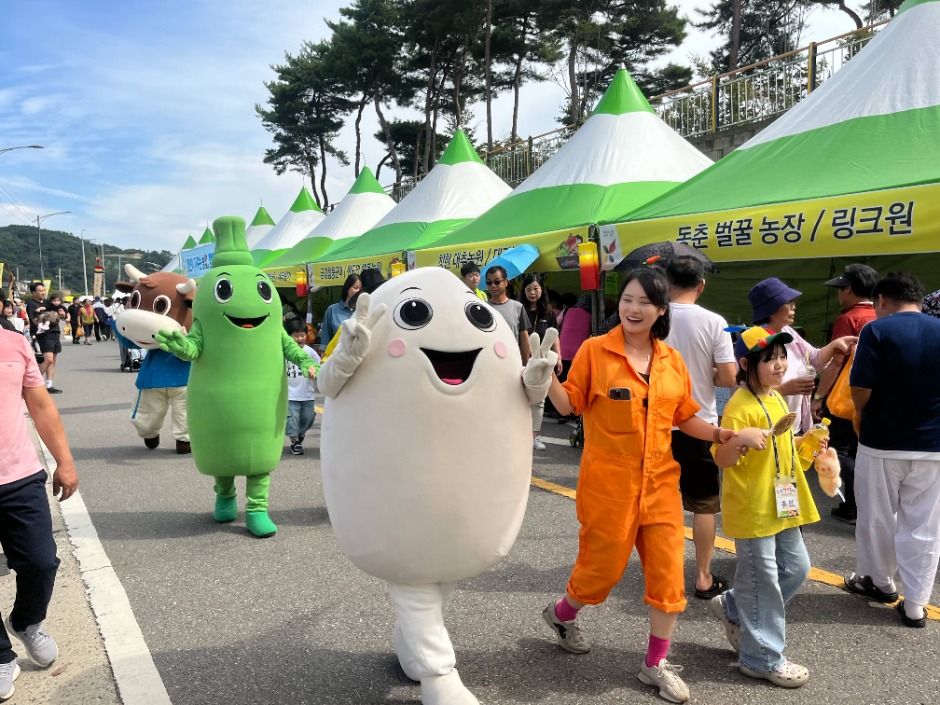
Agriculture, seasonal gardens and food at Miraeji Rural Theme Park. Best for travellers interested in rural produce and hands-on festival activities.
2026 festival: October 2–11, at Miraeji Rural Theme Park in Ochang. Programme sessions, entry arrangements and shuttle information should be checked on the official date-specific guide. This 2026 event/opening period has ended. Confirm any later access directly.
Visit
Allow about half a day if joining activities. Begin with the venue map and choose one activity plus the outdoor garden area. The photograph shows a past festival setting, not this year’s flower conditions or current programme.
Transport
Cheongju city and Osong railway station are different starting points. Map the onward journey to Ochang Miraeji Rural Theme Park before booking your train. Use a confirmed festival shuttle or a bus/taxi plan and verify the last return.
Stay
Cheongju city accommodation suits an overnight with broader dining options; an Ochang hotel can shorten the local drive. Compare transport to the park, not just the distance to Osong station.
Browse regional produce and festival food with displayed prices. Ask whether purchases can be eaten on site and whether cooking, table or equipment charges are extra. Do not carry fresh products for an overseas flight without checking destination import rules.
Actual festival mascot performers, visitors and green/white festival tents; historical undated reference photo, not landscape. 2026 official dates Oct2–11 at 미래지농촌테마공원, https://korean.visitkorea.or.kr/kfes/detail/fstvlDetail.do?cmsCntntsId=613316 .
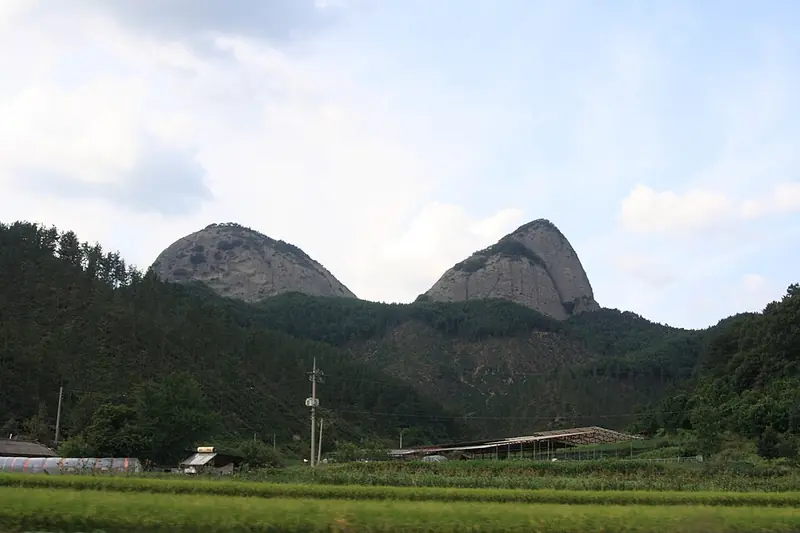
One event at the Agricultural Technology Center, not two destinations. The nearby Maisan photo is explicitly a regional reference, not a photograph of the festival flower beds.
2026 festival: October 4–5. Venue: Agricultural Technology Center, 진안읍 진무로 702-30. Verify garden access outside the two event dates separately. This 2026 event/opening period has ended. Confirm any later access directly.
Visit
Use the Agricultural Technology Center entrance for the flower festival, not Maisan’s temple entrance. Choose the flower paths and scheduled activities from the current venue map. Suggested allowance: 1½–2 hours, excluding queues. Maisan is a separate regional visit.
Transport
Plan an intercity bus to Jinan, then a taxi or confirmed local bus to the Technology Center. Do not assume the terminal and flower grounds are next to each other. Keep the return coach and local connection together in your plan.
Stay
A Jinan town stay makes a relaxed visit easier; a Maisan-area pension needs a separate transfer. Confirm heating, bed type and the exact address. Jeonju offers a wider hotel choice but adds travel in both directions.
Jinan town rice meals are a practical option around the coach journey. Red-ginseng products are a local speciality to browse, not a promised health treatment. Compare packaged-product labels and prices before purchasing.
Nearby Maisan mountain contextual photograph only; NOT Agricultural Technology Center flower garden. Caption must state nearby mountain.
Photo credit & context
Nearby Maisan mountain contextual photograph only; NOT Agricultural Technology Center flower garden. Caption must state nearby mountain. · Joachim Dirauf · Source · CC BY 3.0
Personal essentials
Walking shoes, warm outer layer, water and downloaded map pins. Autumn mornings on the plateau may be cooler than the daytime forecast.
A realistic visit plan
Jinan terminal → Technology Center flower visit → town meal → return. Add Maisan only with a separate transfer and time allowance.
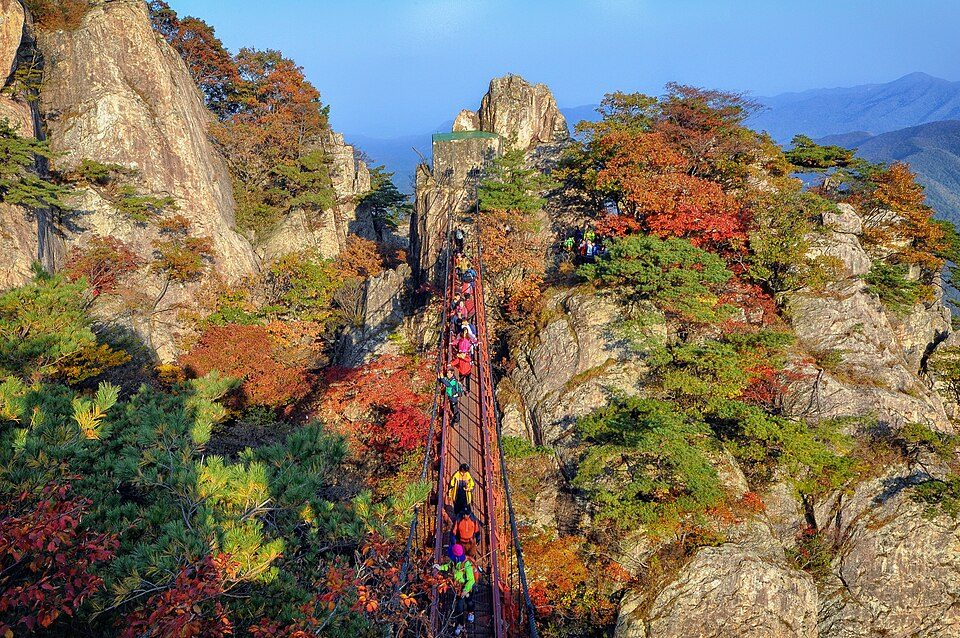
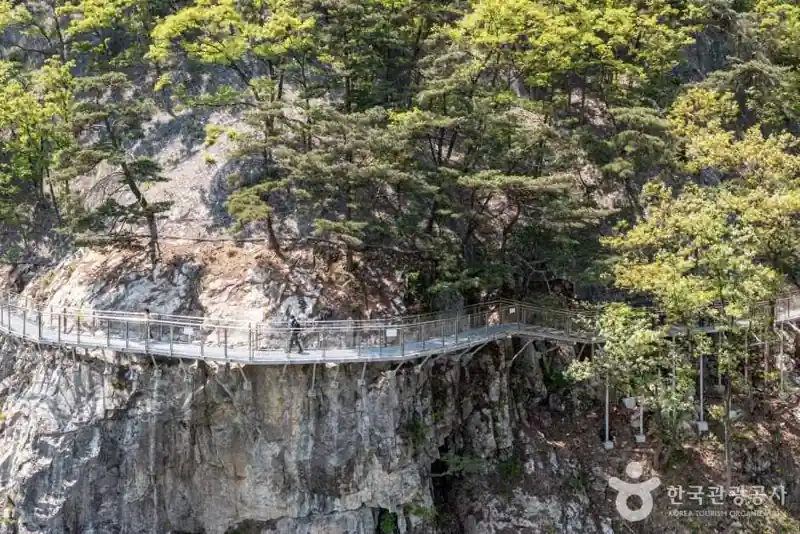
Bridges and an elevated cliff walk above a forested valley. Choose this for dramatic views, while considering stairs, heights and weather closures.
Monday closure is listed by the operator, with holiday exceptions. Opening times and ticket packages vary; confirm the current cable-car and bridge combination rather than relying on old bridge-only prices.
Visit
Allow about half a day locally. Choose the route and ticket that match your mobility and tolerance of heights before paying. A cable car does not mean every walkway is stair-free. Follow the posted walking direction and turn back when the operator closes a section.
Transport
Plan Seoul–Wonju/Manjong rail services for your date, then a separate bus or taxi to the Ganhyeon visitor entrance. Check your chosen arrival station: it changes the local transfer. Save the entrance address 소금산길 12 and leave a buffer for queues before the return train.
Stay
Wonju city is a useful rail-and-meal base. A Ganhyeon-area stay can shorten the morning drive but needs a confirmed return connection. Compare actual accommodation addresses and taxi availability.
Ganhyeon entrance eateries are convenient for a cooked meal after the walk. Confirm single-person availability and closing times before entering the attraction; Wonju city offers more options before the train.
Secure walking shoes, water, windproof layer and a zipped bag. Keep hands free on stairs; avoid loose hats on windy bridges. Check the weather before leaving the station.
Tall metasequoia trees and forest paths near Daejeon. Colour can develop later than an early-October trip; a forest walk remains worthwhile before peak foliage.
Typical colour develops in late autumn, often late October–November; this is not a 2026 peak forecast. The official site has a 2026 campground suspension notice: do not book on the assumption camping is operating.
Visit
Start with the ground-level tree avenues; add an elevated walkway only if it is open and comfortable for you. Suggested forest visit: 1½–2½ hours. Our overlook and green-path photos show the place, not current autumn colour.
Transport
From Daejeon station or your city hotel, plan the local journey to 장안로 461. Check bus connections and the last return; a rural bus stop is not interchangeable with Daejeon station. A taxi or car offers more flexibility for a short daylight visit.
Stay
Stay in Daejeon for easy meals and train access. Forest accommodation must be booked through the operator with its current status checked; cabins and campsites are different products. The camping closure does not automatically mean the daytime forest is closed.
Choose a cooked meal in Daejeon before or after the forest. If using a rural entrance restaurant, check today’s opening and the portion minimum rather than assuming it serves solo visitors or late dinners.
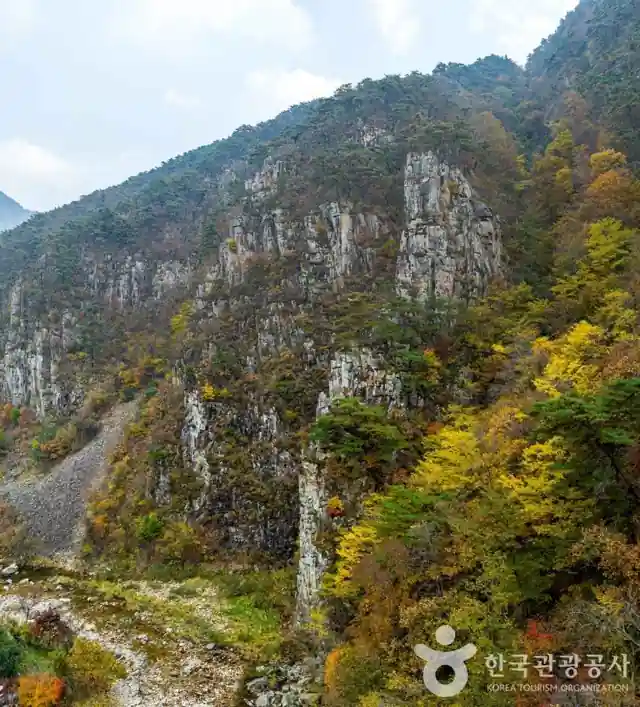
Actual mountain overlook near Daejeon; October15 2023 reference image. Mountains/forested landscape, not specifically the recreation-forest tree avenue.
Photo credit & context
Actual mountain overlook near Daejeon; October15 2023 reference image. Mountains/forested landscape, not specifically the recreation-forest tree avenue. · VaneTrz20 / Wikimedia Commons · Source · CC0 1.0
Personal essentials
Grip-soled shoes for damp leaves, water, an extra warm layer and a small rain cover. Use walking sticks only where allowed, and keep elevated walkways clear for other visitors.
A realistic visit plan
City base → tree avenues → optional open skywalk → city meal and hotel/train.
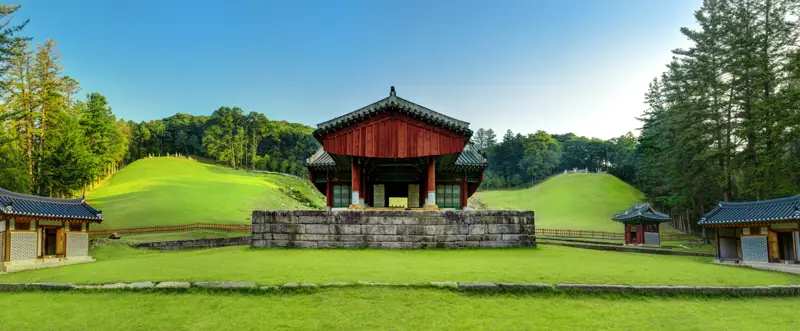
Stonework and autumn trees in a remote mountain setting. It rewards a slow visit, but the last local transfer needs planning before arrival.
Foliage changes with elevation and weather. Confirm opening and last-entry times with the operator for your date; historical October photos are not current colour reports.
Visit
Allow 1½–2 hours as an editorial estimate. Follow the marked stone paths and account for uneven surfaces and steps. This is a cultural-site walk, not a promise of a flat accessible garden or a Jirisan summit hike.
Transport
Arrive in Hadong, then arrange the separate journey to Cheonghak-dong/Samseonggung. A rural bus can involve a long wait; confirm both directions before committing. A car or a pre-arranged taxi return is usually easier for a short trip.
Stay
Hadong town gives more transport and meal choices. A Cheonghak-dong pension suits a slow car-based stay, but verify the exact approach road, heating and dinner options. Do not add a distant river stay without checking the transfer.
Look for cooked mountain-vegetable meals near your route and verify portion minimums. Hadong tea is a regional speciality, but tea plantations and Samseonggung are separate locations. Keep lunch simple if the return transfer is fixed.
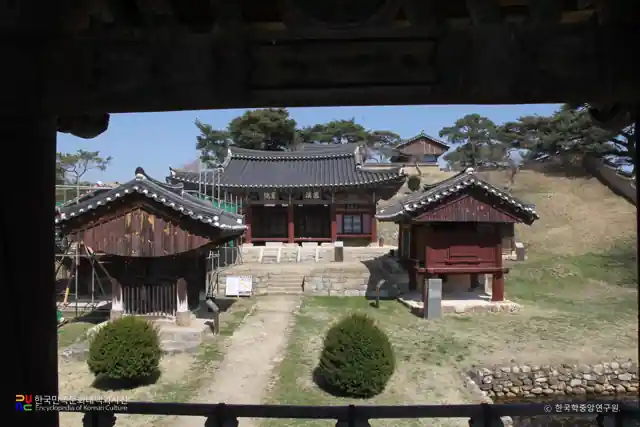
Main shrine grounds in Hadong with stonework and autumn trees. Historic October photograph.
Photo credit & context
Main shrine grounds in Hadong with stonework and autumn trees. Historic October photograph. · Steve46814 · Source · CC BY-SA 3.0
Personal essentials
Non-slip closed shoes, warm layer, water, rain cover and offline map pins. Mobile reception can vary in mountain areas; save the driver’s pickup details.
A realistic visit plan
Hadong base → Samseonggung paths → pre-confirmed lunch → return. Add another Hadong stop only if the driving route fits.
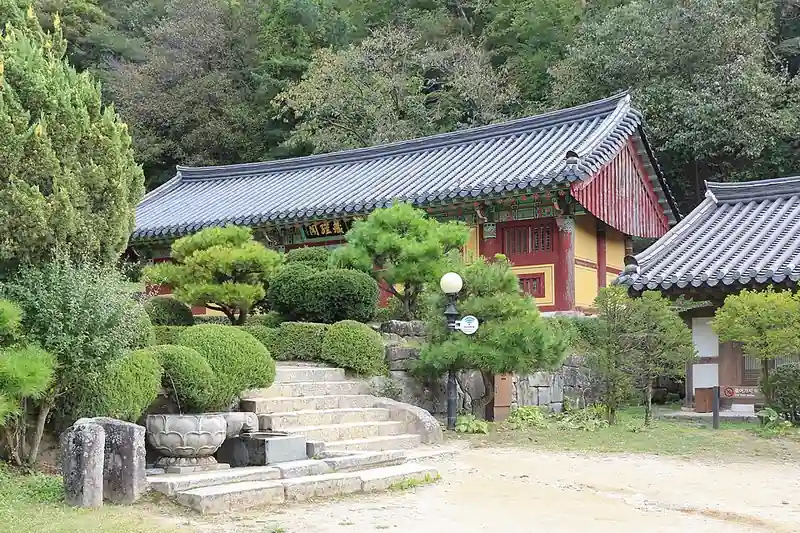
A temple approach with stairs, historic halls and long views. Visit the temple itself rather than treating the Bonghwangsan name as a summit itinerary.
Autumn colour varies year by year. Temple access and programme hours should be checked separately; no fixed 2026 peak date is claimed.
Visit
Suggested temple visit: 1½–2 hours. Walk from the entrance towards the upper halls, resting on the steps and looking back over the layered temple roofs. Respect prayer areas and posted photography restrictions. Mobility-limited visitors should ask about the accessible approach before travelling.
Transport
Plan a rail or coach arrival in Yeongju, then a separate local transfer to 부석사로 345. Confirm the temple bus and last return for the travel day. Keep the return station connection realistic rather than scheduling a meal and another attraction into the same short window.
Stay
Yeongju city is a practical base for train travellers. A temple-area pension needs a confirmed local transfer; a templestay is a separate reserved programme with its own rules, not ordinary drop-in accommodation.
Buseoksa Sikdang at 부석사로 317 appears in Yeongju’s official food listings, with mountain-vegetable meals and salted-mackerel dishes. Ask the restaurant about current prices, portion minimums and fish allergens. Its address is separate from the temple gate.
The bridge between the fourth and fifth peaks is reached on a mountain hike. This belongs with hiking preparation, not an easy roadside photo stop.
Check the official trail notices and weather before setting out. Do not copy a duration for a different Jinan cloud bridge. A peak-foliage date and a verified bridge photograph are not currently claimed.
Visit
Choose a published trail that fits your fitness, daylight and descent time. The bridge is an intermediate mountain destination; reaching it requires ascent. If stairs, exposure or a steep return are unsuitable, choose a valley or town walk instead. See K-Hiking for preparation.
Transport
Travel to Jinan and arrange the separate transfer to the actual Gubongsan trailhead/parking area. Map the trailhead, not merely the bridge. Pre-arrange a return taxi if local transport cannot match the descent time.
Stay
A Jinan overnight avoids making a long intercity journey before an early hike. Check breakfast availability and transport to the trailhead. A rural pension may be closer on the map but need a car.
Carry your own light trail lunch and enough water. Plan a cooked meal in Jinan after descending; do not rely on vendors operating at the bridge. Ask about portions and closing times before the hike.
Hiking shoes with grip, water and food, windproof and insulating layers, rain protection, charged phone, offline trail map and a headlamp for delays. Tell someone your route; do not start late to catch a sunset photograph.
A realistic visit plan
Overnight base → confirmed trailhead → bridge only if conditions permit → descent with daylight → meal. Keep a lower-level backup.
A temple and wooded stream approach for a relaxed autumn walk. Red spider lilies are chiefly a September attraction, not a guaranteed October bloom.
For October, plan the temple and forest rather than promising full-bloom spider lilies. The displayed temple photo was taken in summer and is explicitly a place reference, not an autumn report.
Visit
Allow 1½–2½ hours for the main temple and a short streamside approach. Longer Dosolam or mountain routes need their own time and difficulty plan. Stay outside flower beds and respect worship spaces.
Transport
Plan a coach to Gochang, followed by a confirmed local bus or taxi to Seonunsa. Check the final return before taking a longer forest walk. Save the temple visitor entrance, not a remote mountain summit.
Stay
Gochang town suits bus travellers; a Seonunsa-area stay can make an early walk easier if meals and transport are confirmed. Ask about heating, bed type and the exact pickup location.
Gochang is associated with freshwater eel; compare the restaurant’s current per-weight price, cooking charges and portion minimum before ordering. A simpler rice meal may suit solo visitors and tighter bus connections.
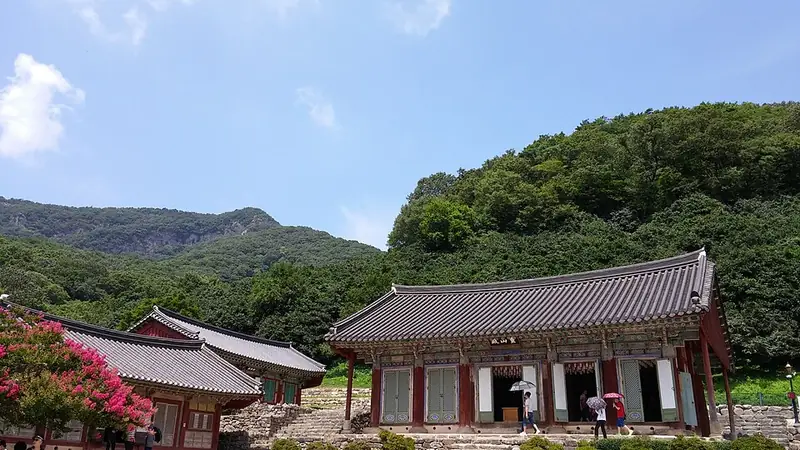
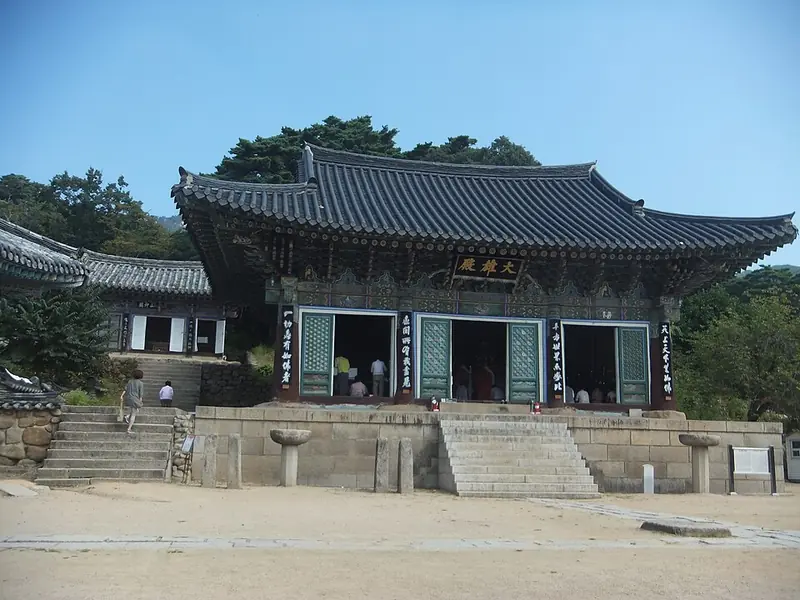
Actual Seonunsa Daeungjeon and summer green mountain background. NO red spider lilies shown. Explicit contextual temple photo only.
Photo credit & context
Actual Seonunsa Daeungjeon and summer green mountain background. NO red spider lilies shown. Explicit contextual temple photo only. · Euchan0224 · Source · CC BY-SA 4.0
Personal essentials
Grip-soled walking shoes, warm layer, water and a light rain cover. Leaf-covered streamside stones can be slippery. Carry only what you can keep secure on a quiet temple walk.
A realistic visit plan
Gochang → temple and short forest walk → cooked meal → terminal. Leave longer mountain routes for a hiking plan.
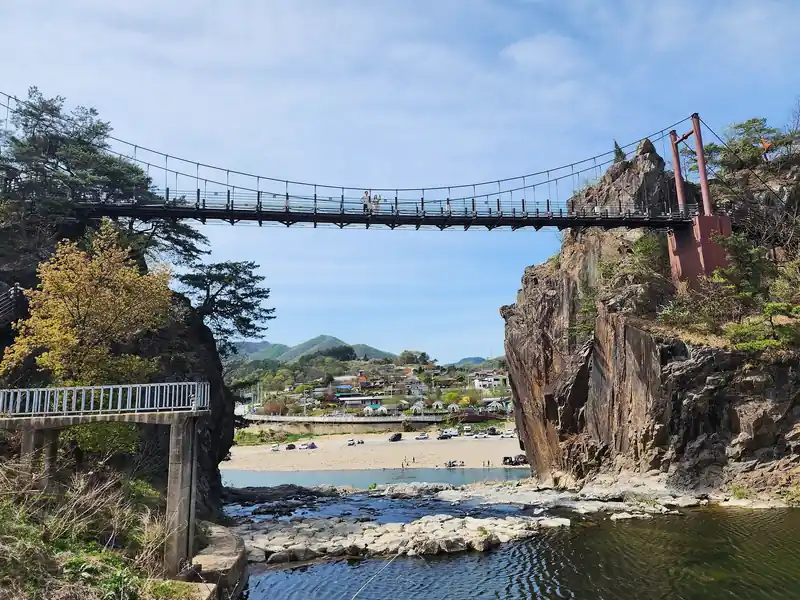
River, cliffs and an outlook bridge near Chungju. Choose a daylight viewpoint visit; riverside camping and water access have separate safety and operating conditions.
The actual bridge photo is from April 2024, not live autumn colour. Check posted bridge and riverside restrictions after rain; access is not guaranteed by an old travel article.
Visit
Suggested viewpoint visit: about one hour, excluding local travel. Use the marked approach and observe bridge signs. Do not enter the river or assume a campsite visible in a photograph is open or freely bookable.
Transport
Reach Chungju by rail or coach, then plan a separate car or taxi journey to the viewpoint. Confirm pickup and return before leaving the city, especially for an evening train. A vague Sujupalbong map pin can lead to a different riverbank.
Stay
Chungju city accommodation offers meals and onward transport. Camp only in a currently authorised, operating location and check its weather policy; a hotel stay is the simpler option for visitors without camping equipment.
A city rice-and-soup meal before or after the rural view is practical. For a riverside restaurant, check today’s opening and seafood portions. Do not rely on seasonal stalls for your only meal.
Actual bridge between river cliffs in April 2024. Current access and autumn colour must be checked separately.
Photo credit & context
Actual bridge between river cliffs in April 2024. Current access and autumn colour must be checked separately. · 경기도 뉴스포털 · 기회기자단 이우영 기자 · Source · KOGL Type1 (출처표시)
Personal essentials
Walking shoes, windproof jacket, water, charged phone and offline map. Stay back from unguarded river edges, especially after rainfall or at dusk.
A realistic visit plan
Chungju base → viewpoint and open bridge approach → city meal → station or hotel.
A lakeside stroll and café stop within a Seoul-area outing. Plan the rural last leg; this is not a subway-adjacent park.
Use the currently open lake paths and obey maintenance signs. Photos are historical references and do not establish the present colour or status of the whole loop.
Visit
Allow 1–2 hours for an unhurried waterside walk and a rest. Start at the official park address 고모리 678-1 and use the marked open sections. Decide how far to walk before daylight and the return bus become tight.
Transport
From Seoul, map your chosen metro/bus transfer towards Pocheon, then the separate Gomo-ri last leg. A car or a planned taxi simplifies the rural connection. Confirm the actual return bus stop, not just the arrival search result.
Stay
A day trip usually needs no hotel. If staying overnight, compare Pocheon accommodation by the drive to the park and your next stop; a lakeside café is not a lodging listing.
A Gomo-ri café can be a rest stop, but check whether it serves a full meal. For a restaurant, compare menu prices and single-portion availability. Budget a meal before the rural return connection.
Comfortable shoes, light windproof layer, water and charged phone. A small torch can help if delayed, but schedule the walk for daylight rather than relying on it.
A realistic visit plan
Seoul → park walk → confirmed café or meal → return. Add another Pocheon attraction only if the transport route fits.
A temple visit from Daegu, with the Seungsi festival treated as a separate programme requiring current confirmation.
A reliable 2026 Seungsi date was not verified. Do not reuse the 2025 dates. The 2026 Nakhwa fire component was reported excluded; do not plan on seeing that display.
Visit
Suggested temple visit: 1½–2 hours. Choose the principal halls and outdoor views, keeping prayers and restricted areas clear. The image shows the actual main hall, not a festival performance. Mountain summit routes are separate hikes.
Transport
Use Daegu as the main arrival base and verify the current local bus/taxi connection to Donghwasa. The Palgongsan area is outside the city centre. Keep a return buffer rather than assuming a festival shuttle exists.
Stay
Daegu city hotels are practical for rail arrivals and evening meals. A Palgongsan stay can shorten the morning transfer but requires the exact address and return transport to be checked.
Choose a cooked meal near the approach or eat back in Daegu. Ask about minimum portions for shared dishes. Festival food availability should not be assumed when the programme date is unconfirmed.
A cultural event to keep on a future-trip list, not a confirmed October attraction.
The official regional event page lists July 3–4, 2026. No October 2026 show was verified. Past photographs or festival videos do not confirm another performance.
Visit
Do not travel expecting a drop-in fire display. First obtain a current dated announcement, entry/reservation requirements and the exact venue; the listed address is 괴산4길 25.
Transport
If a future event is announced, plan the intercity journey and a separate local return from the venue. Evening crowd-control and last-bus arrangements are event-specific.
Stay
Book a Haman or nearby city stay only after the event and return transport are confirmed. Check cancellation terms before paying for a date-sensitive visit.
For a confirmed future outdoor evening event: walking shoes, warm layer, charged phone and booking details. Follow fire and crowd-control instructions.
A realistic visit plan
Confirm the event first → reserve required entry → plan transport, stay and meal. For this October, choose one of the verified flower or forest guides instead.
Choose one main landscape: Hwangmaesan’s high silvergrass plateau, or Haeinsa and Hongryudong’s forest approach. They need separate local journeys.
The park publishes dated silvergrass-condition updates. A 2026 festival date has not been verified here; 2025 festival dates must not be reused. Autumn forest colour varies with weather and elevation.
Visit
For silvergrass, map the official Hwangmaesan visitor/parking approach and choose the designated plateau paths, not a summit ascent. Allow roughly 2–3 hours locally as an editorial estimate. For a cultural forest day, walk an open Hongryudong/Sori-gil section and visit Haeinsa; choose a turnaround point rather than committing to an unfamiliar full trail.
Transport
Reach Hapcheon or a suitable regional gateway, then arrange the distinct local journey to your chosen attraction. Haeinsa and Hwangmaesan are not neighbouring walking stops. A car makes a two-day regional circuit easier; without a car, confirm both local transfers and choose one main destination each day.
Stay
For Haeinsa, compare Gayasan/Haeinsa-area accommodation with access to the temple approach. For silvergrass, verify a mountain-area pension’s exact access road or use a Hapcheon town base. Templestay requires a separate programme reservation; a camping pitch is not a room.
Hapcheon Hanwoo is a regional choice for a shared cooked beef meal; confirm per-weight prices, cooking/table charges and minimum order. Around Haeinsa, cooked mountain-vegetable meals can suit a temple day. A solo traveller should verify single-portion options before travelling to a rural restaurant.
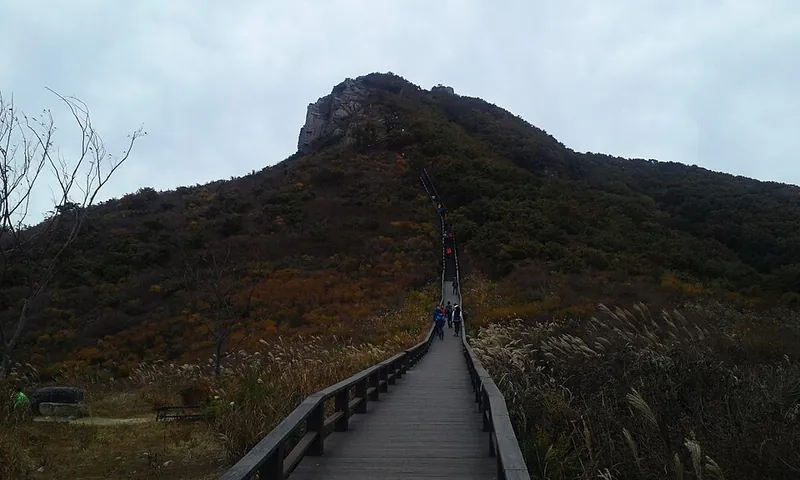
Historic October photograph of Hwangmaesan in Hapcheon: mountain staircase/trail and silvergrass bordering it. Not a current bloom or festival claim.
Photo credit & context
Historic October photograph of Hwangmaesan in Hapcheon: mountain staircase/trail and silvergrass bordering it. Not a current bloom or festival claim. · Choi2451 · Source · CC BY-SA 3.0
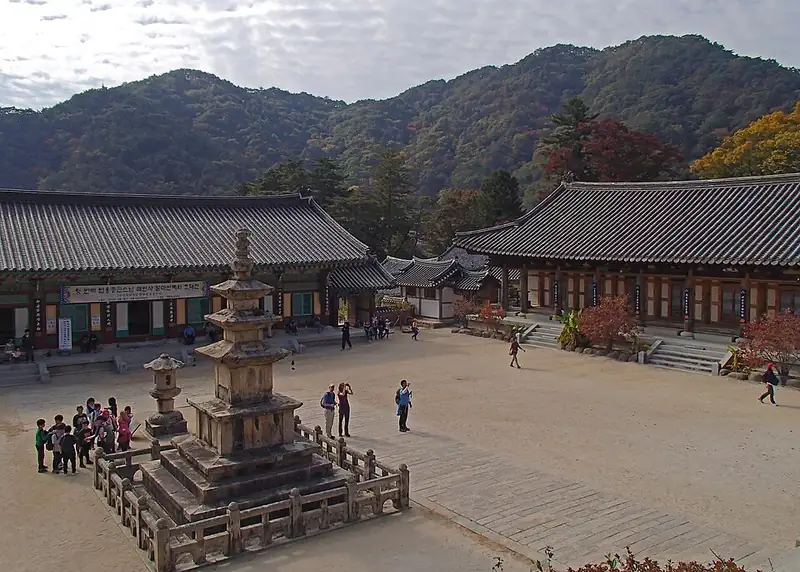
Actual Haeinsa courtyard, pagoda and temple buildings with autumn trees and Gayasan hillside. Not Hongryudong valley.
Photo credit & context
Actual Haeinsa courtyard, pagoda and temple buildings with autumn trees and Gayasan hillside. Not Hongryudong valley. · Lcarrion88 · Source · CC BY-SA 3.0
Personal essentials
For the plateau: grip-soled walking shoes, warm insulating layer, windproof jacket, water, snacks and sun protection. For the temple forest: rain layer and secure footwear for damp leaves. Carry offline map pins and a charged phone; do not rely on a windy ridge for a late transfer.
A realistic visit plan
Day 1: one Hwangmaesan silvergrass visit and local meal. Optional Day 2: separate Haeinsa/Hongryudong forest visit. Allow road transfers and a weather backup rather than rushing both into a short day.
 01