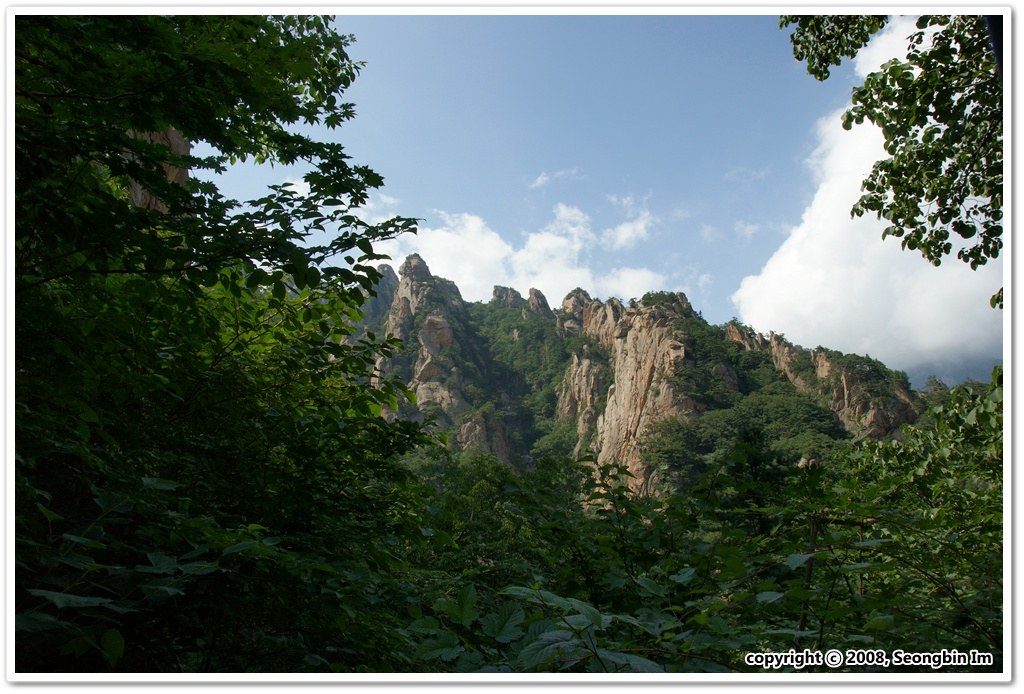
Summer · 4 August 2008
Jujeongol valley
Rock walls and clear water along the Osaek valley path.
Valley day allowance: 3–4 hr, including return
View practical guideSeongbin Im · CC BY-SA 2.0 · Photo source
AUTUMN · OSAEK, YANGYANG · 주전골 · 용소폭포
Walk beside clear pools and granite walls from Osaek on Seoraksan’s southern side. This is a valley day based in Yangyang or Osaek, separate from the Sokcho/Sogongwon entrance.
Practical autumn plan reviewed 30 September 2026 · source-based planning, not a field visit or live transport feed.
Rock walls and clear water along the Osaek valley path.
Valley day allowance: 3–4 hr, including return
View practical guideSeongbin Im · CC BY-SA 2.0 · Photo source
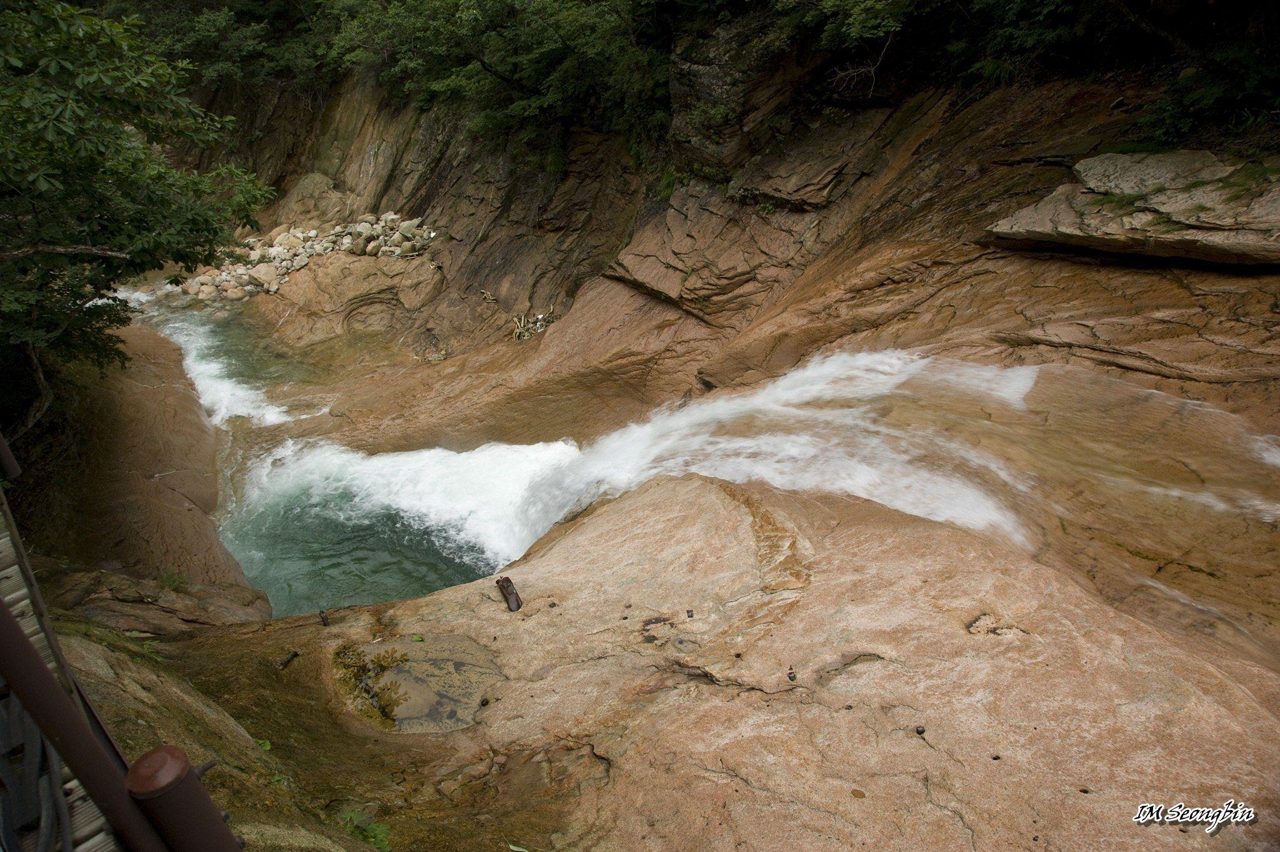
A waterfall and rock pool reached by the signed spur.
Part of the valley day; check the open route
View practical guideSeongbin Im · CC BY-SA 2.0 · Photo source
Time allowances are planning estimates, excluding transport. Photographs show past seasons; check current foliage and access for your date.
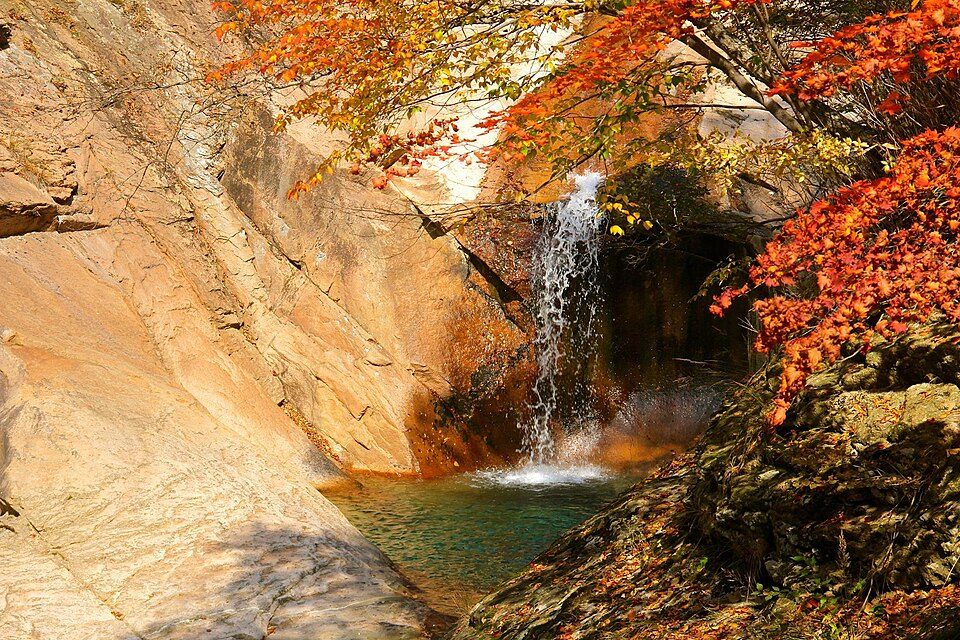
Historical photographs. Open a photo for the larger view; colour and conditions on your date may differ. Photos are resized for display; individual reuse licences apply.
오색약수터탐방지원센터
설악산 성국사
설악산 주전골 선녀탕
설악산 용소폭포
The map locates places; the numbered list is a planning sequence, not a surveyed hiking track. Search results can be approximate. Match your start and junctions with the official entrance map and signs.
The KTO 2026 mountain-wide forecast gives Seoraksan’s peak around 25 October. It is not a separate forecast for the lower Jujeongol valley. Compare recent dated Osaek/Jujeongol photos and the weather before choosing a day; different elevations turn at different times. The photographs below are historical references, not live foliage reports.
Reserve a Seoul–Yangyang coach using the exact terminal on the ticket, then connect at Yangyang Integrated Passenger Terminal (양양종합여객터미널). Yangyang BIS lists local route 1 to Osaek (오색). Check the date-specific detailed departures and the reverse direction; the overview’s last bus is not proof of the last return from Osaek.
Ask the driver for the Osaek stop suitable for 오색약수터탐방지원센터. Walk through the village to the valley-start signs. 남설악탐방지원센터 is the separate steep Daecheongbong summit start; 소공원 is on the Sokcho side. Neither is a substitute for this valley entrance.
Save the Osaek return stop and two departures before starting. Budget 60–90 minutes as a connection buffer at Yangyang before an onward coach, more if roads are congested. Staying in Osaek shortens the morning approach; staying by Yangyang terminal simplifies the onward coach. If a connection fails, ask your accommodation or the local information desk to call a taxi and confirm the fare.
Follow signs from the Osaek spring-side visitor support centre through Seongguksa and the Jujeongol valley towards Seonnyeotang, Geumgangmun and the Yongso Falls junction. Stay on the marked path and use the signed Yongso spur. Return towards Osaek on the permitted route after checking the current direction rules at the entrance.
The published 3.2 km / 1 hour course runs between the spring-side and Yongso Falls visitor support centres. It is a through-course figure, not the complete return outing from the Osaek bus stop. For the valley-and-waterfall visit returning to Osaek, use our 3–4 hour planning allowance, plus village approach, meals and buses. Follow the entrance map for the exact open route; do not double an uncertain waterfall distance.
Shorter option: walk only the open lower valley and turn around at a comfortable landmark before fatigue or your bus deadline. This reduces walking but does not guarantee step-free access: expect bridges, steps, wet leaves and uneven sections. Do not climb down to pools for a photograph.
Seonnyeotang (선녀탕) and Geumgangmun (금강문) are landmarks along the Jujeongol approach towards Yongso Falls. Look from the marked path and follow the current entrance map; use them as pauses within the valley outing, rather than separate hikes with their own return transport.
The summer photographs in the cards show Jujeongol and Yongso Falls, not close-up photographs of these two landmarks. Wet rock and pool edges are unsuitable photo shortcuts. Keep your turnaround deadline even when stopping for the scenery.
At the Yongso Falls junction, follow the waterfall signs and check the permitted return direction. The waterfall visit forms part of the 3–4 hour valley-day planning allowance; the published 3.2 km through-course is not the full bus-stop-to-waterfall return outing.
Heullimgol is a separate, longer route starting at 흘림골탐방지원센터 and joining at the Yongso Falls junction. KNPS currently lists the 3.1 km section as one-way, about 2 hr 30 min, with reservations in October–November. That time ends at the junction and does not include the walk back through Osaek.
The booking notice concerns Heullimgol; it does not by itself establish a reservation requirement for every lower Jujeongol walk. Check the named route’s current notice and access controls. Never enter Heullimgol uphill from the junction against its one-way rule. If you want Heullimgol, arrange its separate start transport and booking rather than adding it casually.
Day 1: Seoul → Yangyang; check the Osaek connection, leave luggage at your confirmed accommodation and eat locally. Choose Yangyang terminal area for transport convenience or Osaek for a shorter next-morning approach. Ask about luggage storage and breakfast hours.
Day 2: reach the Osaek valley start in the morning, read the access notice, walk the valley/waterfall route within your return deadline, eat near the village and travel back via Yangyang. For a day trip from Seoul, use only the shorter permitted walk if transport is late; do not squeeze in a summit or Heullimgol.
Illustrative local-day allowance: ₩30,000–60,000 per adult for simple meals, drinks, local bus and a small contingency. This is an editorial planning allowance, not an observed average or package. Accommodation, Seoul–Yangyang coach, taxis, spa admission and other paid activities are excluded. Confirm transport and optional admission charges separately.
Eat or buy supplies in Osaek village before walking. Sanchae bibimbap (산채비빔밥) and simple soup/rice meals are useful choices to look for; verify one-person ordering and current opening hours. Ask about fish stock, meat and seafood even in vegetable dishes. Carry water, a snack and a warm/rain layer.
A hot-spring visit is optional: check whether the chosen facility admits day visitors, its fee, towel rules and closing time. Do not promise access simply because a hotel advertises “Osaek hot spring”. If sleeping in Sokcho, budget a separate journey to the southern entrance rather than treating Osaek as a nearby city-bus stop.
Rain can make decks, stones and fallen leaves slippery; heavy rain or a park closure means cancelling the valley walk, not searching for a side path. Remain in Osaek for an operating indoor meal/spa, or return to Yangyang for an indoor stop. A beach or another mountain path is not automatically a safe bad-weather alternative.
Start turning back before the last useful bus, keep your phone charged and read out the nearest park location sign if you need help. Osaek park enquiries: 033-801-0973; Seoraksan office: 033-801-0900; emergency: 119. Ask for transport help while still in the village rather than waiting beside the mountain road after dark.
Review date applies to this autumn plan only. Check access, weather and transport again for your date. We do not claim a completed visit, booking, measured trail distance or current foliage observation.
Click Biondi to chat. Drag the top bar to move this window. AI answers may need checking.
Where would you like to go?