Read & measure
Read the exact packet you are cooking. Measure its stated water amount; one product’s instructions do not apply to every ramyeon.
FLOVA FILM · 27s · 9:16
A 27-second introduction to packet soup ramyeon. Read your packet for its own water quantity, ingredient order and cooking time; cup noodles use a different method.
Read the exact packet you are cooking. Measure its stated water amount; one product’s instructions do not apply to every ramyeon.
Bring the water to a boil. Add noodles, soup base and flakes in the order given on the packet.
Let the noodles loosen and follow the packet’s cooking time. The short film condenses the wait; it is not a real-time cooking timer.
Optional: top with sliced spring onion and a separately cooked egg. Start with the basic bowl, then compare the other flavour ideas below.
COOK ALONG
Fry the spices first for a deeper flavor. A 2-minute 31-second cooking clip with ingredient pictures, English narration and 11 subtitle options.
Video recipe: 1 packet of ramyeon with its seasoning; 550 ml water; 1 teaspoon each of gochugaru, soy sauce and minced garlic. Use enough oil to lightly coat the pot and napa cabbage or onion to taste. Follow the packet noodle cooking time. Check packet labels for allergens. The written basic ramyeon guide below uses a different method. Original digital illustrations and English AI narration. Recipe reference
KOREAN KITCHEN · RAMYEON
Learn the basic pot method, then add egg, vegetables, kimchi or cheese with confidence.
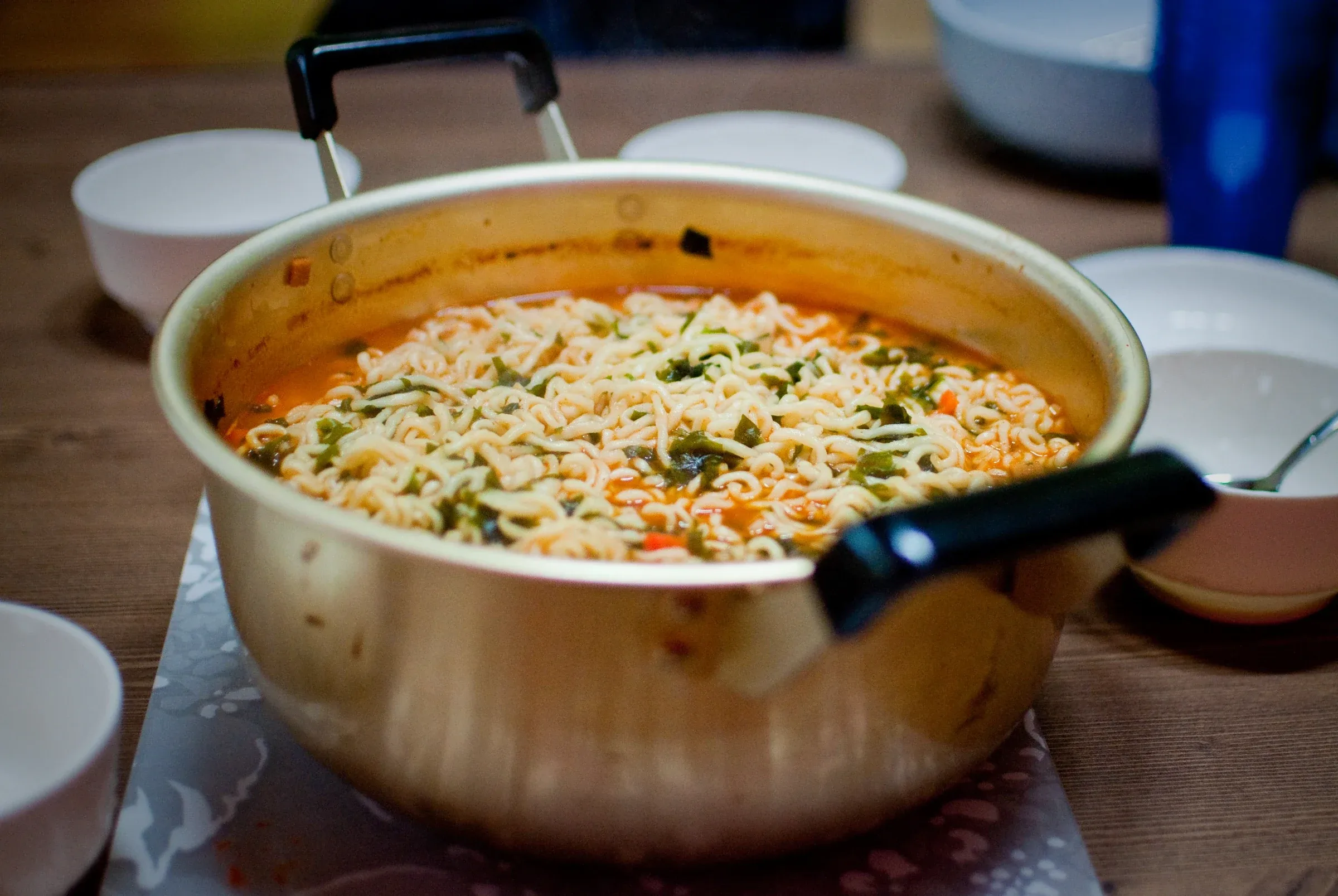
Ramyeon is Korea’s everyday instant-noodle favourite. A good bowl depends on measured water, a proper boil and serving the noodles as soon as they are ready. This guide starts with one packet of soup-style ramyeon. Dry or stir-fried noodle products have different instructions.
COOK WITH THIS PAGE
Check off ingredients, follow one uncluttered step at a time and keep the timer on the same screen. Your checklist is saved only on this device.
BEFORE YOU START
Tap each box as you place the ingredient on your worktop.
| Ingredient | Amount | What to look for |
|---|---|---|
| 1 packet | Keep the seasoning and dried-vegetable sachets. | |
| The quantity printed on your packet | For the 120 g Shin Ramyun example below: 550 mL. Other products differ. | |
| ½–1 stalk, optional | Thinly slice; separate the pale and green sections. | |
| 1, optional | Cook separately for the easiest control over doneness. | |
| A small handful, optional | Try thinly sliced mushrooms, bok choy or cabbage. | |
| 2 tablespoons, optional | Use safely stored kimchi; it adds salt and acidity. | |
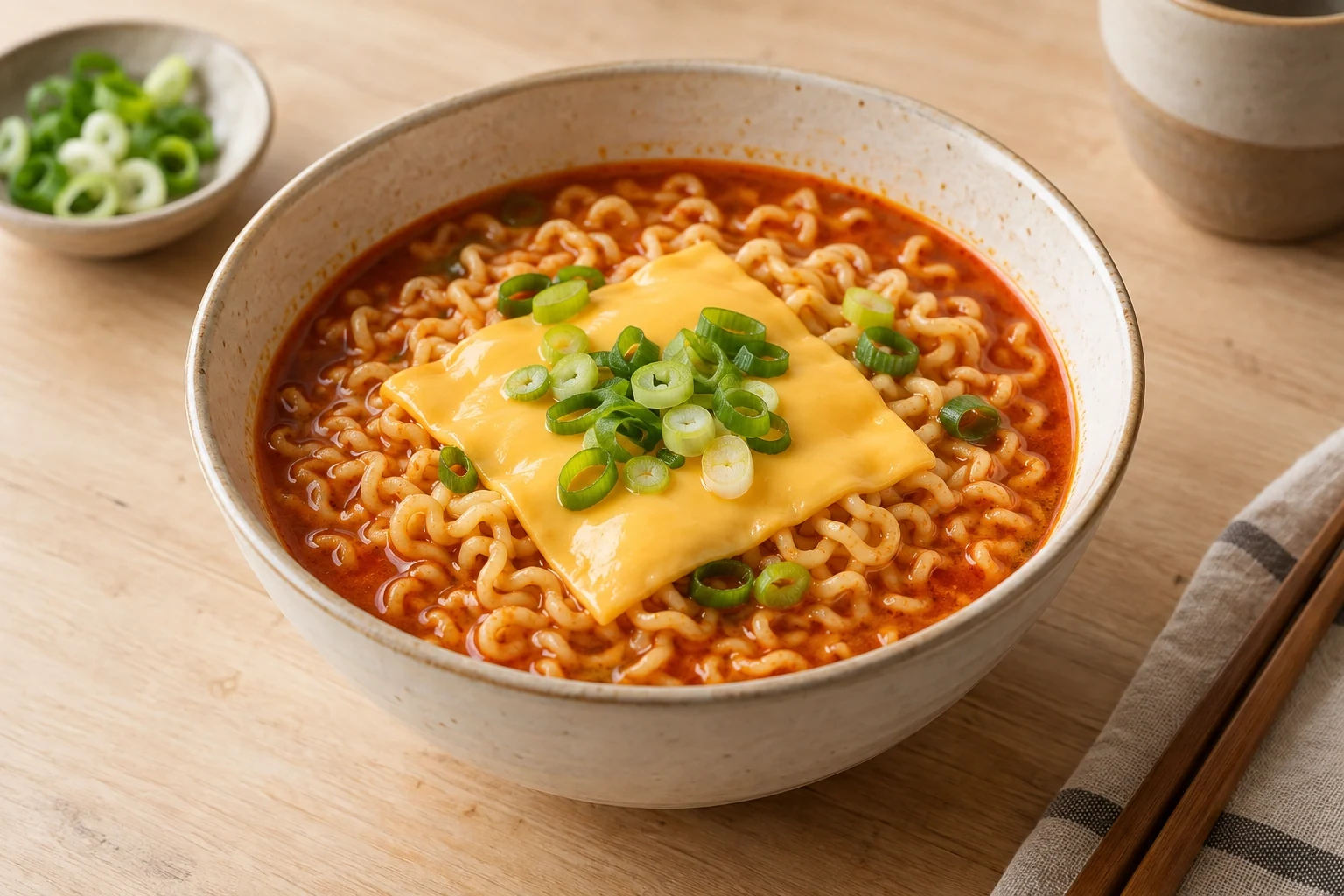
| 1 slice, optional | Add after turning off the heat. Check milk allergens. |
Begin with the basic bowl before adding several extras. A heavily loaded pot needs more heat and cooking time. Read the packet for wheat, soy, egg, milk, fish and shellfish ingredients; a vegetable flavour name does not guarantee a vegetarian product.
TAKE IT ONE STEP AT A TIME
Step-by-step mode is on. Only your current step is shown; use the controls below to move through the recipe.
Identify whether the noodles are soup-style, stir-fried or a cup product. Find the stated water amount and cooking time. Place the sachets beside the cooker and note whether any finishing oil or sauce is added after cooking. Do not put an ordinary cup container directly on the stove.
Kitchen note Use this pot method only for products whose packet provides stovetop instructions.
Wash and slice the spring onion and vegetables before you boil the water. For a simple egg topping, cook an egg separately until the white and yolk are firm, then peel or slice it. Put the serving bowl nearby so the finished noodles are not left sitting in the pan.
Kitchen note For the first attempt, choose one or two extras rather than every ingredient listed above.
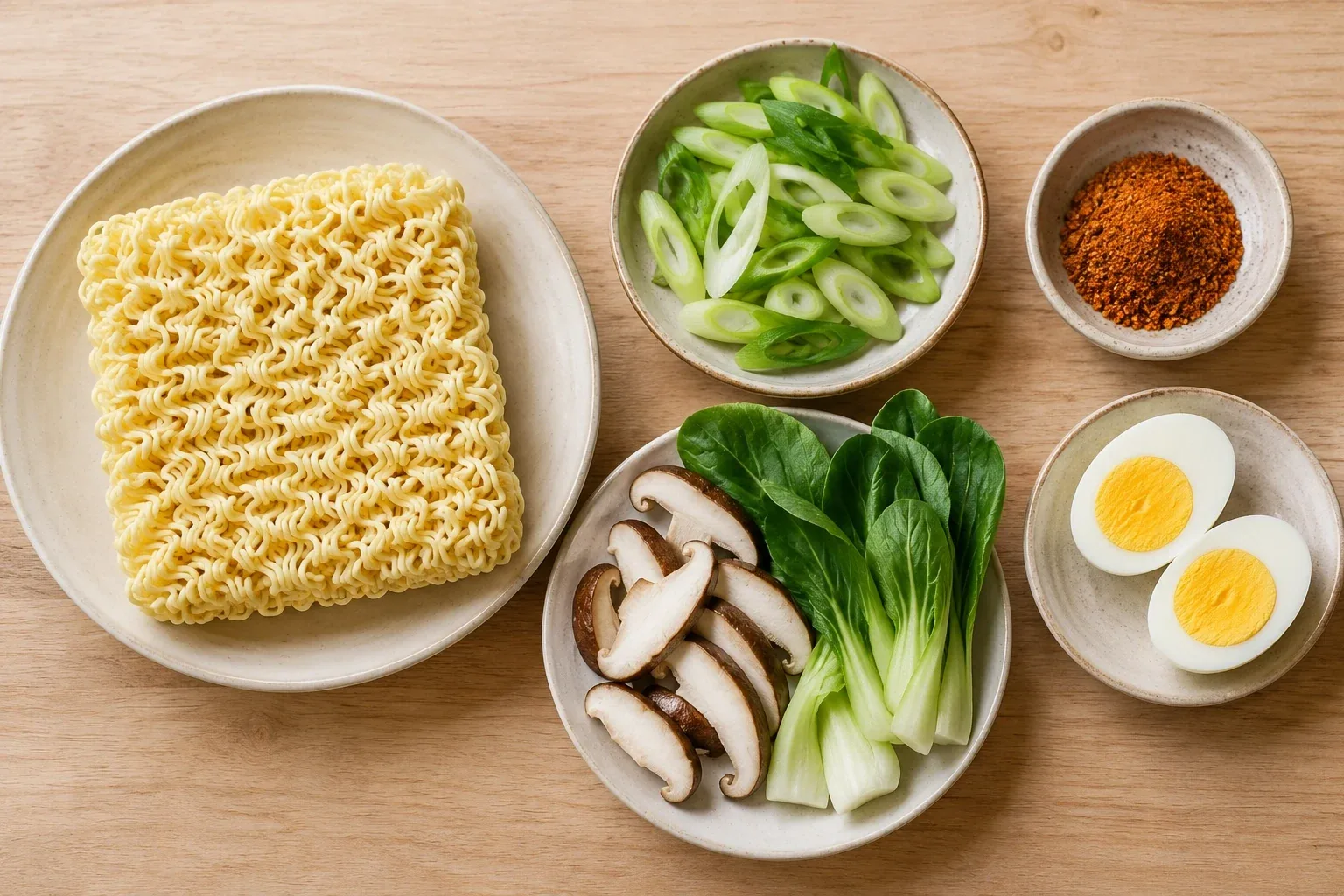
Use a measuring jug rather than filling the saucepan by eye. For the standard 120 g Shin Ramyun example, the manufacturer gives 550 mL and a cooking time of 4–5 minutes. Your own packet takes priority because product size and regional versions can differ.
Kitchen note Less water concentrates salt as well as flavour. If you prefer less seasoning, start with part of the sachet and taste near the end.
Heat the measured water until bubbles rise strongly across the surface. Add the seasoning and vegetable sachets in the order directed on your packet. Add firm, thinly sliced vegetables now if using them; let the water return to a boil before adding the noodles.
Kitchen note A weak simmer after adding cold ingredients can leave the noodles unevenly cooked.
Lower the noodle block carefully into the water to avoid splashing. Start the packet’s timer. As the block softens, gently separate the strands with chopsticks or tongs. Keep a steady boil, lowering the heat slightly if the broth threatens to overflow.
Kitchen note Gently loosen the noodle block as it softens. Follow your packet’s seasoning order and cooking time.
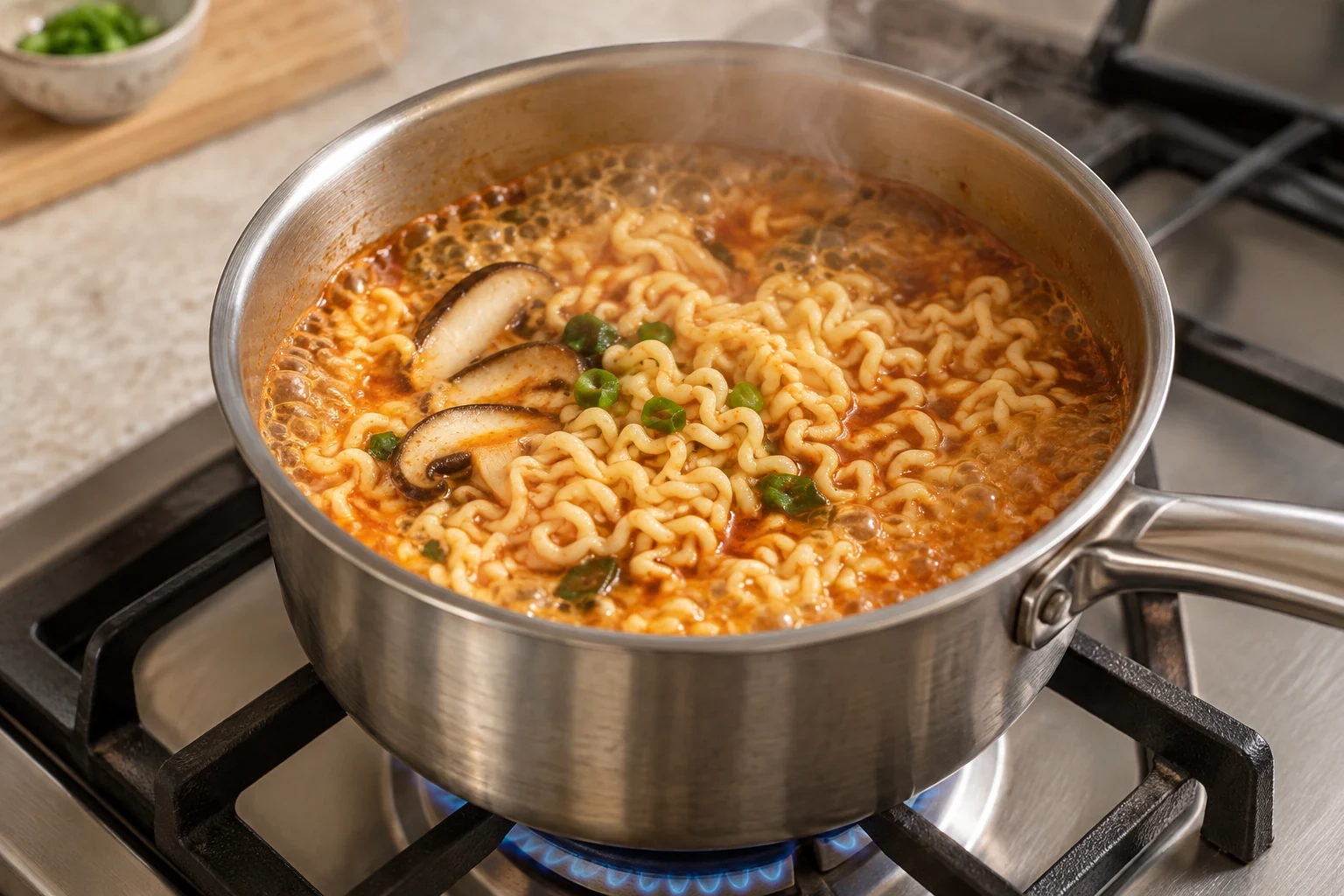
Add leafy vegetables and the green spring-onion pieces near the end so they keep some texture. A separately cooked egg can be placed on top when serving. If you cook an egg in the soup instead, ensure it is fully cooked; noodle timing alone is not an egg-safety check.
Kitchen note Cook raw meat or seafood separately to a safe internal temperature before using it as a topping.
Near the packet’s finish time, lift a strand with clean chopsticks. It should bend easily but still have a little bite. Taste a small spoonful of cooled broth. If it is too concentrated, add a small splash of hot water. If using cheese, turn off the heat and let one slice soften on top.
Kitchen note The noodles continue to soften in hot broth after the heat is turned off.
Transfer the broth and noodles carefully into the heatproof bowl. Add the cooked egg and remaining spring onion. Use a spoon for broth and chopsticks or a fork for noodles. Allow the first mouthful to cool; a just-boiled bowl and its steam can burn.
Kitchen note For two people, two separate batches often give a beginner more control than one crowded pot.

CONFIDENCE IN THE KITCHEN
Egg & spring onion: make the basic bowl, then top with a separately cooked egg and sliced spring onion. Kimchi ramyeon: add 2 tablespoons of chopped, safely stored kimchi with the broth; begin with less packet seasoning because kimchi contributes salt. Cheese ramyeon: make the basic bowl and melt one slice of cheese over it after turning off the heat. These are finishing ideas, so the packet still controls the water and noodle cooking time.
Add a small handful of thinly sliced mushrooms to the boiling broth, then the noodles. Add a few cubes of ready-to-use tofu and leafy greens near the end and heat them through. Do not assume the packet is vegetarian: use a clearly labelled vegetarian or vegan product if that matters to you. A large quantity of cold toppings can stop the boil and change the result.
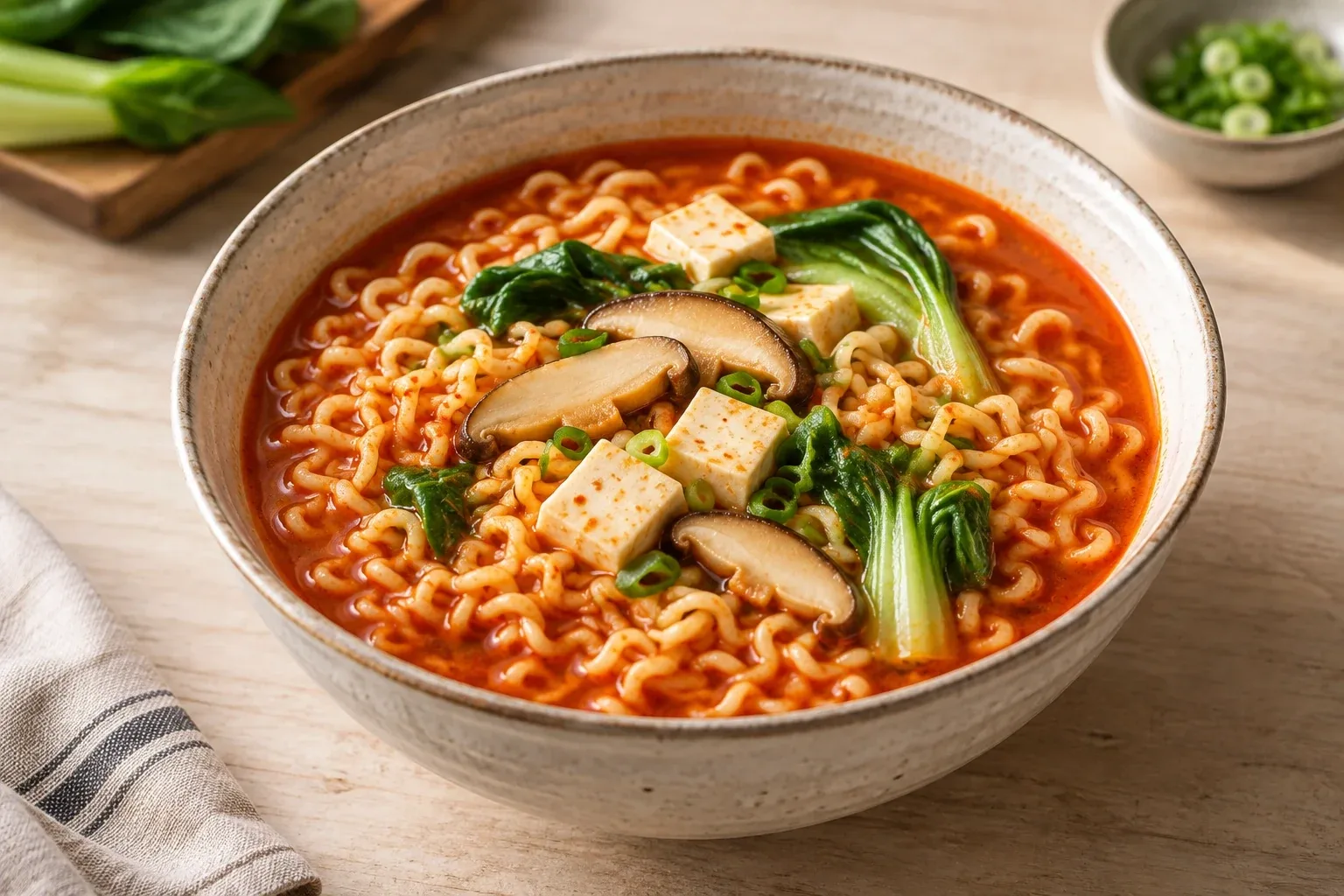
Soup ramyeon is served with its cooking broth. Products such as jjajang-style or spicy stir-fried instant noodles often require draining most of the water and then mixing in sauce. Follow that packet’s retained-water quantity. Do not drain a soup packet or leave all the water in a dry-noodle product unless its own instructions say to.
Cook eggs until both white and yolk are firm. If you add raw meat, use a food thermometer and the correct minimum temperature for that ingredient; do not judge it by the noodle timer. The linked FoodSafety.gov chart lists 74°C for poultry and leftovers. Keep raw-ingredient boards and utensils separate from ready-to-eat toppings.
Ramyeon tastes best immediately because the noodles absorb broth. If saving leftovers, transfer them promptly into a shallow container, refrigerate within two hours and use within 3–4 days. Reheat thoroughly to 74°C. A long period on the counter cannot be fixed by boiling the soup again.
They cooked too long or sat in hot broth after cooking. Have your bowl and toppings ready first, use the packet timer and serve immediately.
For the current bowl, add a little hot water. Next time measure the water carefully and try only part of the seasoning. Kimchi, cheese and processed toppings can add further salt.
Many soup packets allow the seasoning and noodles to go in together; some cooks dissolve seasoning first. Follow your product’s directions, especially if it includes a finishing sauce or oil.
Choose a mild noodle product first. Using less seasoning usually reduces both heat and salt, but it also changes the broth flavour. Extra vegetables or cheese may soften the eating experience without removing the chilli.
The terms are related, but this page teaches Korean packaged instant ramyeon. Restaurant ramen made with separately prepared stock, tare, noodles and toppings follows a different workflow.
Click Biondi to chat. Drag the top bar to move this window. AI answers may need checking.
Where would you like to go?