Prepare & salt
Prepare napa cabbage and distribute salt between the leaves according to your chosen recipe. Allow the required salting time before moving on.
FLOVA FILM · 27s · 9:16
A 27-second introduction to whole-leaf napa cabbage kimchi. Salting, draining and fermentation take additional time; the film compresses these stages.
Prepare napa cabbage and distribute salt between the leaves according to your chosen recipe. Allow the required salting time before moving on.
Rinse the salted cabbage thoroughly and drain it well. The drained cabbage is a later stage, not an instant change from fresh leaves.
Mix the recipe’s chilli, garlic, ginger, radish, spring onion and fish sauce. Use clean food-safe gloves to spread the seasoning between leaves.
Pack into a clean container and follow the complete recipe for storage and fermentation. Serve the finished kimchi with rice; fish sauce makes this version non-vegan.
COOK ALONG
A whole-leaf recipe without radish, with ingredient pictures and measured quantities. English narration with 11 subtitle options.
Video recipe: one whole cabbage, salted for about 2 hours. Contains wheat and fish. The written chopped-cabbage recipe below uses a different method. Original digital illustrations and English AI narration. Recipe reference
KOREAN KITCHEN · KIMCHI
A small batch of chopped-cabbage kimchi, with each preparation stage explained.
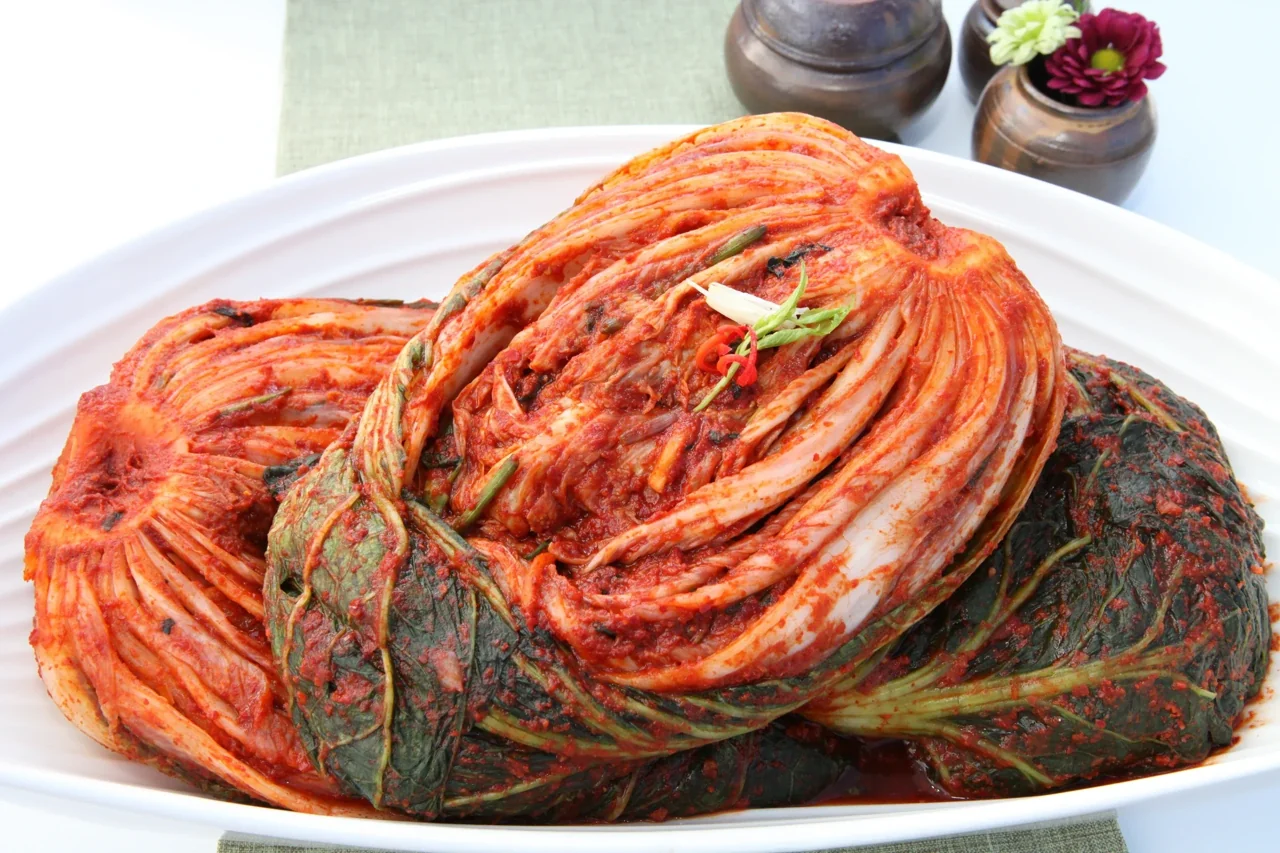
Kimchi is a family of seasoned vegetable dishes. This guide makes mak-kimchi: napa cabbage cut into serving-sized pieces before seasoning. Expect crisp white stems, tender leaves, chilli warmth, garlic and a flavour that becomes tangier as the kimchi matures.
COOK WITH THIS PAGE
Check off ingredients, follow one uncluttered step at a time and keep the timer on the same screen. Your checklist is saved only on this device.
BEFORE YOU START
Tap each box as you place the ingredient on your worktop.
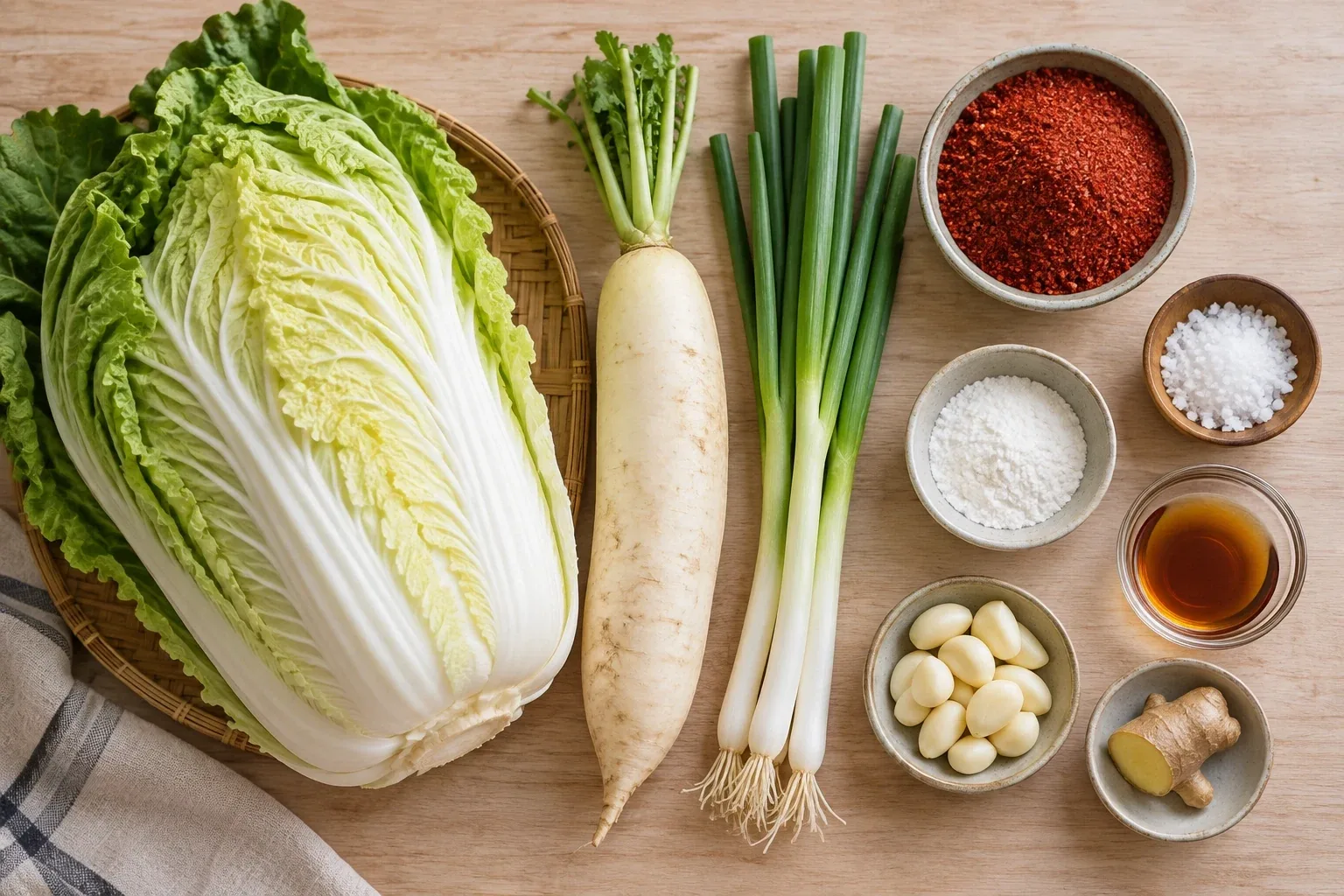
| Ingredient | Amount | What to look for |
|---|---|---|
| 1 kg, after trimming | Choose a firm head with crisp stems. Use napa/Chinese cabbage for this version. | |
| 60 g | For salting the cabbage, most of which is rinsed away. Do not add this amount again to the paste. | |
| 150 g | Peel and cut into thin matchsticks. | |
| 3 | Trim, wash and cut into 3 cm lengths. | |
| 20 g, peeled | Finely mince or crush. | |
| 5 g, peeled | Grate finely; too much can dominate. | |
| 40 g | Korean chilli flakes for kimchi. Reduce to 25 g for a gentler version; chilli products vary in heat. | |
| 30 mL / 2 tablespoons | Check the label for fish and other allergens. | |
| 10 g / about 1 tablespoon | Also called glutinous rice flour; it helps the seasoning cling. | |
| 120 mL | Use clean drinking water, plus cold water for rinsing. | |
| 5 g / about 1 teaspoon | For the paste. | |
| 50 g, optional | Peel and grate for a little sweetness. |
Metric quantities are the main measurements. A tablespoon here is 15 mL and a teaspoon 5 mL. This small-batch version uses no raw seafood. For a vegan batch, use a clearly labelled vegan kimchi seasoning and its directions; changing salt-bearing ingredients changes the recipe.
TAKE IT ONE STEP AT A TIME
Step-by-step mode is on. Only your current step is shown; use the controls below to move through the recipe.
Wash your hands and clean the worktop, knife, board, bowl and container. Separate this preparation from raw meat and seafood. Check that your container is food-safe and fits in the refrigerator. Have the measured salt and a colander ready before you cut the cabbage.
Kitchen note Use a bowl large enough to turn the cabbage without spilling it.
Remove damaged outer leaves. Quarter the head lengthwise, cut out the hard core, then slice the leaves across into pieces about 4–5 cm wide. Rinse in cold water, separating any trapped soil from the stem ends. Drain briefly; a little water on the leaves helps distribute the salt.
Kitchen note Keep the white stems and green leaves together. Both belong in the finished kimchi.
Layer the damp cabbage with the measured coarse salt in the bowl. Toss gently and leave for about 1½–2 hours, turning it every 30 minutes so the bottom pieces do not become much saltier than the top. The cabbage will shrink and release liquid. A thick white stem should bend rather than snap sharply.
Kitchen note The texture check matters more than an exact minute count. Very thick stems can take longer.
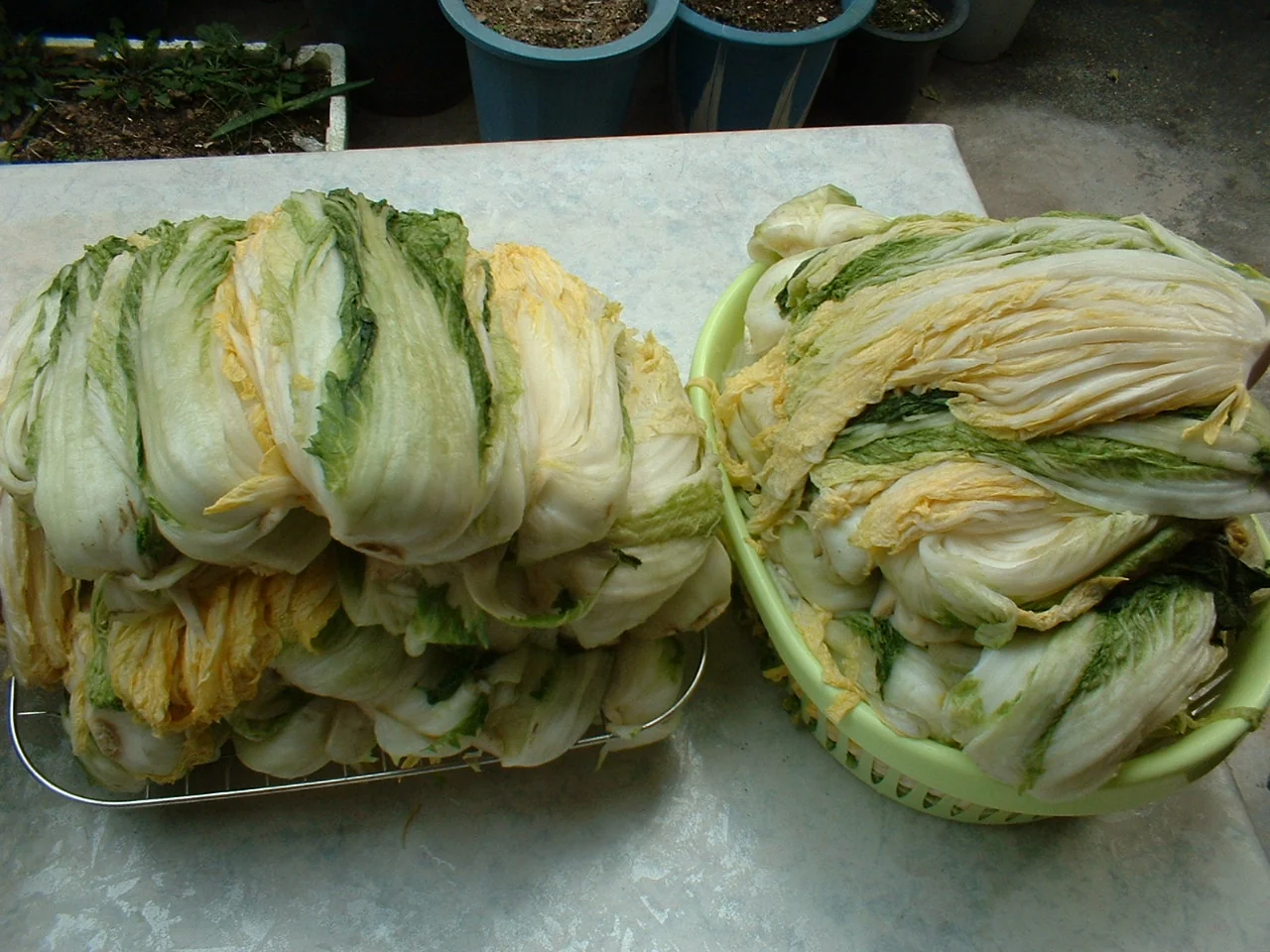
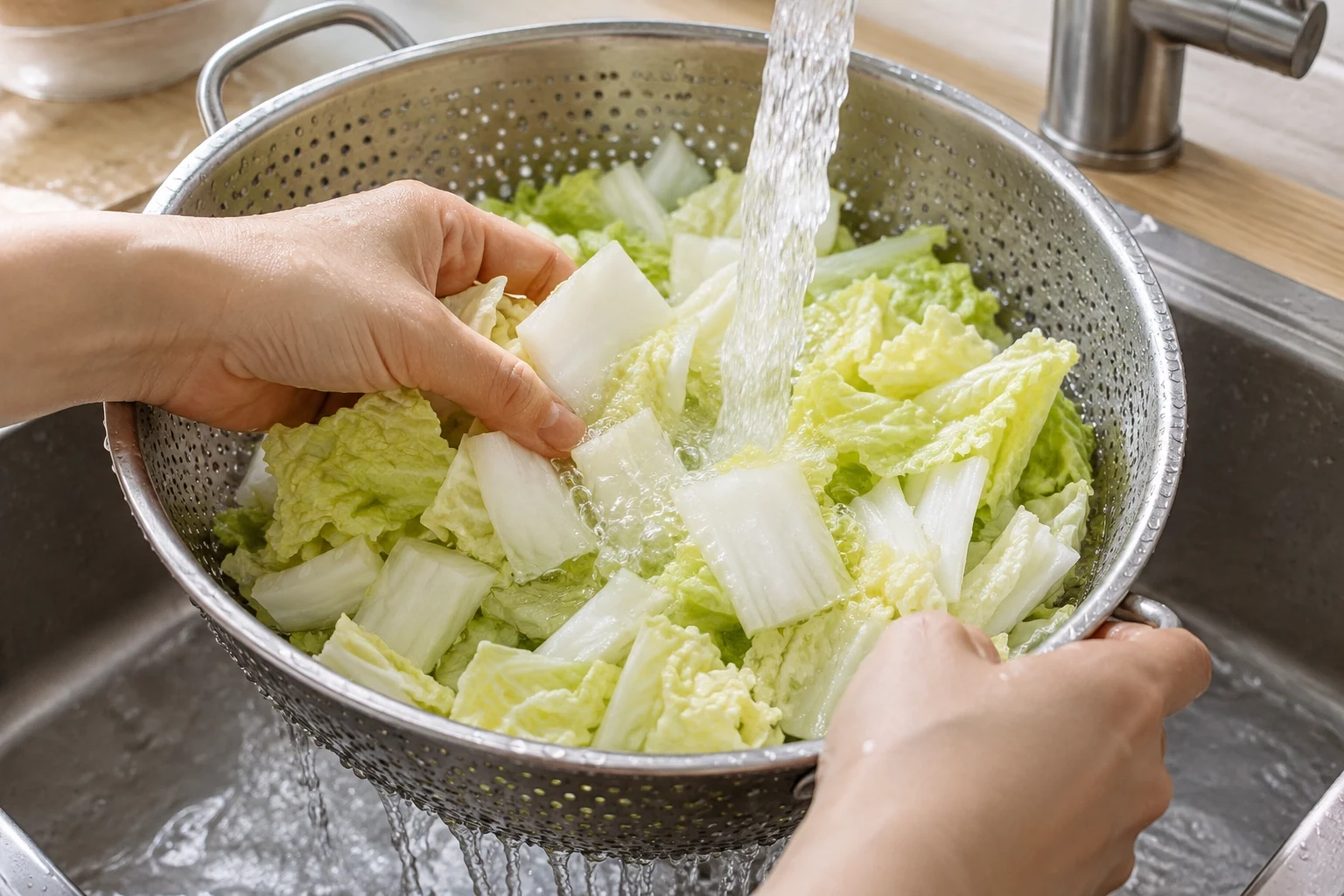
Rinse the cabbage thoroughly in three changes of cold water, moving it around gently each time. Drain in a colander for about 30 minutes. Taste a small piece: it should be lightly seasoned, not intensely salty. If it is unpleasantly salty, rinse again and drain well.
Kitchen note Do not squeeze the leaves into a tight ball. Excess water dilutes the paste, but crushed leaves lose texture.
Whisk the rice flour into 120 mL cold water in the saucepan until smooth. Heat gently, stirring as it thickens into a loose porridge. Stir in the sugar, remove from the heat and let it cool completely. The finished paste should spread easily rather than form a dry dough.
Kitchen note Hot paste wilts the vegetables. Let it cool before the next step.
Combine the cooled paste, gochugaru, garlic, ginger, fish sauce and optional grated pear. Let the chilli flakes hydrate for a few minutes. Fold in the radish matchsticks and spring onions. Scrape the sides of the bowl so all the seasoning is evenly mixed.
Kitchen note Gochugaru is different from gochujang, a fermented paste. Do not replace one with the other measure for measure.

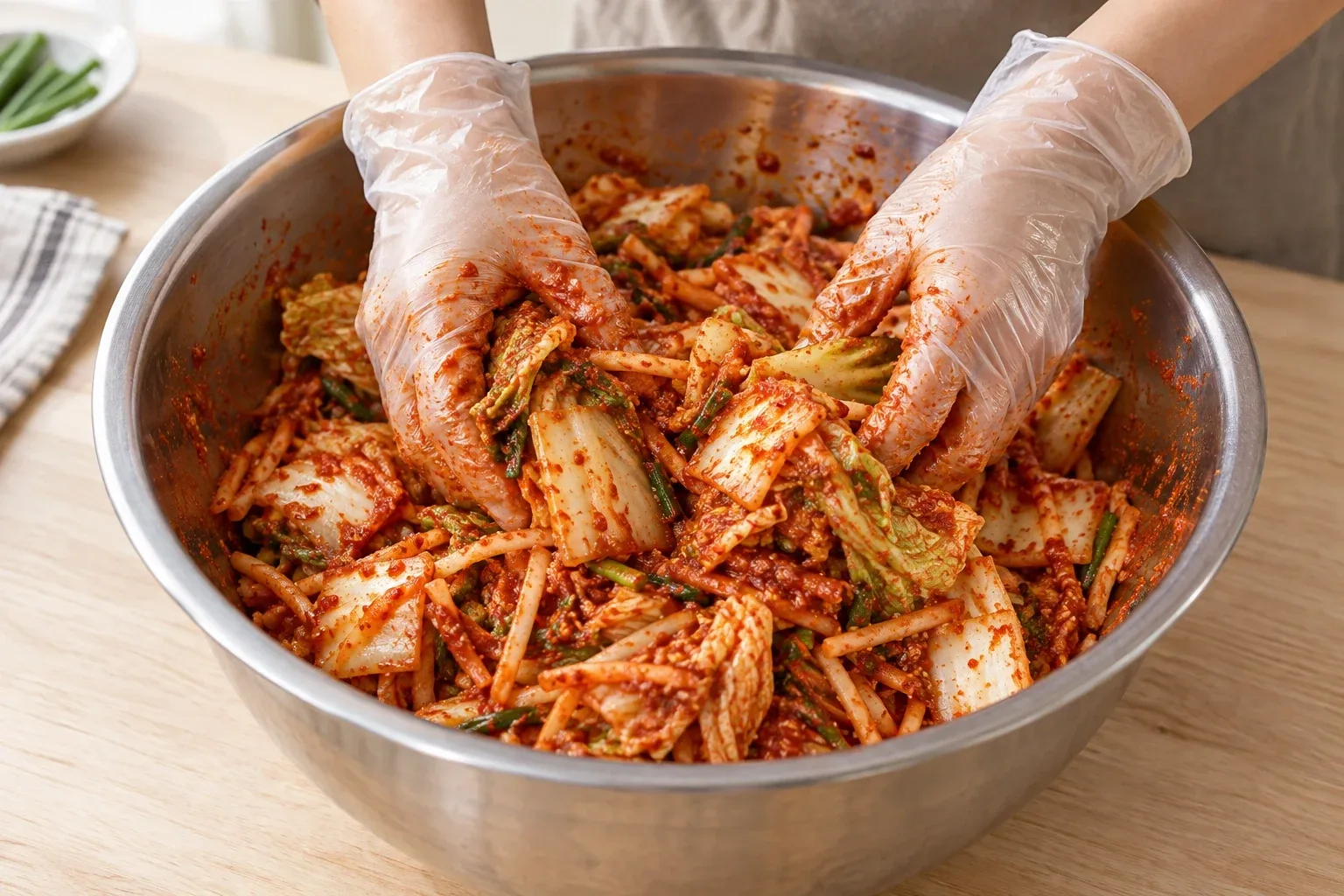
Put on clean food-handling gloves. Add the drained cabbage to the seasoning and fold it through from the bottom of the bowl. Separate folded leaves so they receive paste, and rub gently around the thicker stems. Stop when the mixture is evenly coated; vigorous kneading is unnecessary.
Kitchen note Fold gently so the softened leaves stay intact, and scrape in all the measured seasoning.
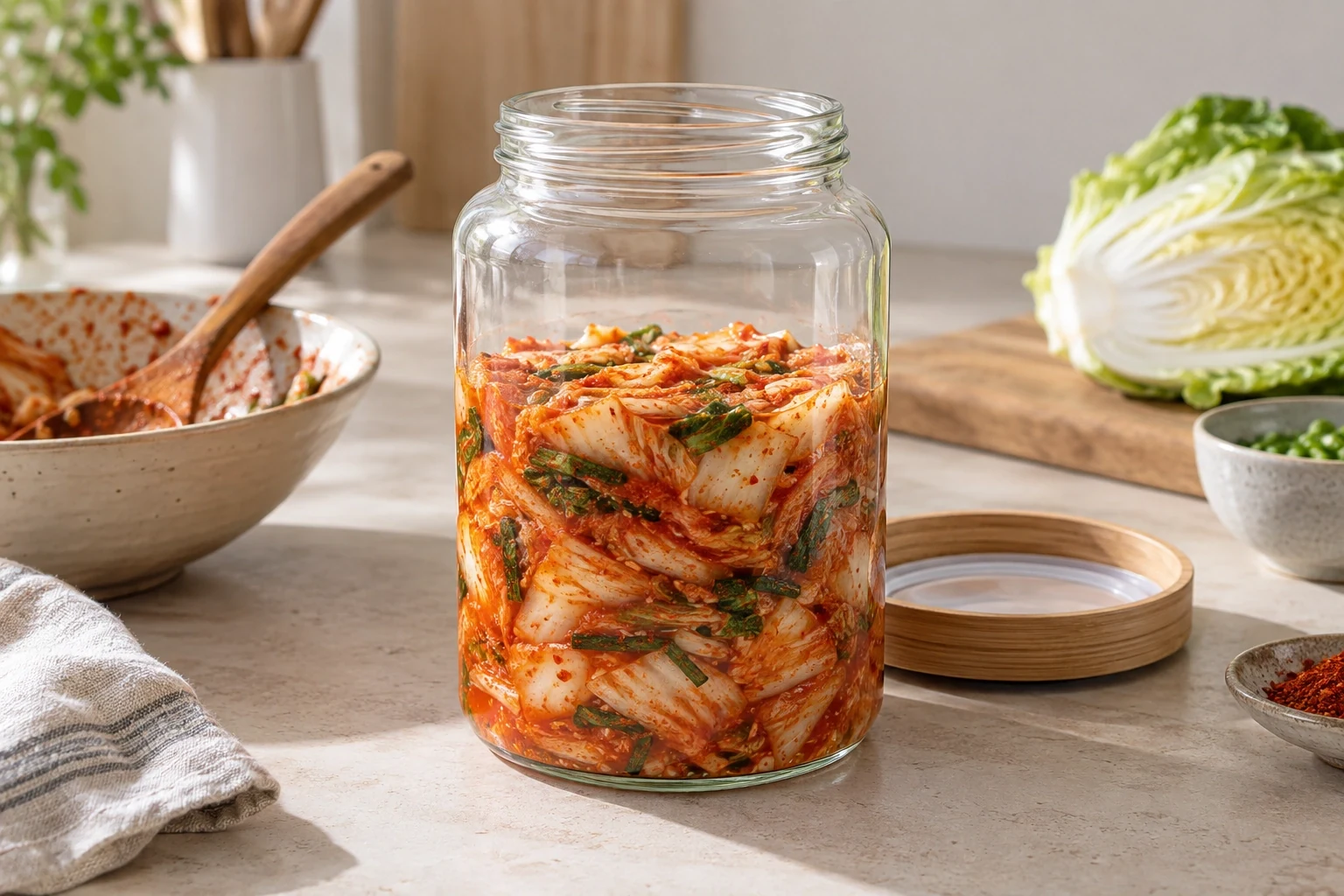
Transfer the kimchi into the clean container, pressing down gently with a clean spoon to reduce large air pockets. Leave generous room above it: fill the container only about two-thirds full. Wipe the rim and follow the container’s instructions for releasing fermentation gas. Stand it on a tray in case liquid overflows.
Kitchen note Do not fill a glass jar to the brim or tightly seal an unsuitable container under pressure.
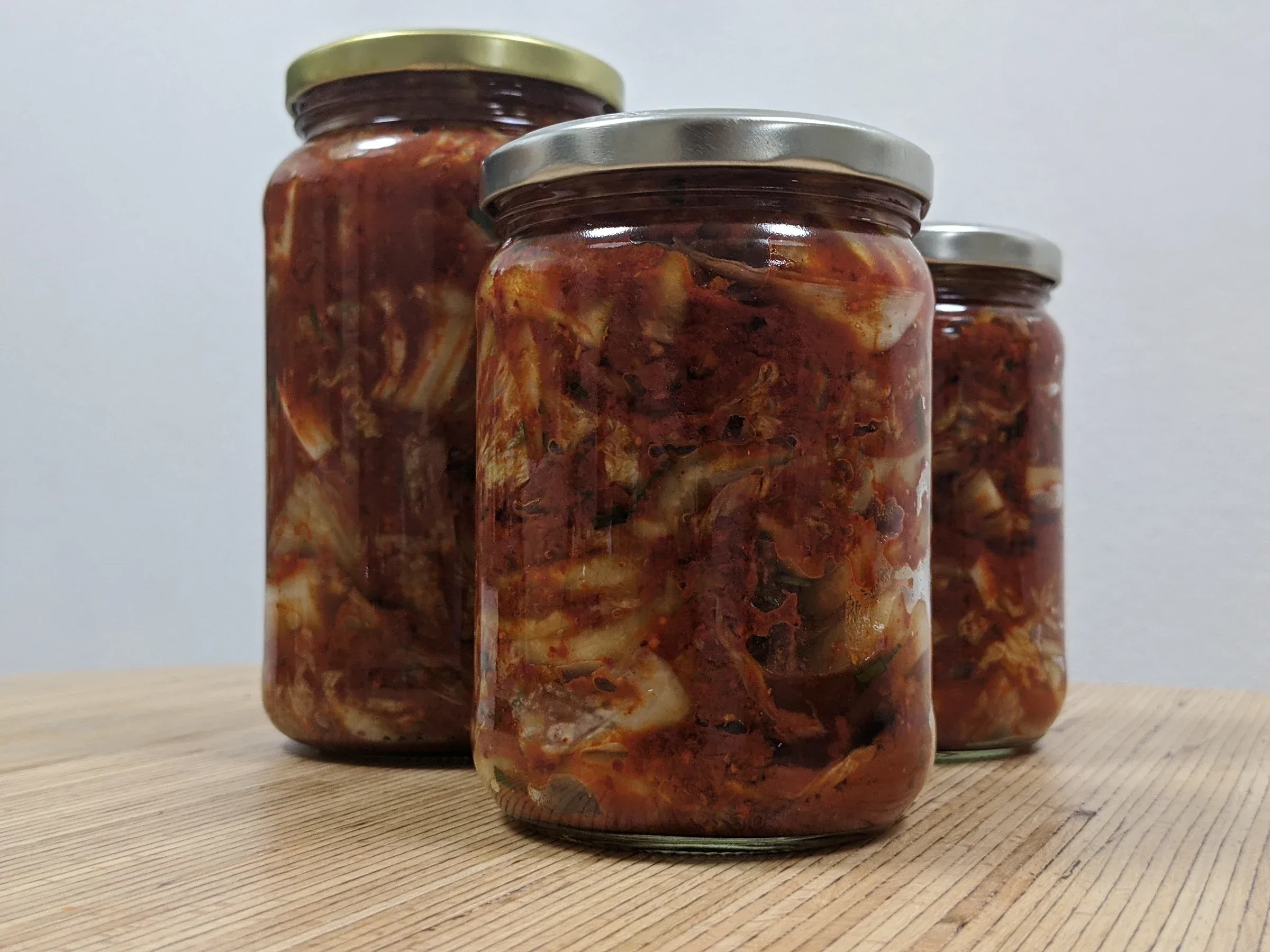
For this beginner approach, place the kimchi in the refrigerator rather than leaving it in a hot kitchen. Fermentation continues slowly in the cold; the cabbage’s flavour and acidity change over several days. Date the container. Use clean utensils each time and press the remaining cabbage down after serving.
Kitchen note Bubbles or a sour smell show change, but do not prove safety. Read the fermentation and storage notes below.
Transfer a little kimchi to a side dish rather than repeatedly eating from the storage container. Serve with rice, grilled tofu or a bowl of ramyeon. As the batch becomes more sour, use suitable, safely stored kimchi in cooked dishes such as kimchi fried rice or kimchi pancakes.
Kitchen note Keep the main container refrigerated while the serving dish is on the table.
CONFIDENCE IN THE KITCHEN
Colorado State University Extension recommends verifying that fermented kimchi reaches pH 4.6 or below, keeping it refrigerated and using it within two weeks for best quality. Follow the test-strip or meter instructions; a calendar, bubbles and taste cannot replace an acidity check. Keep your refrigerator at 4°C or below. Discard the entire batch if you see mould or suspect spoilage, and do not taste it to find out. This is refrigerated food, not a room-temperature canned product.
CSU Extension: kimchi fermentation and safe handling
Napa cabbage brings two textures: juicy, thick stems and delicate leaves. Radish adds crunch; garlic and ginger supply aroma. Gochugaru supplies colour, flavour and heat. Fish sauce adds savouriness and salt. Rice paste helps distribute the seasoning. A red colour alone does not tell you how spicy a batch will be. Kimchi styles vary by family and region, so this is one approachable version rather than a single universal formula.
Start with the lower gochugaru amount or a milder gochugaru. Keep the garlic, ginger and vegetable preparation unchanged. Do not reduce the salting step simply to reduce chilli heat. White kimchi is a different style with a different recipe; it is worth learning separately rather than removing random ingredients from this one.
Cabbage size, salt texture and insufficient rinsing can affect the result. Check a rinsed piece before adding seasoning. Do not try to repair a ferment by adding unmeasured water. For the next batch, weigh the trimmed cabbage and salt and drain consistently.
Salt continues to draw moisture from the vegetables. Some liquid and gas can develop during fermentation. Keep the container on a tray and follow its venting instructions. Liquid alone does not establish that a batch is safe.
For your first batch, use refrigeration. If you want room-temperature fermentation, follow the complete CSU method, its temperature guidance and its acidity checks rather than guessing from the weather.
It has a different texture and salting behaviour. Use a recipe designed for green cabbage. It is not a direct substitution in this napa-cabbage guide.
Fish sauce contains fish; some seasonings also contain shellfish, soy or wheat. Read every packaged ingredient and use separate utensils if cooking for someone with an allergy.
Click Biondi to chat. Drag the top bar to move this window. AI answers may need checking.
Where would you like to go?