Follow reed beds and tidal channels across Korea's southern wetland, then decide whether to climb to Yongsan Observatory or slow down in the National Garden. This guide keeps the two entrances, sunset timing and return transport unmistakably separate.
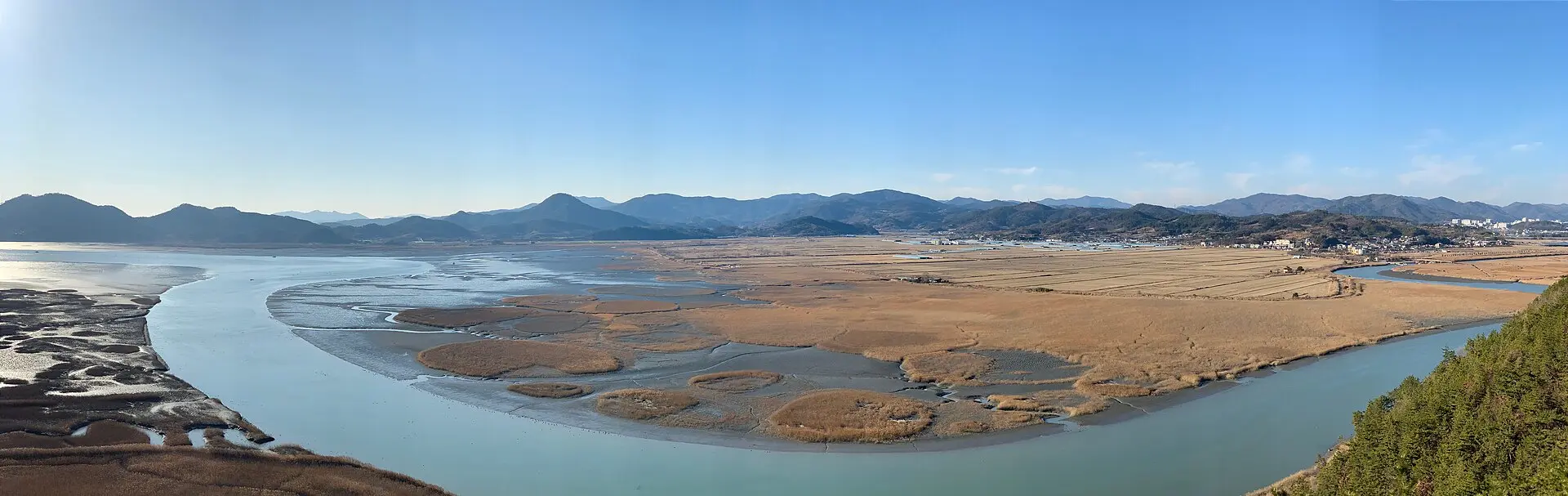
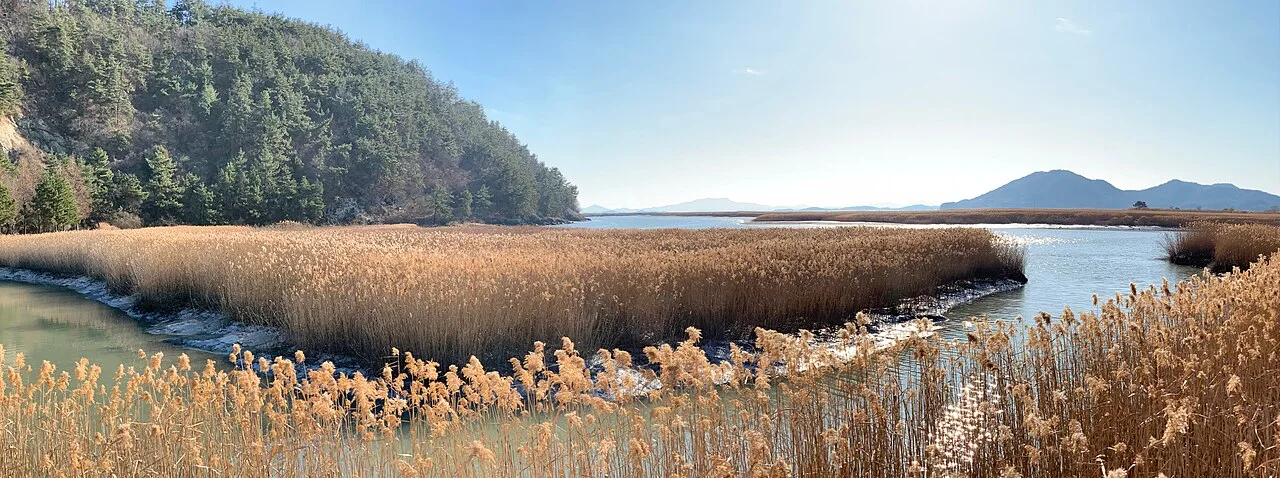
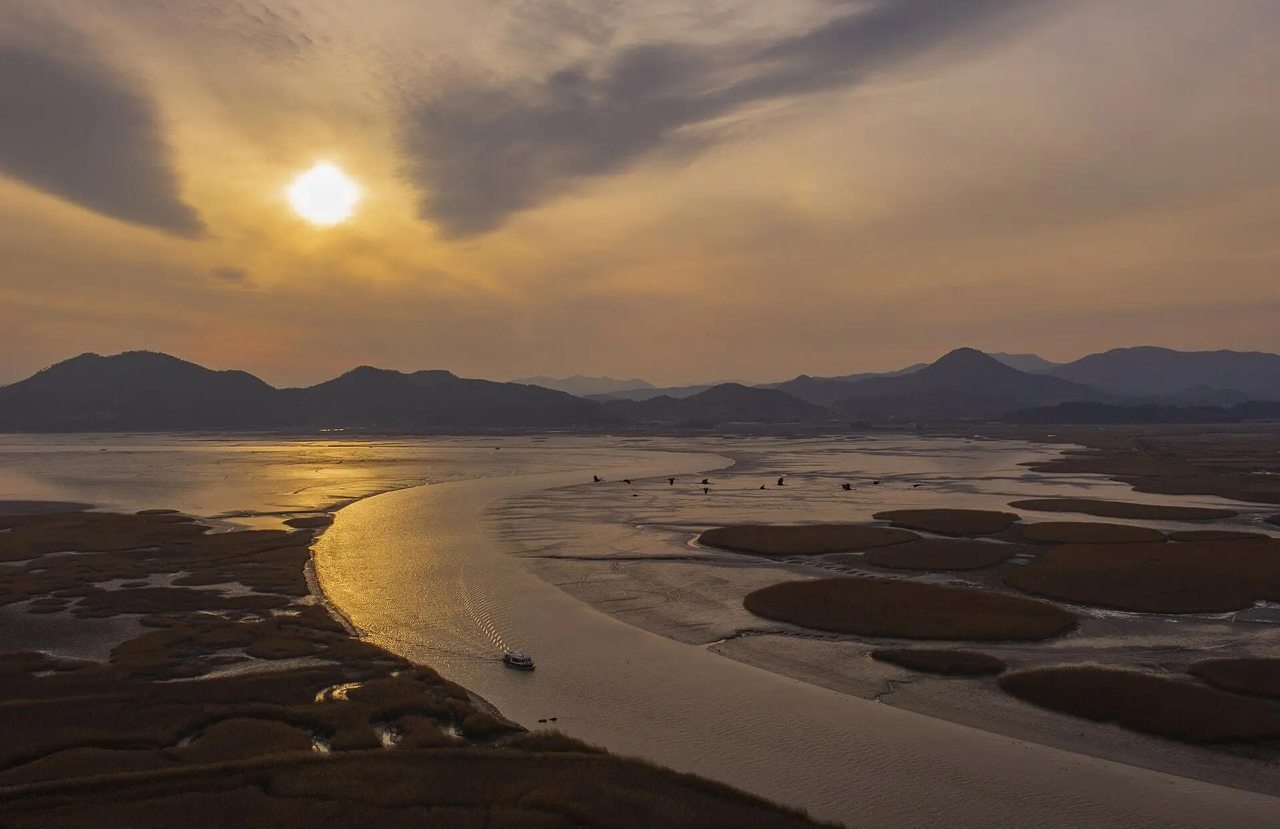
A sweeping winter panorama of reed beds and winding tidal channels at Suncheon Bay. Tide, season and light can make the landscape look completely different on each visit. Jjw · 2018 · CC BY-SA 4.0 · Source · Licence
SUNCHEON · AUTUMN WETLAND WALK
Golden reeds, red Suaeda & the S-curve sunset
Suncheon Bay Wetland (순천만습지) is in Suncheon City. The reed beds and tidal saltmarsh make a different autumn landscape from mountain foliage: flowering reed plumes catch low sunlight, while Suaeda (칠면초) can turn red. Colour, water level and visibility change; the strongest red and gold do not necessarily peak together.
Start at the wetland entrance, cross Mujingyo and follow the designated reed boardwalk. For a shorter visit, return before the hill. For the S-shaped channel panorama, add Yongsan Observatory: the official guide allows about 30 minutes uphill from the Yongsan entrance. Allow 2–3 hours for your whole wetland visit as a planning estimate, longer for photographs.
The observatory route includes steep terrain and steps. It is not a flat extension of the boardwalk. Stay on marked paths; never enter the mudflat or red plant beds for a photograph.
Take a confirmed train to Suncheon Station, then take city bus 66 or a taxi to 순천만습지. The official directions estimate about 35 minutes by bus from the station; confirm the current stop and departure in a live map. The National Garden and Wetland have separate entrances; do not use the garden gate as your taxi destination for this walk. Save the return route before setting out, especially if staying for sunset.
Address for maps: 513-25 Suncheonman-gil, Suncheon. Use the official directions for current bus connections rather than an old timetable.
Suncheon Station / central Suncheon is a practical base for rail arrivals and dinner. Choose a wetland-area stay only after confirming its actual address, transport, check-in and how you will get back after dark. Wetland views are not guaranteed by a hotel name.
Look for local cockle dishes (꼬막), grilled fish or a Korean set meal. Check the menu price per person, minimum order and shellfish allergies before ordering. Keep restaurant visits separate from the walk.
Official entry hours: September–October 08:00–18:00; November–February 08:00–17:00. The listed viewing window ends one hour after the entry cutoff. Plan the walk back before darkness; do not assume an observatory sunset photograph leaves enough time for your return.
The official website lists adult admission at ₩10,000. Check current ticket coverage, discounts, opening notices and last entry before visiting. Bring comfortable shoes, a windproof layer, water, charged phone and power bank; add binoculars if watching birds.
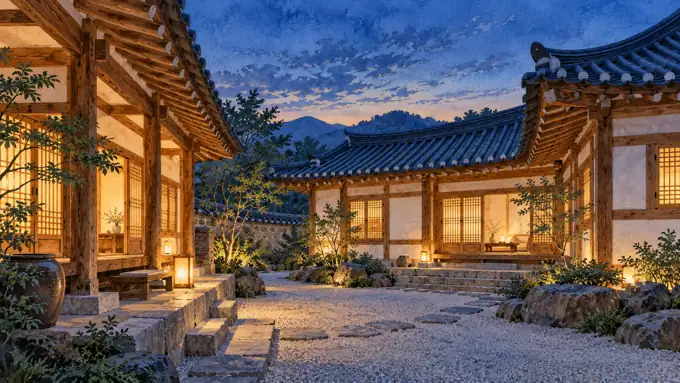
A traditional hanok-style youth hostel with ondol rooms. The National Garden and the wetland are separate destinations: book this as your overnight base, then plan transport to the wetland entrance.
16:00–22:00 / 11:00 next day. Contact the property if arriving after 22:00.
Reservations
Official online application, payment, confirmation, then completed booking. The official guide requires payment within 24 hours; overseas guests should ask how to pay before booking.
Confirm the room's capacity, floor bedding or bed type, bathroom, total nightly price and cancellation terms. Breakfast may not be provided if fewer than 20 people request it. Bring a toothbrush and toothpaste. Garden admission is purchased separately.
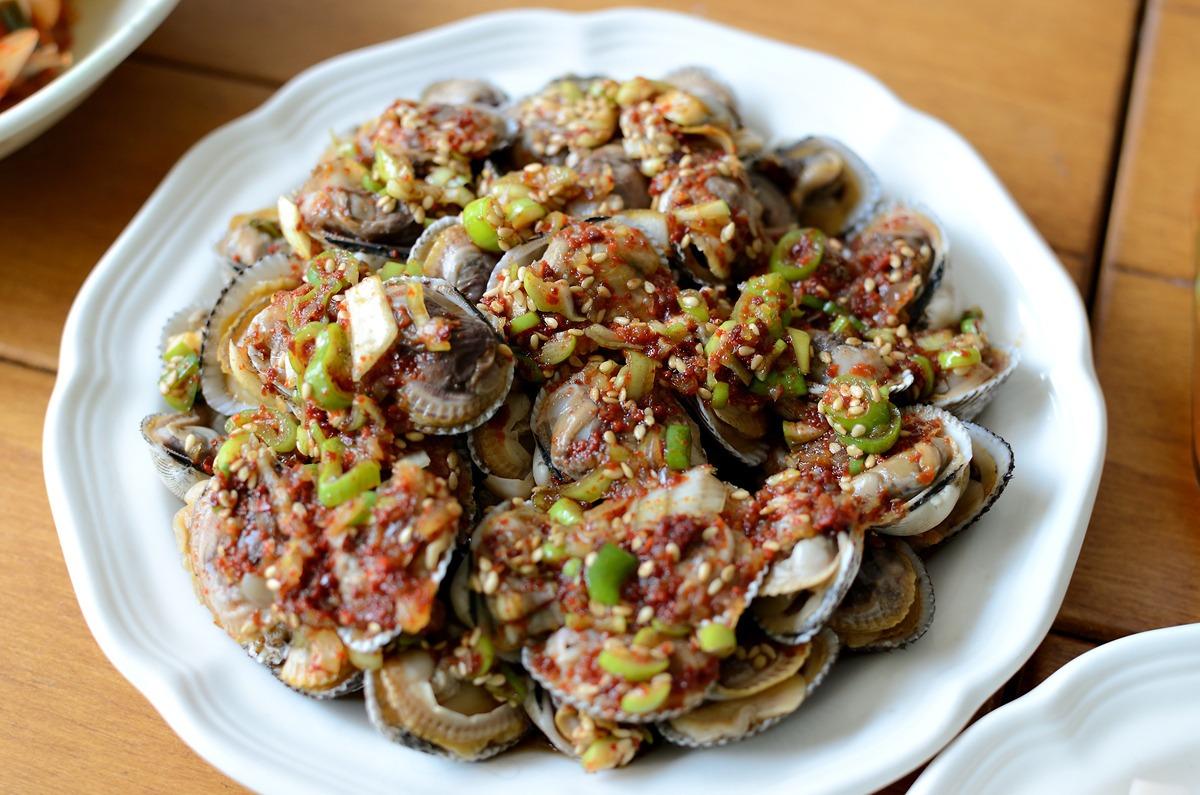
Suncheon cockle bibimbap · Park Dong-sik · CC BY 4.0 · Photo source. Representative dish; not a specific restaurant's current menu.
LOCAL FOOD
Cockle set meal or bibimbap?
꼬막정식 · Kkomak jeongsik: a rice-and-side-dish meal featuring cockles. Ask which dishes are included; menus differ. 꼬막비빔밥 · Kkomak bibimbap: seasoned cockles mixed with rice and vegetables; the sauce can be spicy.
A restaurant to check near the wetland
순천만 일번가 · Suncheonman Ilbeonga, 520 Suncheonman-gil. The Korea Tourism Organization lists a dried-fish and cockle set meal, alongside other Korean set meals. Check today's menu, final order time and price directly; this is a location-and-menu lead, not a quality guarantee or confirmed booking.
Before ordering, check whether the displayed price is per person or per set, whether two people must order, and whether rice is included. If travelling alone, ask about a single serving. Cockles are shellfish; sauces and side dishes may contain other seafood.
Official visitor information checked 7 October 2026. Route duration and base suggestions are editorial planning estimates. Pink saltmarsh image: AI-created illustration, not a photograph or exact viewpoint. Other photographs are historical, not a live colour report.
PLAN A VISIT YOU CAN FOLLOW
Suncheon · your practical trip plan
Choose the area, save the correct entrance and keep the return journey in view.
Is this region right for you?
Choose Suncheon for gardens, reeds and a slower nature visit. One full day can focus on either site; one night gives you separate garden and wetland visits. The National Garden and Wetland are about 7 km apart, not two gates of the same park.
Arrive at the right gateway
Take a train to Suncheon Station (순천역); match the Seoul departure station to your issued ticket. Leave large luggage at your confirmed accommodation before an exposed boardwalk walk. Save 순천만습지 for the wetland or 순천만국가정원 동문 for the garden’s east entrance.
The wetland operator directs rail visitors to the 순천역 bus stop, then bus 66 to 순천만습지. Its example journey is about 35 minutes plus the walk to the stop and waiting. Use the correct direction; do not alight at the garden when you want the reed boardwalk.
At the wetland stop, follow signs to the ticket entrance at 513-25 Suncheonman-gil. Start with the reed boardwalk; the Yongsan observatory adds an uphill walk. Ask the visitor centre for an easier route if slopes or steps are unsuitable.
For both sites, plan the separate transfer and the last return to the station before starting. SkyCube has its own ticket and operating notice; do not assume a garden admission includes it or guarantees a late return. Save the return bus stop, not only the attraction pin.
Save these Korean names. Use the live route result to match the boarding stop, direction and final entrance; a general map pin is not a verified entrance.
Choose garden paths or wetland boardwalks, then a meal in town. A wetland visit with the viewpoint needs more walking than a short boardwalk circuit. Add station transfers outside this window.
Two days · separate garden and wetland
Day 1: arrive, garden loop, town dinner. Day 2: wetland, lunch and station return. If doing both in one day, allow a 6–8-hour sightseeing window with a transfer and drop the viewpoint if delayed.
Time windows are editorial estimates at a relaxed pace, excluding the intercity journey. Add real waiting times and your own walking pace.
The operator lists adult standard admission KRW 10,000. Keep the ticket for same-day entry to the other site. Wetland admission ends seasonally; confirm the last-entry notice separately from your planned return transport.
Per adult, for simple meals, a drink, local bus / metro travel and modest selected admissions. This is our planning allowance, not a surveyed average or a quoted package price. Hotels, flights / intercity tickets, taxis, rental cars, ferries and paid experiences are excluded.
For a real total, add: actual return tickets + accommodation quote + any taxi / special activity + this local allowance. Confirm menus and operator fares before paying.
A station / town base makes arrival and departure simpler; a wetland-side stay suits early nature time but needs a dinner and return-transport plan. Choose a single-person rice or soup meal in town, or ask the minimum order for a regional set meal. Avoid scheduling a long lunch between two timed transfers.
Heavy rain, wind or a closed boardwalk: shorten the outdoor visit. Ask whether the wetland Nature Ecology Museum is open before travelling there; otherwise stay in town for a meal and move the nature visit to the next day.
Delayed transfer: visit only your priority site. A shared ticket is not a reason to risk the last train. For a taxi return, show 순천역 and compare the arrival estimate with your boarding margin.
The sources below support the stated access, admission and service distinctions. Routes, visit windows, base choices and budget allowances are our editorial planning advice. This review did not include an on-site visit, completed booking or live journey. Check operator notices and the live route for your date; the date applies to this practical plan, not every older section of this page.
Birds, protected reed habitat, tidal flats and the seafood dishes visitors meet around the bay.
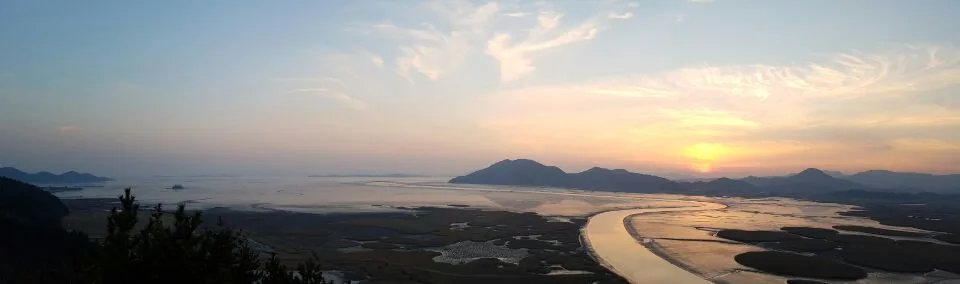
Tidal channels at sunset
Low-tide channels catch the evening light across Suncheon Bay. The mudflat's shape and colour change with tide, cloud and season, so no two visits look exactly alike.
Korea Heritage Service · 2016 · KOGL Type 1 · Source · Licence Photographed: 2016-01-21
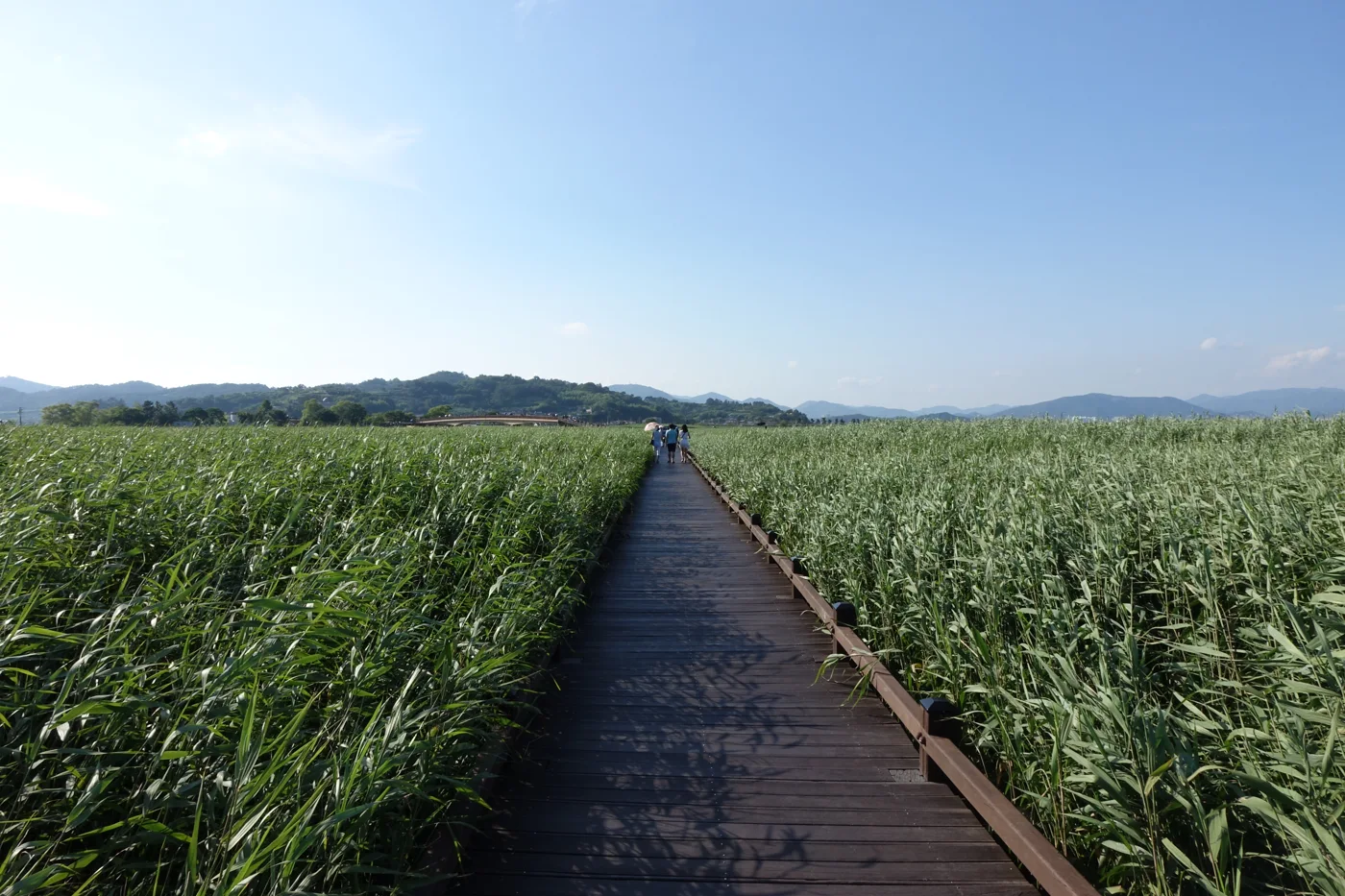
Boardwalk between reeds and wetland
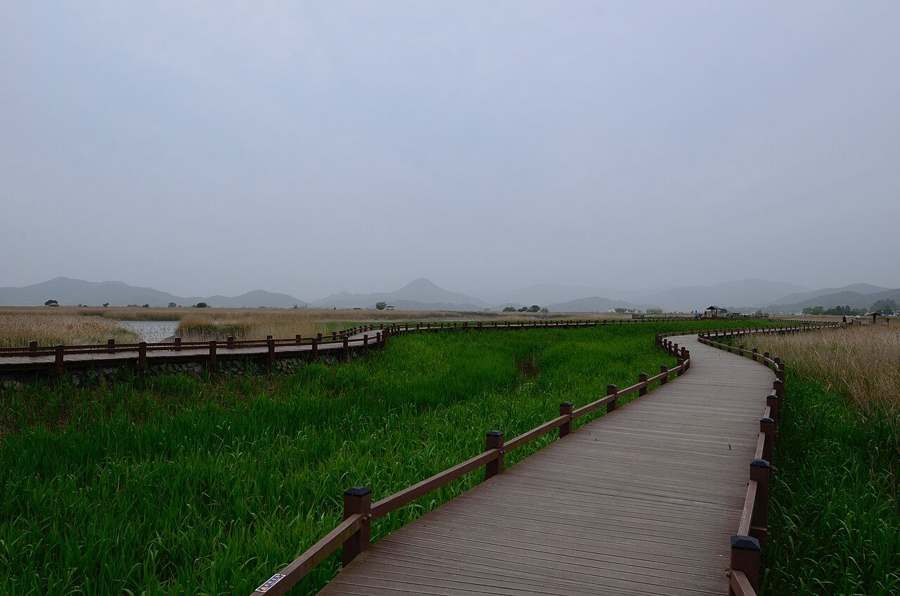
The designated boardwalk keeps visitors above the wetland while protecting reed-bed shelter and nesting habitat. Stay on the path and leave dense vegetation undisturbed.
Jakob Reichmann · 2017 · CC BY-SA 3.0 · Source · Licence Photographed: 2017-05-08
Hooded crane — a winter visitor to Korean wetlands
A close view of hooded cranes, one of the winter species associated with Suncheon Bay. This representative species photograph was taken at Izumi Crane Migration Ground in Japan, not at Suncheon; sightings in the bay are seasonal and never guaranteed.
Christoph Moning · 2017 · CC BY 4.0 · Source · Licence Photographed: 2017-02
Kkomak-muchim seasoned cockles
Cockles dressed with a savoury, spicy seasoning. Cockle dishes are closely associated with the southern coast; ask whether rice, soup and additional seafood are included when ordering a set meal.
Bakgasangmin · 2014 · CC BY 4.0 · Source · Licence Photographed: 2014-05-01
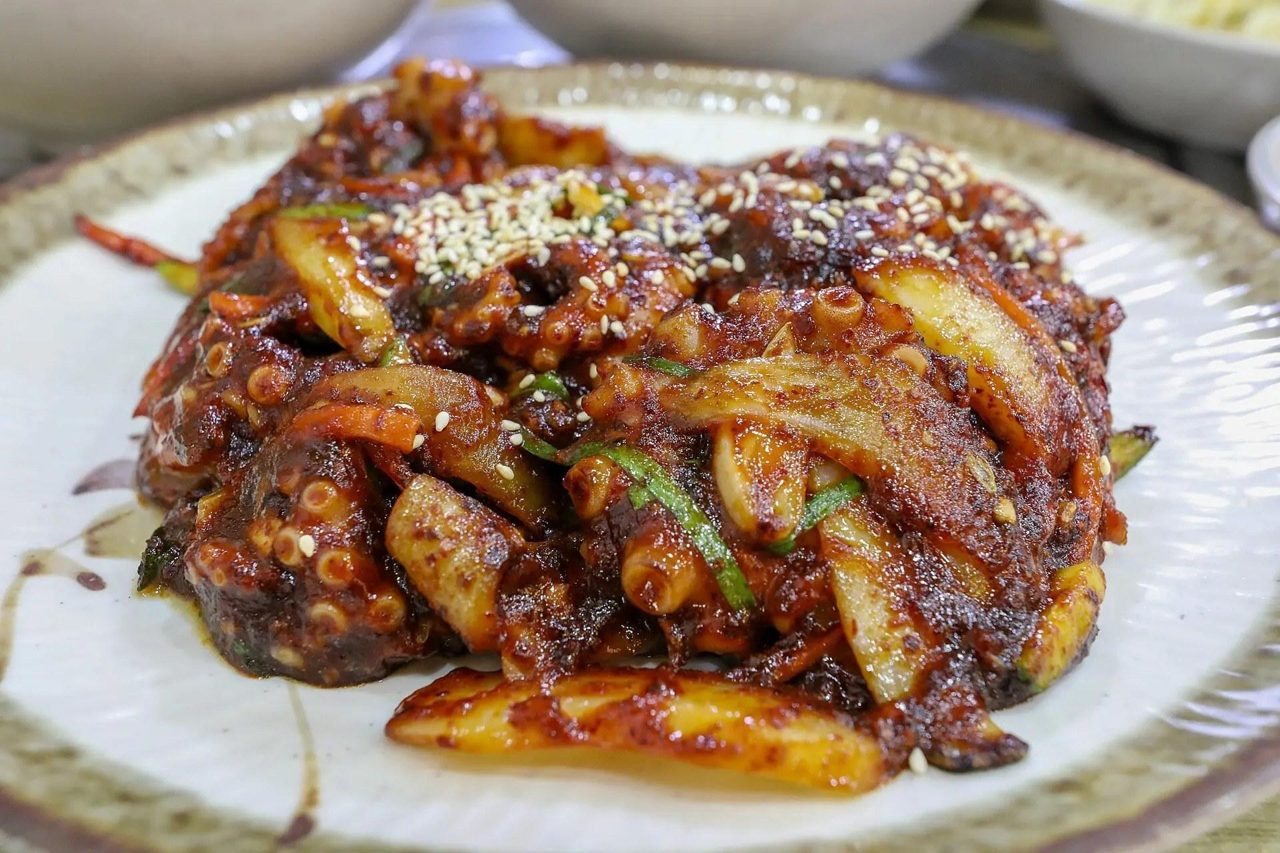
Nakji-bokkeum spicy stir-fried octopus
Spicy stir-fried octopus served as a Korean shared dish. Mudflats support small octopus and other marine life, but visitors should eat through licensed restaurants rather than collect wildlife in the protected wetland.
Use the filters to separate attractions, hiking trails, culture venues, food, photo spots, hotels and parking. Numbered pins match the cards below. Some cards describe areas or routes and use directions links instead of a pin. Locations are approximate planning references; open a live map before travelling.
13 places shown. Select a card or numbered marker for details.
Hover over an amber region pin to see its name; click or tap to select it. Compare car, KTX and flight options. KTX lines connect major stations in order; numbered pins show stations and selected rest areas. Lines between pins are simplified, not surveyed track or road geometry. Train stops vary by service. Select a numbered stop below to locate it on the map.
Green line / numbered pins: car & rest areas · Blue dashed / numbered pins: KTX stations · Purple dashed: flight connection · Grey: local transfer
Show your taxi driver: “Please take me to the Suncheonman Wetland entrance.”
Top sights
Wetland walk
Follow the visitor paths through the reed-bed landscape. Stay on the designated routes and observe wildlife from a distance.
Plan your visit: Start at the Suncheonman Wetland entrance and follow the designated boardwalk through the reeds. This is an observation visit, not a walk out onto the mudflat. Keep food and rubbish contained, give wildlife space and leave enough time to return before the paths close.
Tidal-flat views
The water level changes with the tide. Check conditions before visiting if your priority is seeing exposed tidal flats.
Plan your visit: Water levels change the appearance of the channels and exposed mud. A photograph taken at another tide or season may look very different from your visit. Plan around the day's tide, weather and daylight rather than expecting a particular view on arrival.
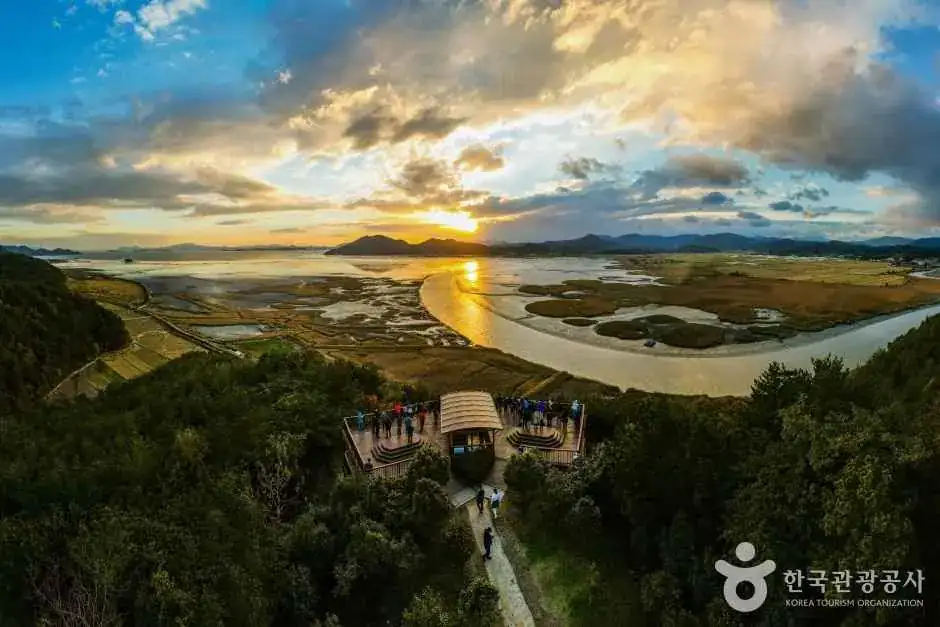
Yongsan Observatory
Look across the winding channels from above. Check trail access and allow time for the walk back before closing.
Plan your visit: The official visitor page describes an approximately 30-minute climb from the Yongsan trail entrance, additional to the approach through the wetland. The observatory was rebuilt in 2025. Choose it only if the trail is open and the climb fits your group; return to the entrance before access closes.
Suncheon Bay National Garden
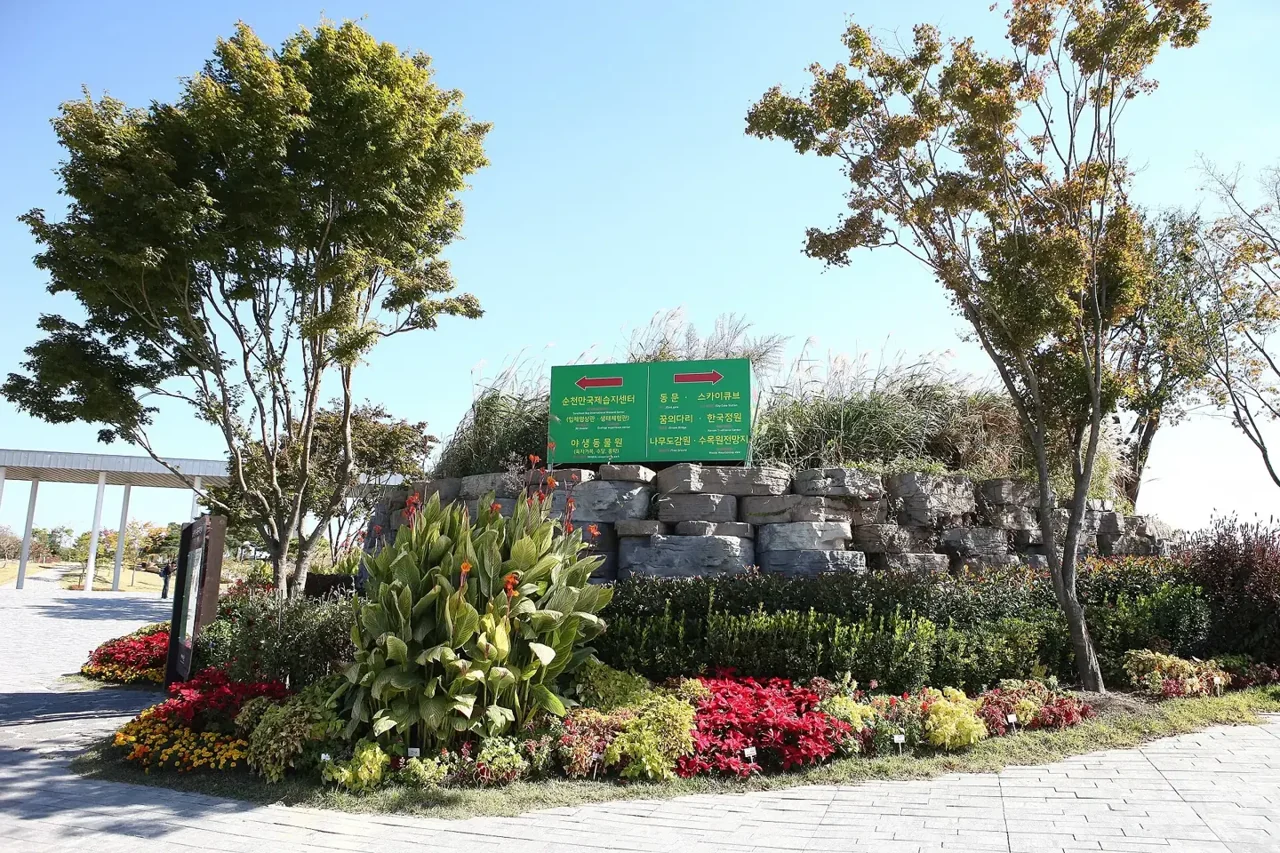
The landscaped National Garden is a separate visitor site from the natural wetland. Give it its own time in the itinerary and choose the correct entrance for your transfer. Check current admission and any connecting transport instead of assuming a garden ticket or shuttle covers every service.
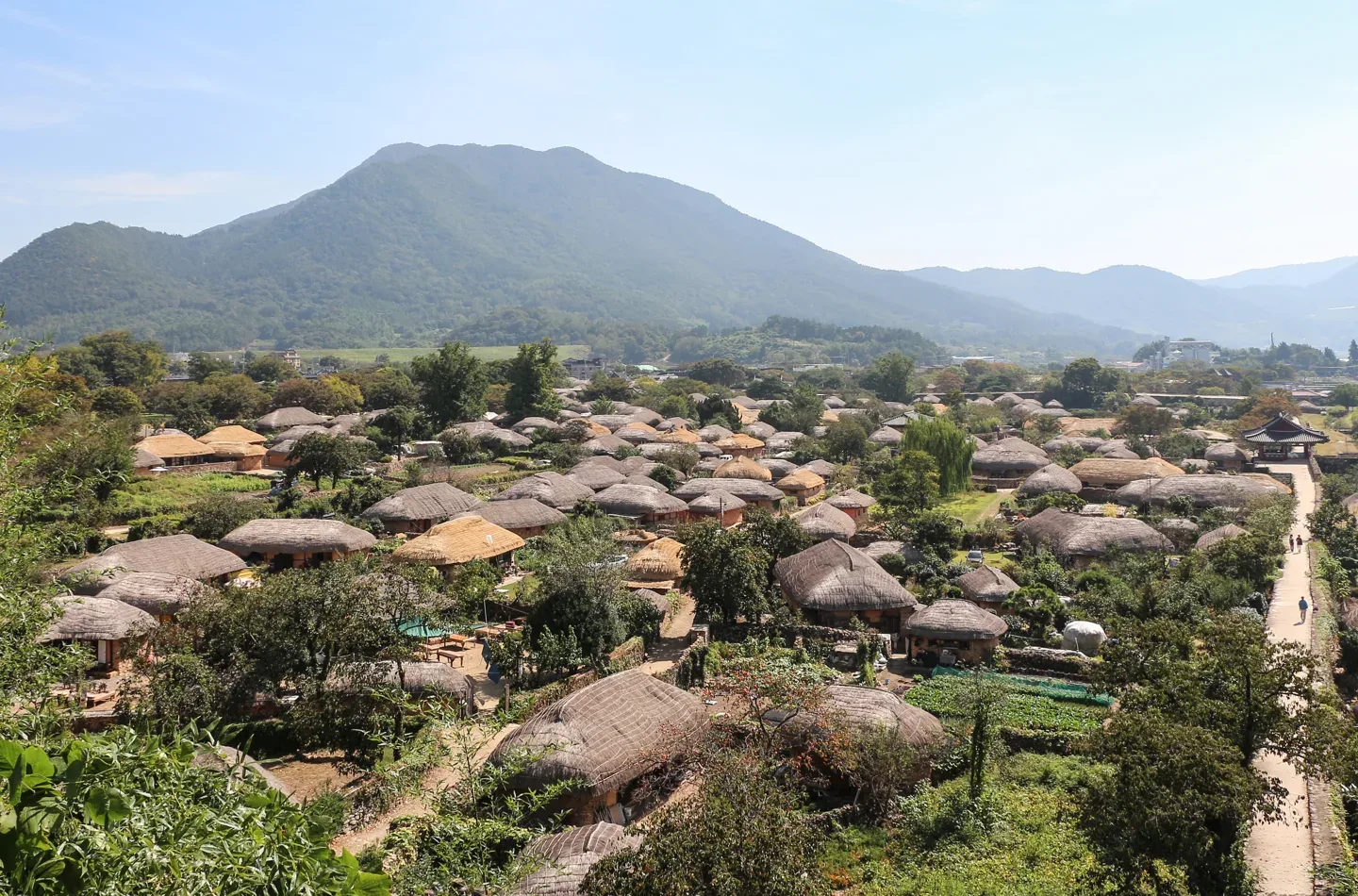
Explore thatched houses, village lanes and the setting of a historic walled town. Residents still use the village, so respect private doorways and gardens. This is outside central Suncheon: arrange the outbound and return journey and treat it as a separate half-day outing.
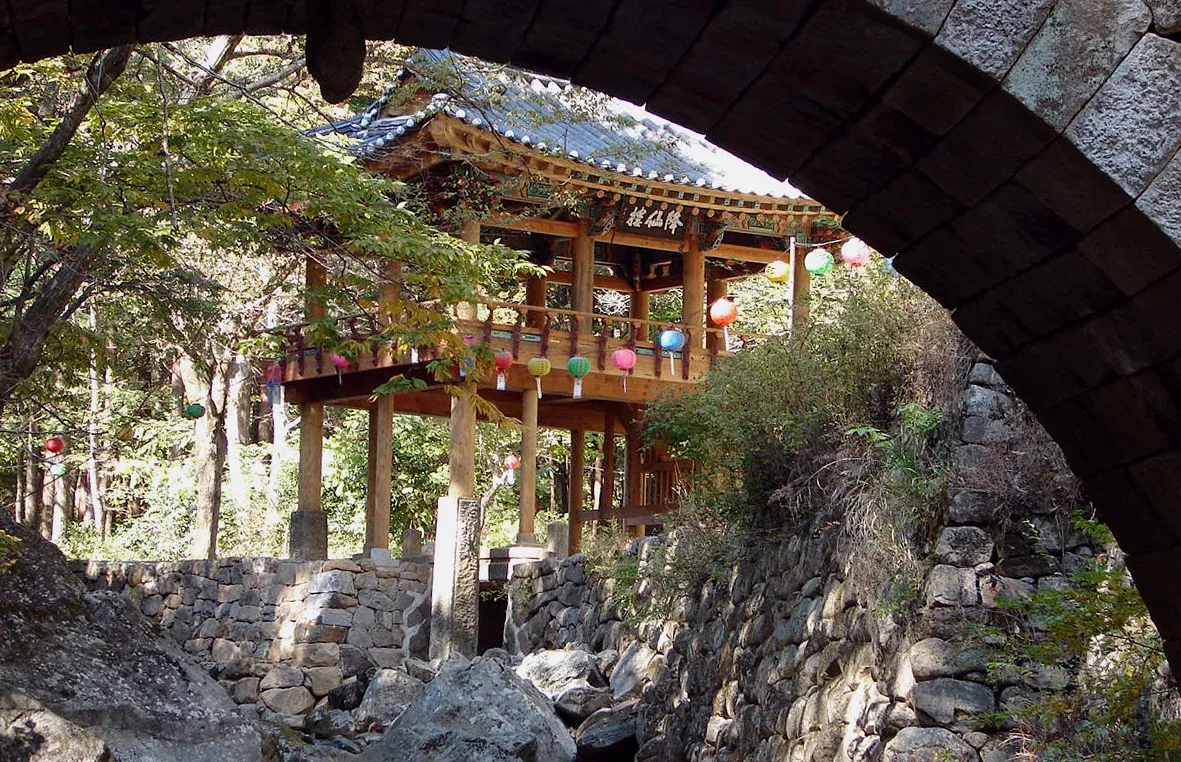
The wooded approach and Seungseon stone bridge make this a different experience from the reed beds. Walk quietly around the temple and follow signs at worship buildings. It is a separate inland excursion; do not squeeze it into the same short afternoon as a sunset wetland walk.
Suncheon Bay is valued as feeding and resting habitat for migratory waterbirds. Hooded cranes are among its best-known winter visitors, but arrival numbers and viewing conditions vary each year. Bring binoculars, keep voices low and treat every sighting as a possibility rather than a guarantee.
Reeds, nests and shelter
Dense reed beds provide shelter and nesting habitat for wetland birds and smaller wildlife. Never leave the boardwalk to search for a nest, play recorded bird calls or push a camera through vegetation. A distant view protects the birds and usually produces more natural behaviour.
Tidal flats and mudflat life
At low tide, winding channels expose feeding ground for birds and habitat for crabs, shellfish and small octopus. The visible mudflat changes with the tide. This is a protected ecosystem, not an open foraging area for visitors; observe from designated paths.
Photograph responsibly
Use a longer lens instead of approaching wildlife. Do not publish a precise nest location, feed birds or block the boardwalk. Check seasonal notices at the visitor centre before setting up a tripod.
Travel from Seoul
1 / Leave Seoul by train
Search Yongsan → Suncheon on Korail and select a service for your travel date. Check the train’s actual duration, departure platform and reserved seat before paying.
The wetland operator lists city bus 66 from Suncheon Station to Suncheonman Wetland, approximately 35 minutes on the bus. Allow extra time to walk to the stop and wait. Check the route and return departure on the day.
The operator lists approximately 8.6 km / 16 minutes by car from the station; traffic and pick-up time can change this. Confirm the fare and return pick-up with your taxi driver.
For reed paths and tidal-flat views, arrive at Suncheonman Wetland. The National Garden is a separate entrance about 7 km away. Check admission and any connecting transport before combining both sites.
4 / Plan the return before sunset
Save your accommodation address and the return bus stop. Leave time to walk back from the viewpoint while paths remain open and visible. A sunset visit should fit the day’s closing notice and your transport.
Cockle dishes and set meals are useful ways to explore the area's food. Cockles are shellfish, and sauces or soups may contain additional seafood. For a simpler meal, ask about the ingredients of each dish and whether rice, soup and side dishes are included in the price.
VISITKOREA lists this hanok pension near the wetland. Use the tourism listing and map to review its location, then confirm availability and rates with the property.
Map results are accommodation searches, not confirmed reservations. Rates and availability are set by each property.
Before you book
A station or central-city base is convenient for arrivals, meals and onward travel. A countryside or hanok stay may be quieter, but check late check-in, the nearest food options and whether a taxi can reach the exact entrance. Keep your booking address available in Korean for the driver.
A suggested itinerary, not a timed tour. Adjust the order to your arrival, the tide, weather and the day’s closing time.
01 / Arrive & settle in
Arrive in Suncheon, leave luggage with your accommodation if available, and have lunch before travelling to the wetland. Check your return transport now.
02 / Follow the reeds
Start at the wetland entrance and explore the designated paths. Pause to watch the water and birds. Keep your visit on the boardwalks and marked routes.
03 / Choose your finish
Continue to Yongsan Observatory if the trail is open and you have enough time and energy. Otherwise enjoy a shorter wetland visit. Leave time to return before closure.
Staying overnight? Give the National Garden its own visit the following day rather than rushing both stops. This is an editorial suggestion, not a transport or admission package.
Before you go
Check the official website for current admission, opening hours, weather-related access and programmes. Wear comfortable walking shoes and allow extra time for photography.
Travel information reviewed on 8 September 2026. Confirm operational details with the official operator before departure. Our Suncheon travel film is in preparation.
Seasons and what to bring
Green reeds, autumn colours and winter bird activity offer different experiences. Wildlife sightings are never guaranteed. Exposed boardwalks can feel hot, windy or cold, so carry water, sun protection and a layer appropriate to the forecast.
Choose a comfortable route
The boardwalk visit and the observatory climb have different physical demands. Ask the visitor centre which route suits a wheelchair, stroller or shorter walking range, including accessible toilets and any temporary restrictions. You can enjoy the wetland without attempting the viewpoint.
Check trail notices before leaving town. If wetland conditions are unsuitable, use an indoor meal or cultural stop and move the walk to another day. Sunset is a possible bonus, not a reason to return along a closed or unlit trail.
Visitors follow a wooden boardwalk through green reed beds at Suncheon Bay on 3 August 2015. Archive photograph; paths and facilities may have changed.
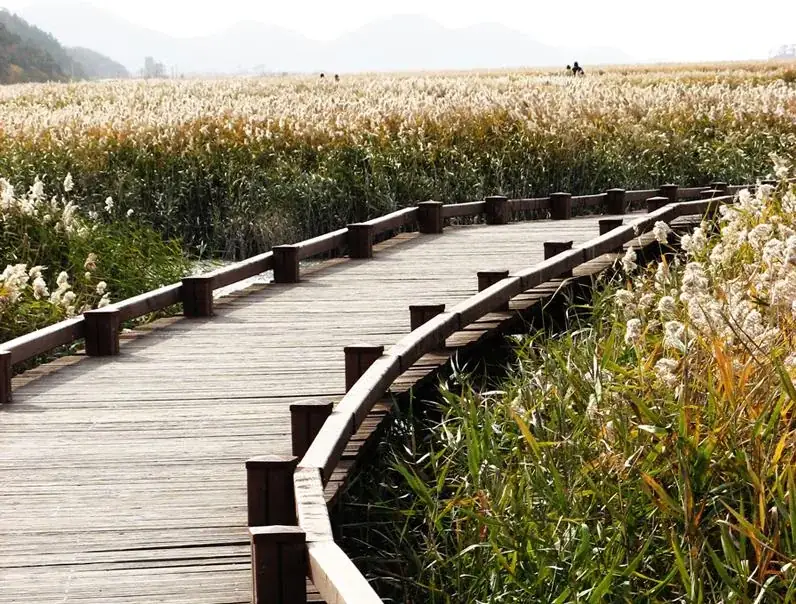
A curving wooden boardwalk passes through flowering reeds at Suncheon Bay, photographed on 21 October 2008. Archive photograph; paths and facilities may have changed.