Around a city
Start with the subway where available. Use a local bus for the final neighbourhood connection, or a taxi when carrying luggage.
THE PRACTICAL GUIDE / TRANSPORT
Learn Korea’s transport system: subway, KTX, buses, taxis, traffic signals and expressways. Plan, book and travel with confidence.
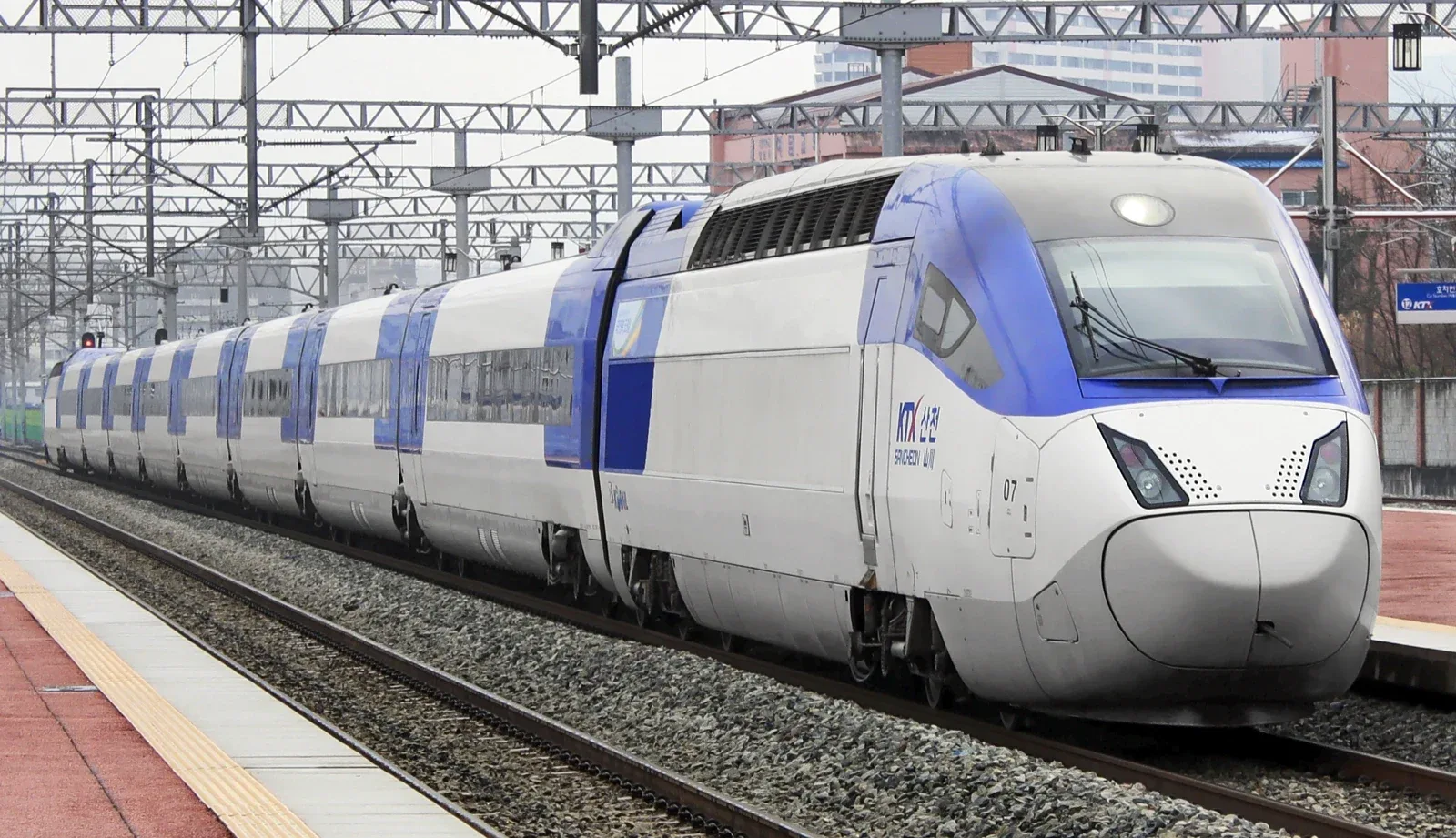
MOVE WITH CONFIDENCE
From your first subway gate to a cross-country KTX trip. Learn the essentials, then open the detailed route and ticket guides.
Find my route →Plan the whole journey: main service + last connection + return.
Plan the same connections for your return, including the last local service.
Start with the subway where available. Use a local bus for the final neighbourhood connection, or a taxi when carrying luggage.
Compare KTX or other trains with express/intercity coaches. Compare arrival locations as well as journey time.
Use the airport route finder for your terminal. For Jeju or islands, compare flights or ferries; rural outings need a return-bus or taxi plan.
Read the signal for your lane or crossing. Never assume a turning vehicle has seen you.
Each picture shows a separate signal state. These are simplified drawings of common Korean signal housings, not a timing sequence.
Stop at the stop line. Right-turn rules still require a full stop first; follow any dedicated right-turn signal.
Do not accelerate to beat the light. If already inside the junction, clear it safely.
The arrow applies to the marked turning movement. Use the correct lane and check that the way is clear.
A circular green light does not give unrestricted permission for every turn. Check lane arrows and signs.
Stay at the kerb. The vehicle signal is not your crossing signal.
Check for turning traffic. If green is already flashing, do not start; if already crossing, finish promptly and safely.
Pedestrians: wait at the kerb. Drivers: stop before the stop line. A vehicle green light is not a pedestrian crossing signal.
Check that vehicles have stopped, then cross on the marked crossing. If the signal starts flashing before you set off, wait for the next cycle.
Do not speed up to beat the light. Follow the stop line and signal; if already in the junction, clear it safely.
Use the marked turn lane and corresponding arrow. A normal green light does not automatically permit every turn.
Drivers must give priority to pedestrians. A right turn on red requires a complete stop first; do not proceed across someone crossing or about to cross. Where a dedicated right-turn signal exists, follow it. A “비보호” unprotected left-turn sign allows a cautious left turn on green only when the way is clear; it is not permission to turn on red.
For walking routes, use signed crossings or underpasses. Keep looking for turning cars, bicycles and delivery traffic, including at small side streets.
Official reference: Driving rules & signs →
Line → direction → transfer → station → exit.
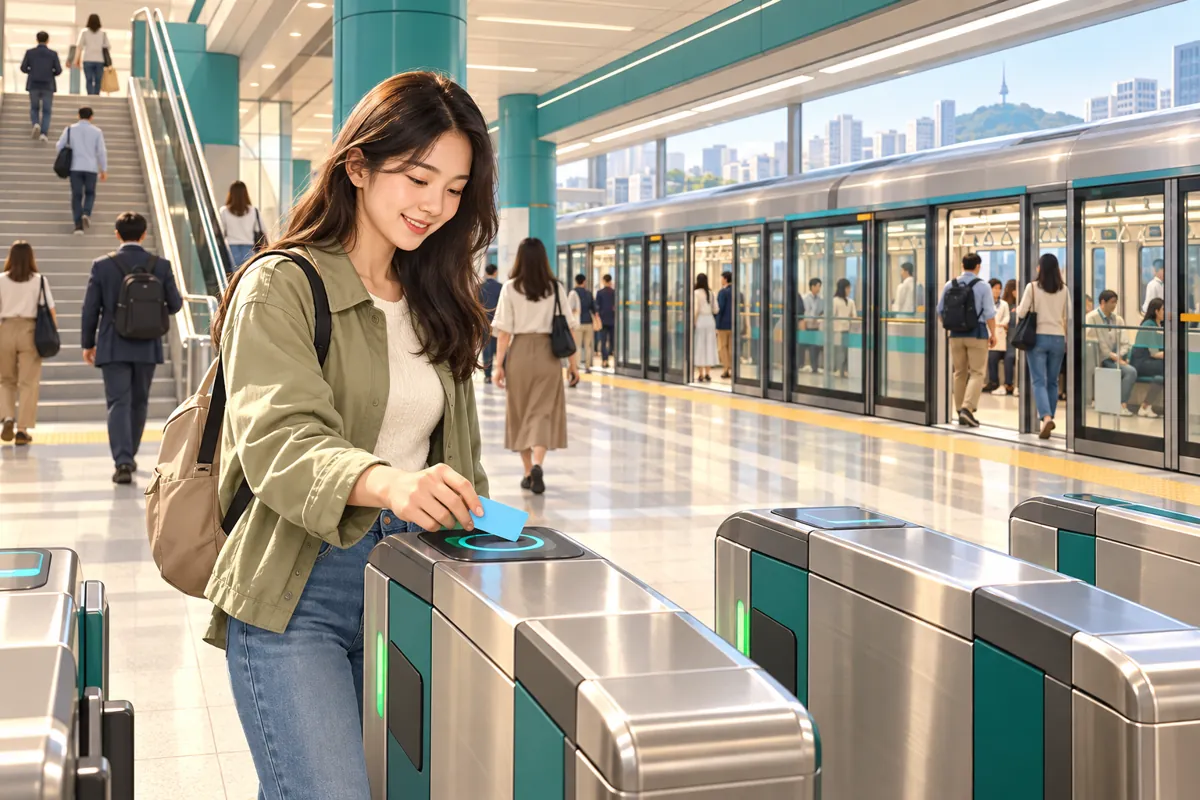
Official reference: Subway networks →
Intercity rail is a separate journey from the metro: buy the correct train ticket.
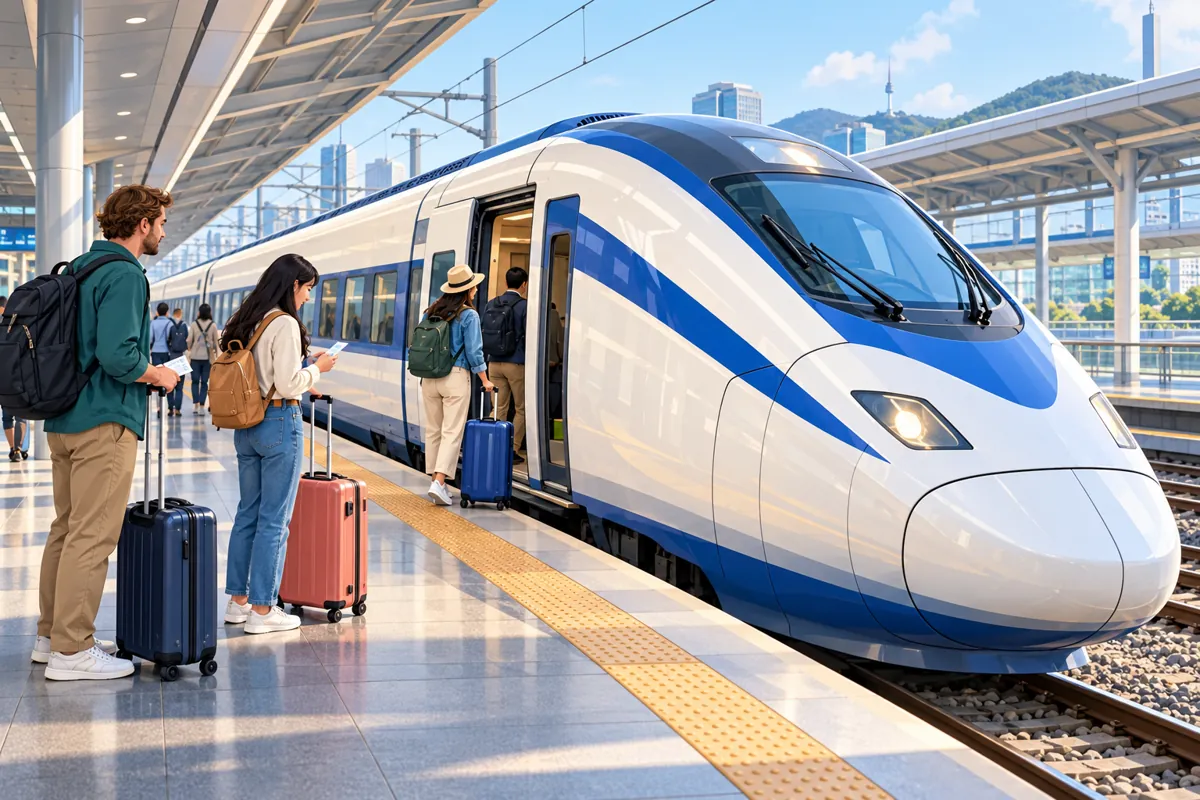
High-speed Korail services. Select the actual departure station, date and train; Seoul, Yongsan and other stations are not interchangeable.
A separate high-speed operator. Confirm the departure station and book through the correct operator; a KTX booking is not an SRT ticket.
Useful alternatives depending on the route. Compare stopping pattern, time and seat availability rather than choosing by train name alone.
Official reference: Train types & routes →
The colours below describe Seoul. Other cities use their own systems.
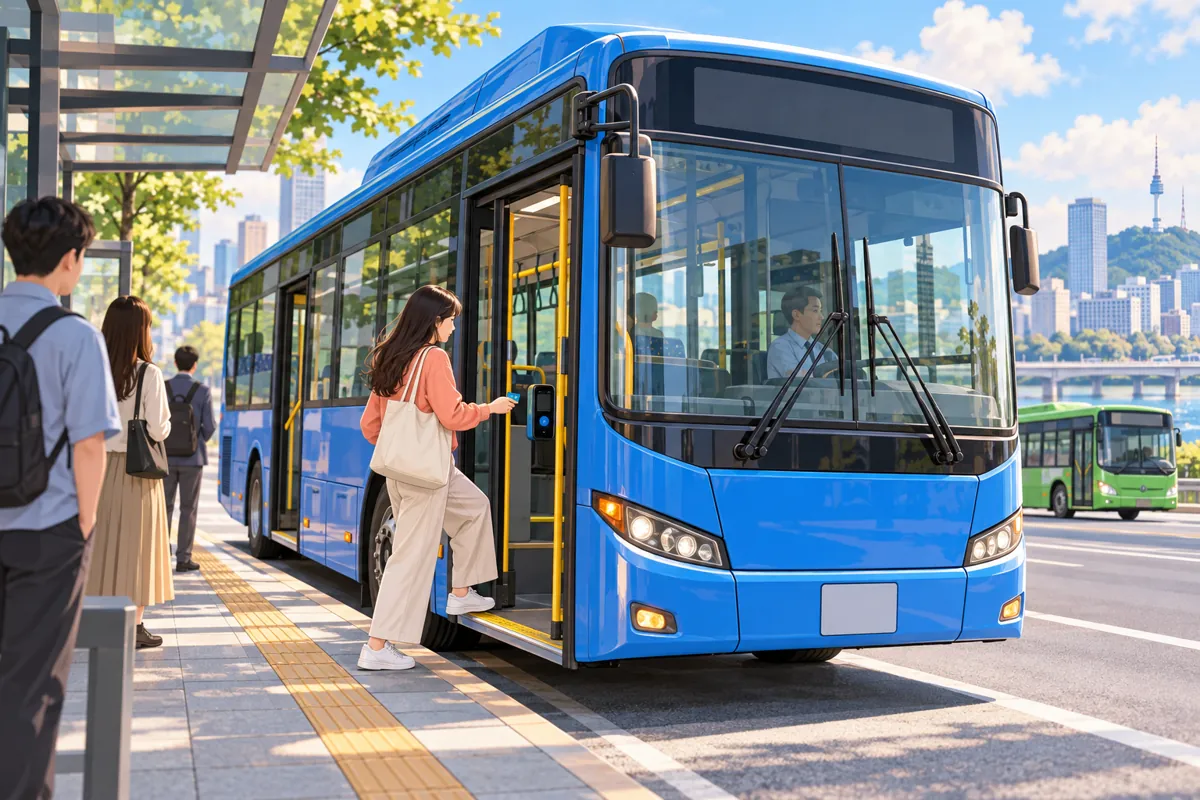
Longer links across the city.
Neighbourhood and subway connections.
Connections with the surrounding metropolitan area; different fares may apply.
Circulation routes in designated areas.
Small neighbourhood feeder services. Check the route number and local stop; fares can differ from other city buses.
Check the specific airport terminal, baggage rules and ticket method. Night routes have their own numbers and timetables.
Compare the service category and quoted fare, not the paint colour alone.
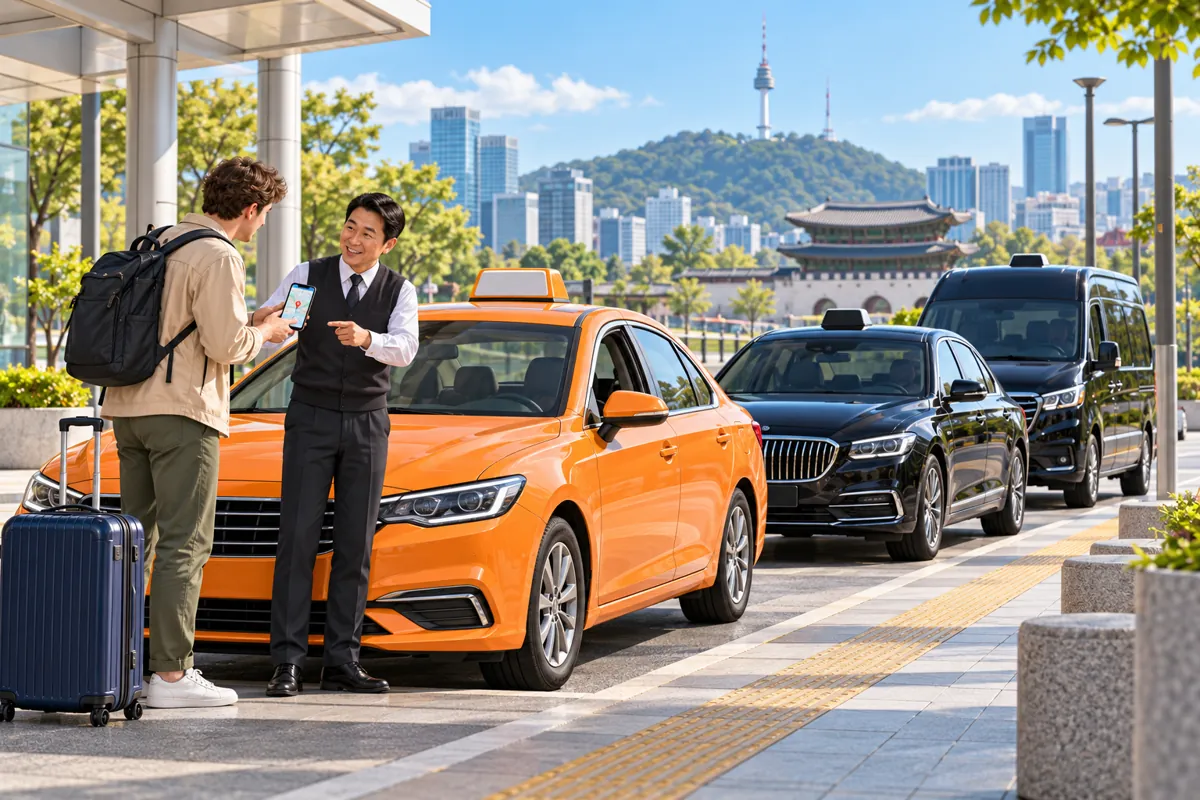
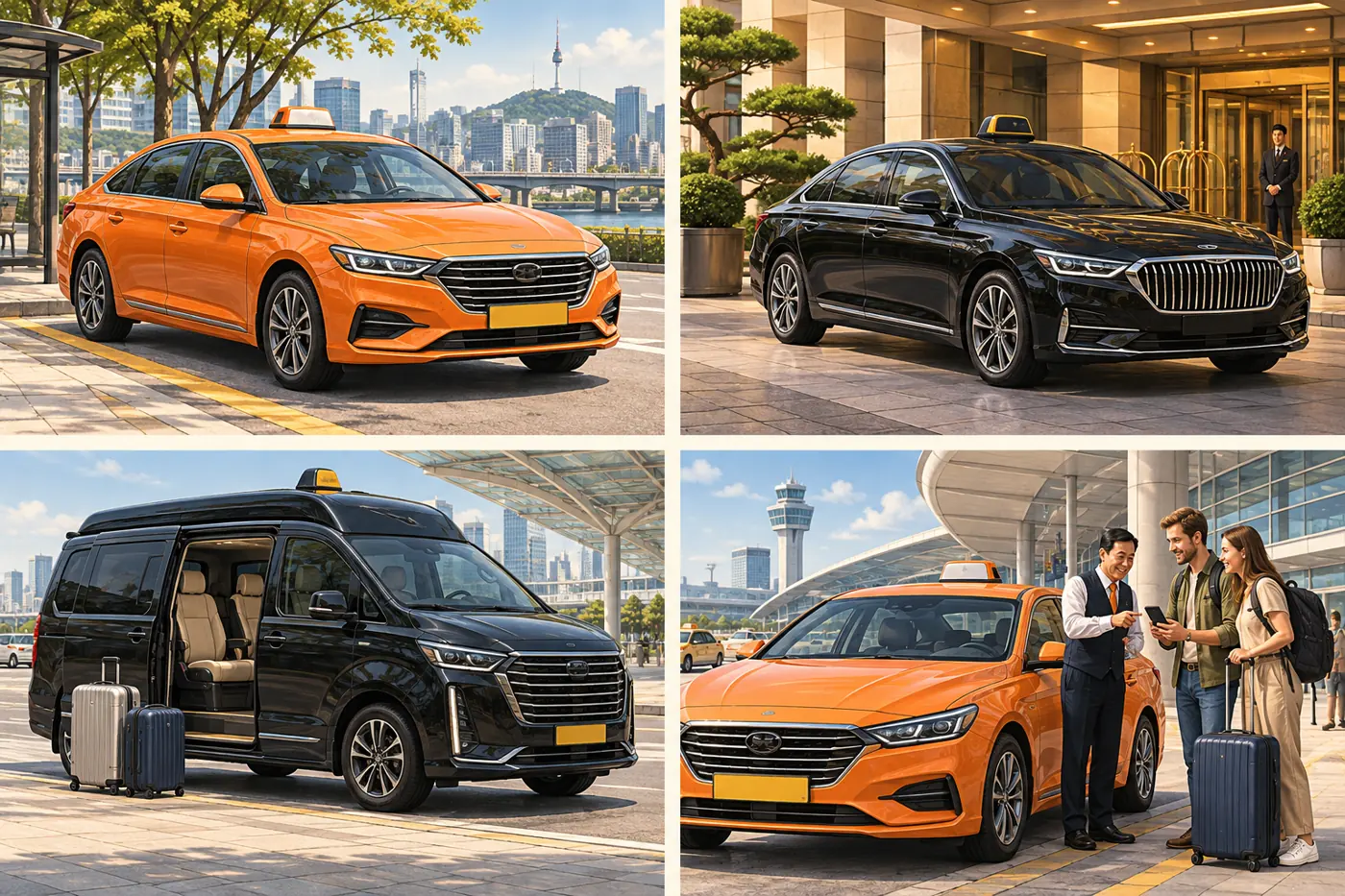
Everyday metered taxi. Check the destination and payment method before departure.
Higher-priced service, commonly black. Confirm the category instead of assuming all black vehicles are deluxe taxis.
Useful for groups or luggage. Confirm passenger seats, suitcase space and the fare basis when booking.
Foreign-language service for Seoul and airport journeys. Request the language and pickup arrangement when booking.
Use a taxi rank or a recognised booking service. Match the plate and driver details to your booking. Show the full Korean address, including the entrance. Ask whether tolls, late-night or other surcharges apply. Keep the receipt and check the seat and boot for belongings. Tipping is not normally expected.
With an app, check whether payment is automatic or due to the driver so you do not pay twice. Overseas-card acceptance and booking options vary.
Official reference: Taxi types & use →
고속버스 = express bus · 시외버스 = intercity bus.
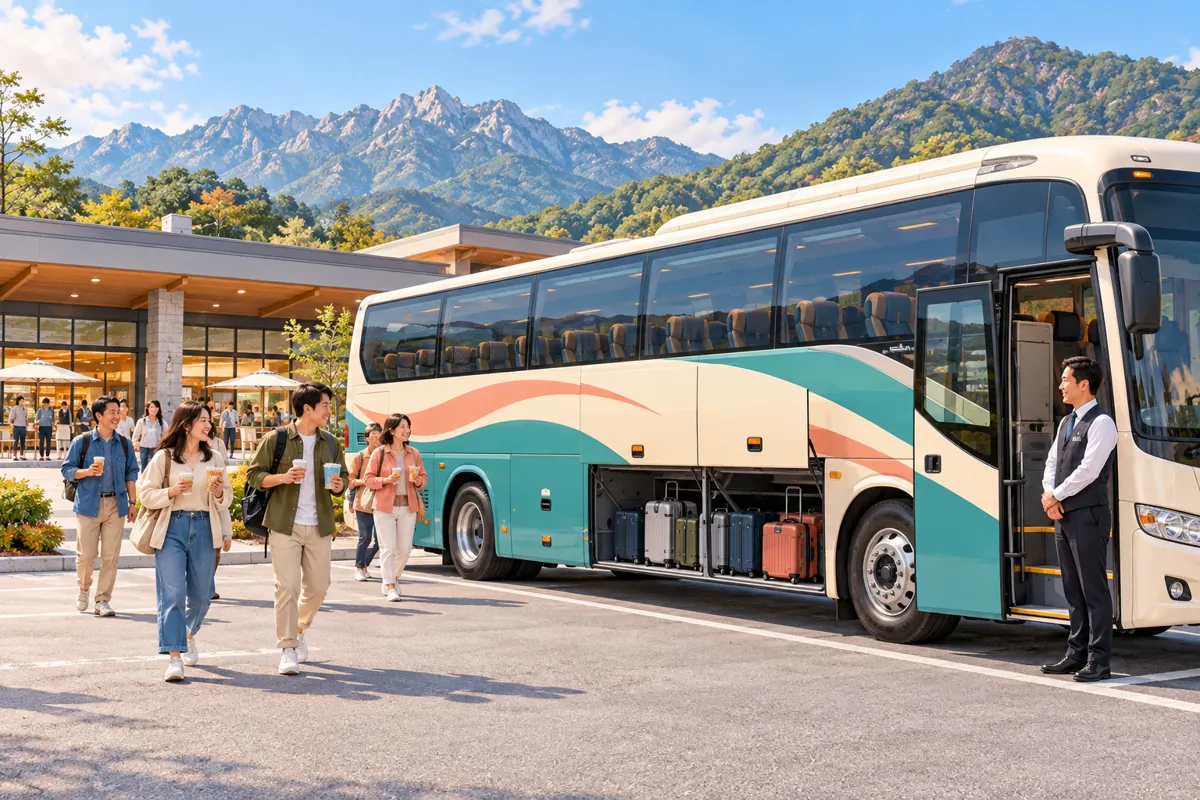
Usually a long-distance expressway service between terminals. Compare standard, excellent/우등 and premium classes where offered.
Connects cities and smaller towns; some services make intermediate stops. Check the exact destination and stop pattern.
Express and intercity terminals may be separate. Use the terminal printed on the ticket, not just the city name.
Official reference: Express & intercity buses →
Drive on the right. Speeds are in km/h; obey the limit posted for your road and conditions.
White, yellow and blue markings have different purposes. Pink and green guidance lines help identify a route through a junction; they are not lane-change permission.
Separates same-direction lanes. Change lanes only when safe and permitted; signal and check mirrors and blind spots.
Do not cross this lane boundary to change lanes. Choose the correct lane before the solid section.
Yellow centre markings separate opposing traffic on undivided roads. Expressways usually have a physical median; never cross a median-side boundary. Kerbside yellow markings relate to stopping/parking.
Check the operating hours and vehicle eligibility on signs. An ordinary rental car is not entitled to use an active bus-only lane.
Match the coloured path to the destination sign at that junction. The colours do not mean the same destination everywhere. Stay within legal lane boundaries.
A blue approach guide to Hi-pass is different from a bus-lane boundary. Use Hi-pass only with the correct working device and payment setup.
References: MOLIT road-marking guide · MOLIT coloured guidance-line manual · KoROAD bus-lane guidance
Illustrations isolate individual markings for learning. Actual layouts, signs and restrictions take priority.Hi-pass: working device + agreed payment setup.
General lane: follow the displayed payment instructions.
An entry or exit linking the expressway to local roads. Save the exit name as well as your destination.
A connection between expressways. Check the route number and direction before the lanes divide.
A place to stop for toilets, food and a break. Fuel and charging facilities vary; check availability before relying on them.
Use only with a working, correctly configured device and payment arrangement. Ask the rental company how tolls are billed.
Wear seat belts in every seat. Do not drink and drive or handle a phone while driving. Follow bus-lane restrictions and parking signs; a navigation suggestion does not override a road sign.
Official reference: Rental requirements & tolls →
Prepare your payment method and a backup before setting off.
A local transport card does not replace a reserved intercity ticket.
Check local acceptance and top-up options. Use one card per traveller for the simplest journey. Tap in and out as required; transfer discounts depend on the region, route and timing.
KTX, SRT and long-distance coaches need their own tickets. A local transport card or city pass does not automatically cover them.
Ask station or terminal staff, show your ticket and destination, or use Travel Help + Clip for practical Korean phrases. Keep receipts for lost-item enquiries.
Guide reviewed 27 September 2026. Prices, last services, booking eligibility and local rules vary. Check the linked operators for your travel date.
Recognise the picture, read the instruction, then check any additional time or vehicle restrictions.
Do not enter from this direction. Find a permitted approach, even if navigation suggests this turn.
Come to a complete stop at the stop line, then check for pedestrians and traffic before moving.
This example means a maximum of 50 km/h. Read the number actually posted; conditions may require a lower speed.
Do not park here. This does not mean a brief stop is always lawful: other stopping restrictions may still apply.
Do not stop or park. Do not use this area for a planned pickup or drop-off.
Identifies a crossing. Pedestrians should follow crossing signals; drivers must yield to people crossing or about to cross.
Watch for children and obey the posted limit (30 shown as an example). At an unsignalised crosswalk inside a school zone, stop even when nobody is crossing.
At a permitted left-turn lane, turn on green only when opposing traffic and pedestrians are clear. This sign does not permit a left turn on red.
Indicates parking information or a parking facility. Check the entrance, charges, opening hours, vehicle restrictions and payment method.
These are learning illustrations of common signs. Follow the actual sign, road markings, signals and supplementary plates at your location.
Official references: VISITKOREA driving signs · KoROAD traffic-sign chart · KoROAD school-zone crossings
Information checked . Fares and services can change. Use the linked operator information for your travel date.
READY TO PLAN?
Click Biondi to chat. Drag the top bar to move this window. AI answers may need checking.
Where would you like to go?